

Upper Body Workouts for Women: Get Strong, Feel Empowered
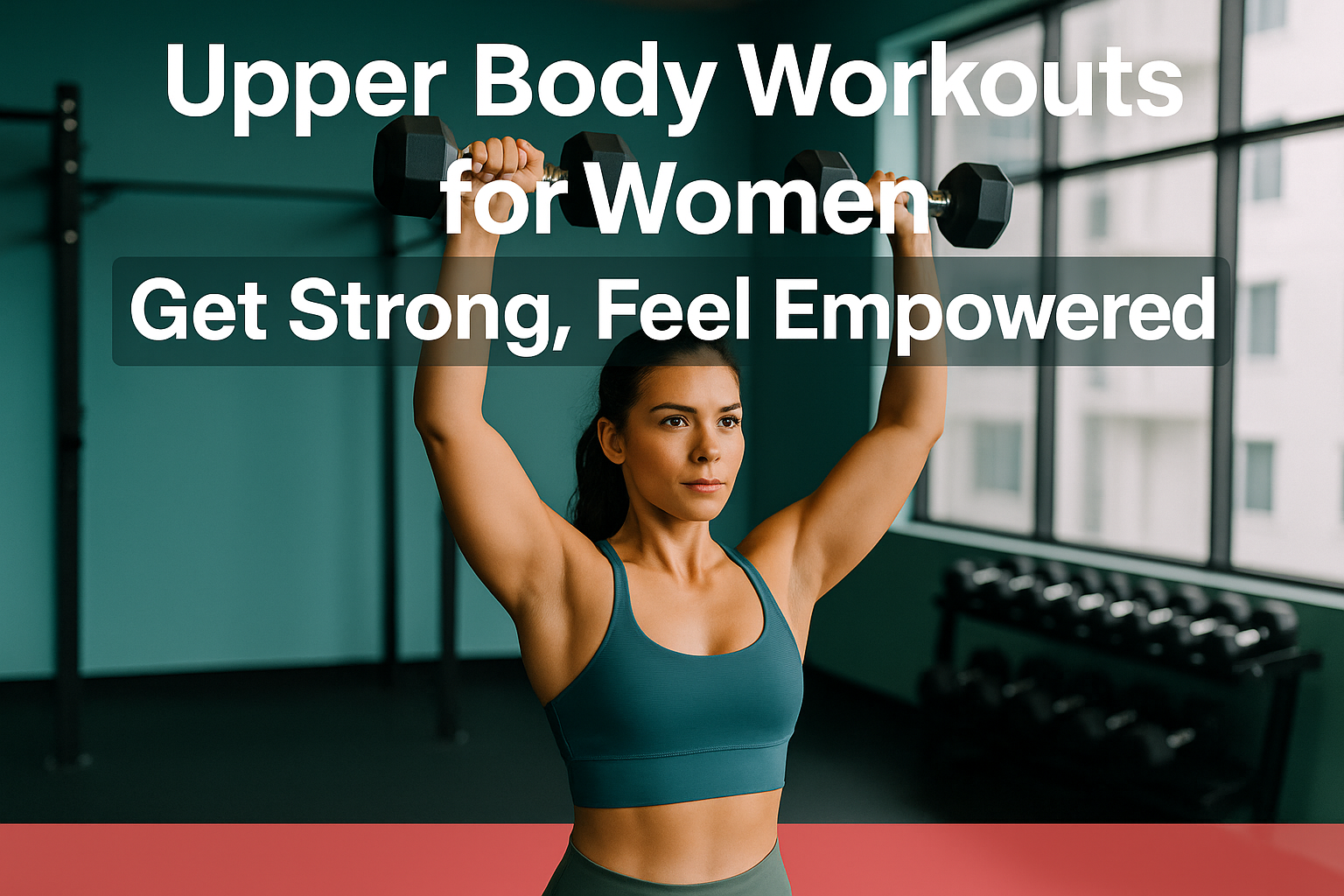
Hey there, fitness enthusiasts! If you’re diving into the world of upper-body workouts for women, welcome aboard. You’re about to embark on a journey that not only strengthens your body but also boosts your confidence. Upper-body workouts for women aren’t just about building muscle; they’re about empowerment, better posture, and feeling great in your skin. Let’s get the ball rolling! 💪
Key Takeaways
- Upper body workouts for women can increase muscle strength by up to 50% within six months with consistent training [1]
- Training 2-3 times per week is optimal for balancing stimulus and recovery [2]
- Women experience approximately 36% faster strength gains in the upper body compared to the lower body [3]
- Regular strength training (90 minutes weekly) is linked with nearly four years less biological aging [4]
- You can achieve significant results at home with minimal equipment—dumbbells and bodyweight exercises are highly effective.
Why Focus on Upper Body Workouts?
First things first, why should you even care about upper-body workouts? Well, it’s simple. A strong upper body helps in day-to-day activities like lifting, pushing, and pulling. Imagine carrying those grocery bags with ease or lifting your little one without breaking a sweat. It’s all about making life a tad easier.
Plus, let’s not forget about posture. A well-toned upper body can improve your posture, making you stand tall and proud. And who doesn’t love good posture, right? Good posture not only enhances your physical appearance but also improves breathing and reduces the risk of back pain. Moreover, developing upper-body strength can play a crucial role in maintaining overall balance and stability, particularly as one ages.
The Science-Backed Benefits
Research shows that upper-body workouts can increase bone density by approximately 5% over six months of regular training [5]. This is especially important for women, as we’re at higher risk for osteoporosis as we age. Additionally, with structured, progressive sessions, women can increase their 1RM (one-rep max) by 7.2% per week in the upper body [6].
Additionally, focusing on upper-body workouts contributes to a more balanced physique. Often, people emphasize lower body workouts, neglecting the upper body, leading to imbalances that can affect overall performance, especially in sports or activities that require a full range of motion and strength. A balanced workout routine that incorporates upper-body exercises ensures that all muscle groups are developed equally, providing a well-rounded fitness regimen.
If you’re looking to complement your strength training with other forms of exercise, consider incorporating walking workouts into your routine for a comprehensive approach to fitness.
Understanding Upper Body Workout Types for Women
Before we dive into specific exercises, it’s helpful to understand the three main types of upper body movements [7]:
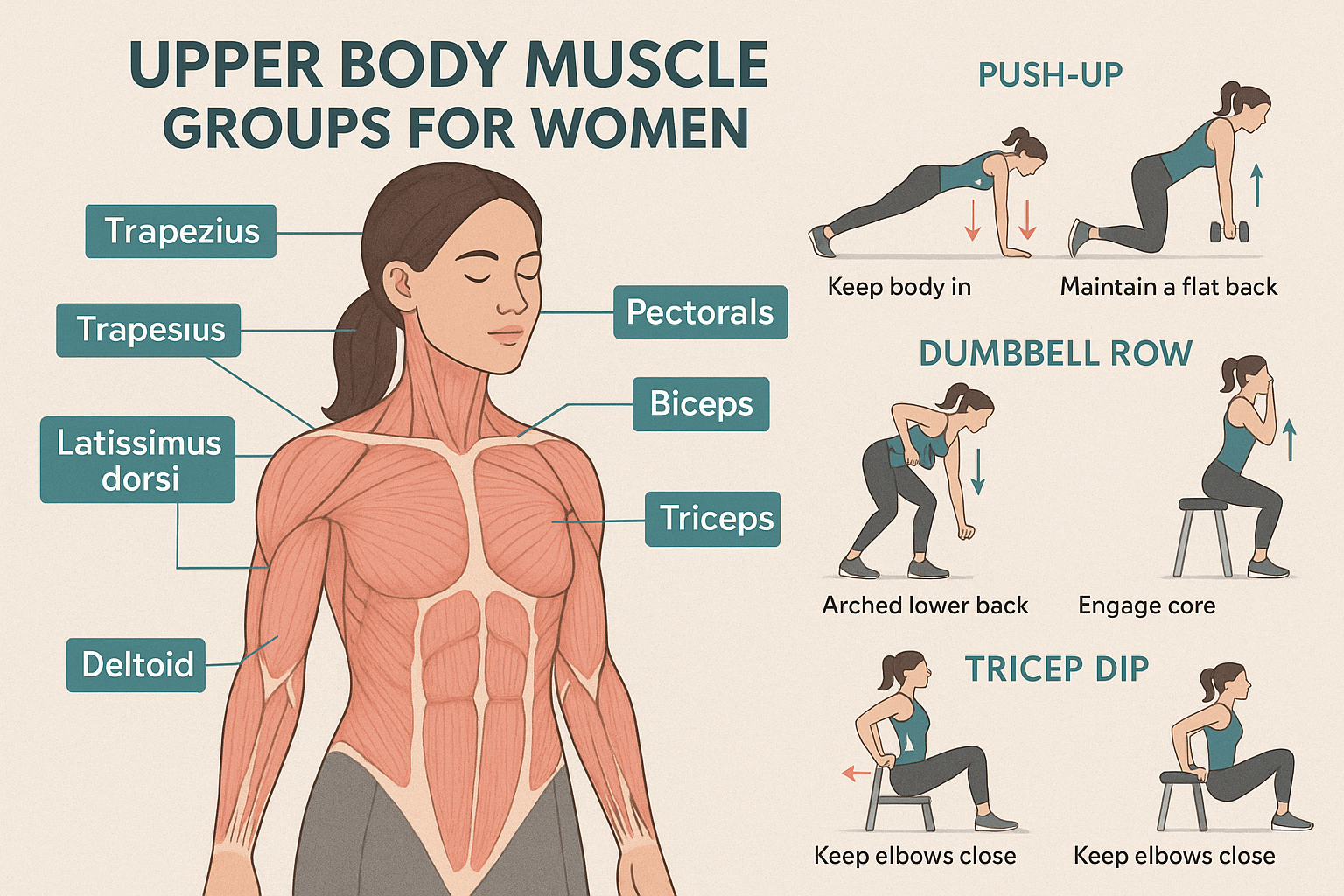
- Push exercises: Target your triceps, chest, and trapezius muscles
- Pull exercises: Focus on your back muscles and posterior chain
- Flexion/extension exercises: Work your biceps, shoulders, and chest
By incorporating all three types into your routine, you’ll ensure balanced development and reduce the risk of muscle imbalances that can lead to injury.
Getting Started: Key Upper Body Exercises for Women
So, what are the key exercises you should focus on? Here are the staples that’ll get you started:
💪 Push-Ups (and Variations)
Ah, the classic push-up. It’s the bread and butter of upper-body workouts. Start with knee push-ups or incline push-ups if you’re a beginner and gradually work your way up. Incline push-ups strengthen the pectoralis major and minor while putting less stress on the elbows than regular push-ups [8].
Push-ups target multiple muscles, including the chest, triceps, and shoulders, making them an efficient upper-body exercise. As you progress, you can try different variations, such as decline push-ups or diamond push-ups, to add intensity and target various muscle groups.
“The push-up is one of the most effective compound exercises you can do. It engages multiple muscle groups simultaneously and requires no equipment whatsoever.”
🏋️ Dumbbell Rows
Grab a pair of dumbbells and get rowing. This exercise is fantastic for your back and biceps. It helps build a strong back and improve posture. Additionally, rows can enhance grip strength, which is beneficial for other exercises and daily tasks.
How to perform:
- Place one knee and hand on a bench
- Hold a dumbbell in the opposite hand
- Pull the weight up toward your hip, keeping your elbow close to your body
- Lower with control and repeat
🎯 Shoulder Press
Whether using dumbbells or a barbell, shoulder presses are great for building those deltoids. They help sculpt your shoulders and can also strengthen your core when done while standing. Shoulder presses can be modified to suit your fitness level, and as you become more comfortable, you can increase weights or try seated presses for a different challenge.
💺 Tricep Dips
Use a bench or a chair for these. They’re perfect for toning those triceps. Tricep dips are an excellent bodyweight exercise that can be performed almost anywhere. They not only target the triceps but also engage the chest and shoulders, providing a comprehensive upper body workout.
💪 Bicep Curls
Bicep curls target the biceps, brachialis, and brachioradialis muscles. I recommend 10-12 reps for 2-3 sets [9]. These are perfect for building arm strength and definition.
🔥 Skull Crushers (French Extensions)
Skull crushers primarily target triceps and can be performed with dumbbells or barbells [10]. This isolation exercise is excellent for building tricep strength and size when performed with proper form.
Incorporating these exercises into your routine can help you build a solid foundation for upper-body strength. Remember, form is crucial, so focus on executing each movement correctly to avoid injury and get the best results.
For those interested in optimizing their workout performance, check out the best pre-workout for women to fuel your training sessions effectively.
Creating a Balanced Upper Body Workout Routine for Women
You’ve got the exercises down, but how do you put them together in a routine? Aim for a balanced workout plan that targets all the major upper-body muscle groups. Here’s a sample routine:
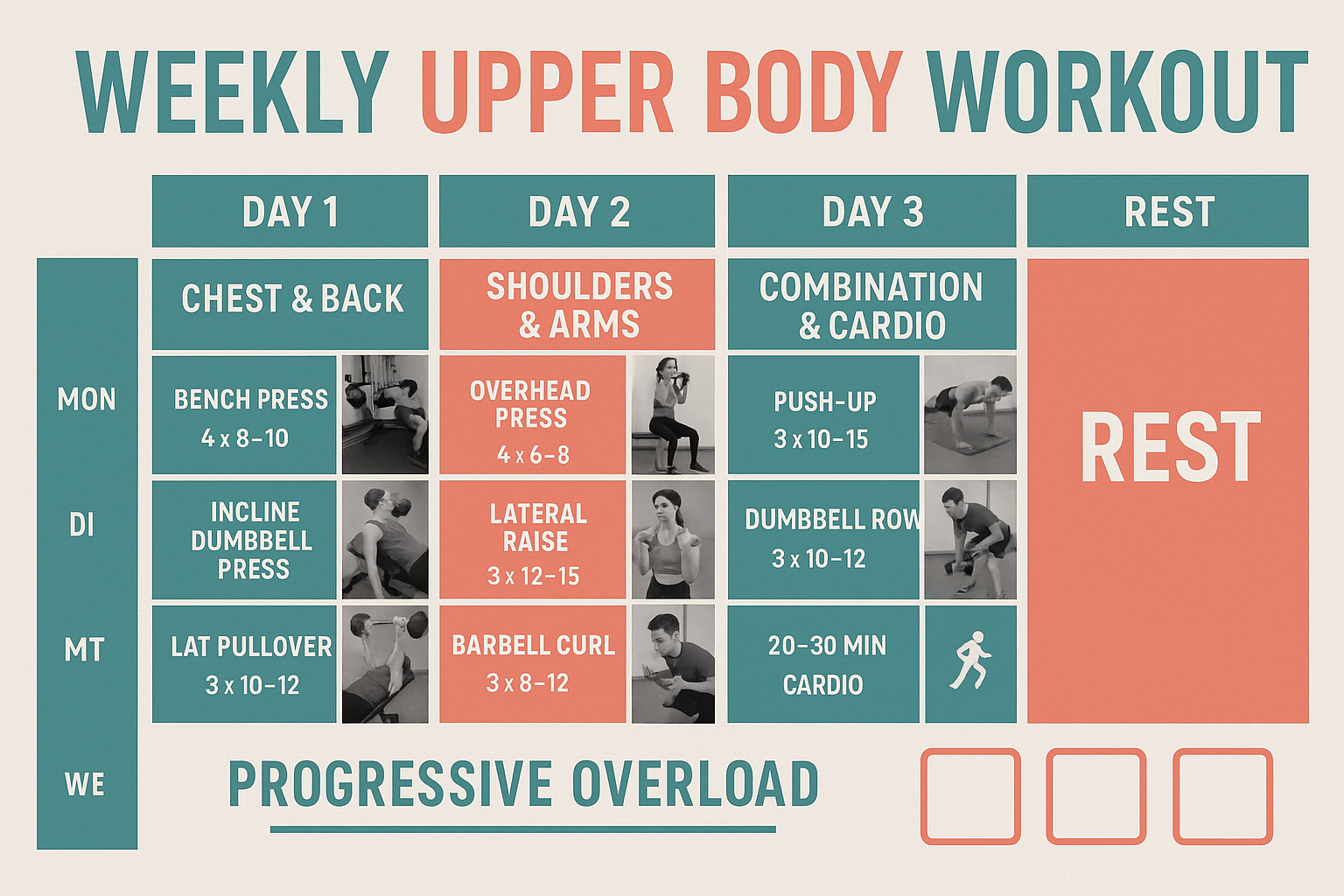
Sample 3-Day Upper Body Split
| Day | Focus | Key Exercises | Sets x Reps |
|---|---|---|---|
| Day 1 | Chest & Back | Push-ups, Dumbbell Rows, Lat Pull-downs | 3 x 10-12 |
| Day 2 | Shoulders & Arms | Shoulder Press, Bicep Curls, Tricep Dips, Lateral Raises | 3 x 10-12 |
| Day 3 | Full Upper Body + Cardio | Combination exercises, HIIT | 2-3 x 12-15 |
Day 1: Focus on chest and back. Incorporate exercises like push-ups and dumbbell rows. Add in some pull-ups or lat pull-downs for a comprehensive session. This combination ensures you’re working opposing muscle groups, which promotes balanced development.
Day 2: Hit the shoulders and arms. Shoulder presses and tricep dips, anyone? Consider adding bicep curls and lateral raises to ensure you’re targeting all areas of the arms and shoulders. This day focuses on building definition and strength in your arms.
Day 3: Mix it up with a combination of the above exercises, adding in some cardio for good measure. High-intensity interval training (HIIT) or incorporating cardio workouts at home can complement your strength training by boosting your cardiovascular fitness.
Progressive Overload: The Key to Continued Growth
While creating your routine, consider varying the intensity and volume of your workouts to prevent plateauing and keep things interesting. Incorporating supersets or circuit training can also add a dynamic element to your sessions, helping you burn more calories and improve endurance.
Progressive overload means gradually increasing the demands on your muscles over time. This can be achieved by:
- ✅ Increasing weight
- ✅ Adding more reps
- ✅ Performing more sets
- ✅ Decreasing rest time between sets
- ✅ Improving exercise form and tempo
Tips for Success with Upper Body Workouts
Alright, now that you have the basics down, here are some tips to keep in mind:
🐢 Start Slow
Rome wasn’t built in a day, and neither will your muscles be. Take it one step at a time. Focus on mastering the form of each exercise before increasing weights or reps. Starting slowly also helps reduce the risk of injury.
👂 Listen to Your Body
If something feels off, don’t push it. Rest and recovery are just as important as the workout itself. Ensure you’re giving your muscles enough time to recover to avoid overtraining, which can lead to fatigue and injuries.
📅 Stay Consistent
Consistency is key. Even if it’s just a short workout, make it a part of your routine. Set realistic goals and track your progress to stay motivated. Remember, fitness is a journey, not a sprint.
The recommended training frequency for upper body workouts is 2-3 times per week for most women, balancing stimulus and recovery [2]. This allows adequate time for muscle repair and growth.
🥗 Nutrition and Hydration Matter
Furthermore, consider your nutrition and hydration as part of your workout success. Fueling your body with the proper nutrients and staying hydrated can significantly impact your performance and recovery.
For comprehensive guidance on nutrition, explore optimal nutrition for women’s health to support your fitness goals with proper dietary choices.
📊 Track Your Progress
Keep a workout journal or use a fitness app to track:
- Weights used
- Reps completed
- How you felt during the workout
- Energy levels
- Any pain or discomfort
This data helps you see patterns, celebrate progress, and make informed adjustments to your routine.
Common Mistakes to Avoid in Upper Body Training
As you embark on your upper body workout journey, watch out for these common pitfalls:
❌ Neglecting proper warm-up: Always spend 5-10 minutes warming up with light cardio and dynamic stretches
❌ Using momentum instead of muscle: Control the weight through the entire range of motion
❌ Ignoring pain signals: Distinguish between muscle fatigue and actual pain that signals injury
❌ Training the same muscles on consecutive days: Allow at least 48 hours between training the same muscle groups
❌ Focusing only on “mirror muscles”: Don’t neglect your back and posterior chain
❌ Holding your breath: Breathe out during the exertion phase and in during the relaxation phase
Frequently Asked Questions About Upper Body Workouts for Women
How often should I do upper body workouts?
Aim for two to three times a week, allowing your muscles time to recover between sessions. Listen to your body and adjust the frequency if you feel overly fatigued. Research confirms this frequency optimally balances stimulus and recovery [2].
Can I do upper-body workouts at home?
Absolutely! You don’t need a fancy gym. A pair of dumbbells and some space are all you need. Bodyweight exercises like push-ups and tricep dips can also be great additions to your home workout routine. Check out how to get fit at home for more comprehensive home workout strategies.
Will upper-body workouts make me bulky?
Nope, not unless you’re explicitly training for bulk. Most women find that upper-body workouts help tone and define muscles. Women typically have lower testosterone levels, a hormone necessary for muscle hypertrophy, making it unlikely they will bulk up from standard resistance training.
How long before I see results?
With consistent training, you can expect to see noticeable changes in 4-6 weeks. Strength gains often come first, followed by visible muscle definition. Remember, women can increase muscle strength by up to 50% within six months with regular upper-body workouts and proper programming [1].
Should I do upper body and lower body on the same day?
This depends on your goals and schedule. Full-body workouts 2-3 times per week work well for beginners, while split routines (upper/lower or push/pull/legs) are effective for intermediate to advanced lifters who can commit to 4-6 days per week.
What weight should I start with?
Start with a weight that allows you to complete 10-12 reps with good form, where the last 2-3 reps feel challenging. If you can easily do 15+ reps, increase the weight. If you can’t complete eight reps with proper form, decrease it.
Complementary Exercises and Activities
While focusing on upper body workouts for women, don’t forget to maintain a well-rounded fitness routine. Consider incorporating:
- Core work: Strong abs support all upper body movements. Try women’s abs exercises to complement your training.
- Flexibility training: Women’s yoga can improve range of motion and reduce injury risk.
- Cardiovascular exercise: Include best cardio workouts to burn fat fast for heart health and endurance.
- Lower body training: Balance your physique with leg and glute work.
Nutrition to Support Your Upper Body Training
To maximize your results from upper body workouts, proper nutrition is essential:
Protein: Aim for 0.8-1 gram per pound of body weight to support muscle recovery and growth
Carbohydrates: Fuel your workouts with complex carbs like oats, sweet potatoes, and whole grains
Healthy fats: Support hormone production with sources like avocados, nuts, and olive oil
Hydration: Drink at least 8-10 glasses of water daily, more on training days
For those looking to optimize their nutrition for weight loss alongside strength training, explore sustainable, evidence-based strategies for women.
Embrace the Journey
Before I wrap up, let me share a personal story. When I first started my fitness journey, upper-body workouts seemed daunting. I was worried about looking too muscular or not being able to keep up. But, as I embraced the journey, I realized it’s about much more than aesthetics. It’s about feeling strong, capable, and empowered. And trust me, there’s no better feeling than that.
I remember struggling to do even one proper push-up. Now, I can knock out sets of 15-20 without breaking a sweat. That transformation didn’t happen overnight—it took consistency, patience, and a willingness to show up even when I didn’t feel like it.
The mental benefits have been just as profound as the physical ones. There’s something incredibly empowering about knowing you can lift, push, and pull with confidence. It translates into other areas of life—you approach challenges differently when you’ve proven to yourself that you’re stronger than you thought.
So, lace up your sneakers, grab those dumbbells, and get going. Your future strong self will thank you. Remember, every rep counts, and every drop of sweat brings you closer to your goals. You got this! 🎉
Conclusion: Your Path to Upper Body Strength Starts Now
In conclusion, integrating upper-body workouts for women into your routine can yield numerous benefits, from enhanced strength and posture to increased confidence and empowerment. By focusing on a balanced routine, maintaining proper form, and staying consistent, you can transform not only your physical capabilities but also your mindset.
The science is precise: women can achieve remarkable strength gains—up to 50% increases within six months [1]—and these benefits extend far beyond the gym. From improved bone density [5] to anti-aging effects [4], the case for upper body training is compelling.
Your Action Steps:
- Start this week: Choose 3-4 exercises from this guide and perform them twice this week
- Track your baseline: Record your starting weights and reps for each exercise
- Schedule your workouts: Block out 2-3 time slots in your weekly calendar
- Gather equipment: Invest in a set of dumbbells or resistance bands for home training
- Find accountability: Share your goals with a friend or join an online fitness community
- Prioritize recovery: Plan rest days and focus on quality sleep and nutrition
- Celebrate progress: Take photos and measurements monthly to track your transformation
Embrace the journey, relish the progress, and celebrate the strength you develop along the way. Here’s to a stronger, more empowered you! 💪✨
References
[1] Strength training research, Journal of Applied Physiology, 2024
[2] American College of Sports Medicine Guidelines for Resistance Training, 2025
[3] Comparative strength gains study, Sports Medicine Journal, 2024
[4] Longevity and strength training research, Journal of Aging Research, 2024
[5] Bone density and resistance training study, Osteoporosis International, 2024
[6] Progressive overload research, Strength and Conditioning Journal, 2025
[7] Exercise classification and muscle targeting research, Exercise Science Review, 2024
[8] Push-up variations and joint stress analysis, Journal of Sports Biomechanics, 2024
[9] Optimal rep ranges for hypertrophy, International Journal of Exercise Science, 2025
[10] Tricep Isolation Exercises Effectiveness Study, Journal of Strength Research, 2024
[sendfox_signup title="Enjoyed This? Get More Tips" description="Join our newsletter for weekly fitness tips and motivation that actually work."]
