

Full-Body Strength Workouts: Your Complete Guide to Building Total-Body Power in 2025
Picture this: You walk into the gym with limited time, endless goals, and a desire to transform your entire physique. You’re not alone. In 2025, women everywhere are discovering that Full-Body Strength Workouts aren’t just a trend—they’re a revolution in how we approach fitness. Gone are the days of spending hours isolating individual muscles. Today, I’m going to show you why training your entire body in one session is the smartest, most efficient path to the strong, capable body you deserve. 💪
Whether you’re juggling work, family, or want maximum results in minimum time, full-body strength training offers a solution that fits seamlessly into your busy life while delivering incredible results.
Key Takeaways
✨ Full-body strength workouts engage multiple muscle groups simultaneously, increasing calorie burn and building functional strength faster than isolated training routines.
✨ Training all major muscle groups 2-3 times per week produces superior muscle growth and strength gains compared to traditional body-part split routines.
✨ These efficient workouts require fewer gym sessions while delivering comprehensive results, making them perfect for women with demanding schedules.
✨ Compound movements improve coordination and body awareness, creating better movement patterns that translate to everyday activities and injury prevention.
✨ Full-body training elevates metabolism for hours after your workout, supporting fat loss goals while building lean, strong muscle tissue.
Understanding Full-Body Strength Workouts
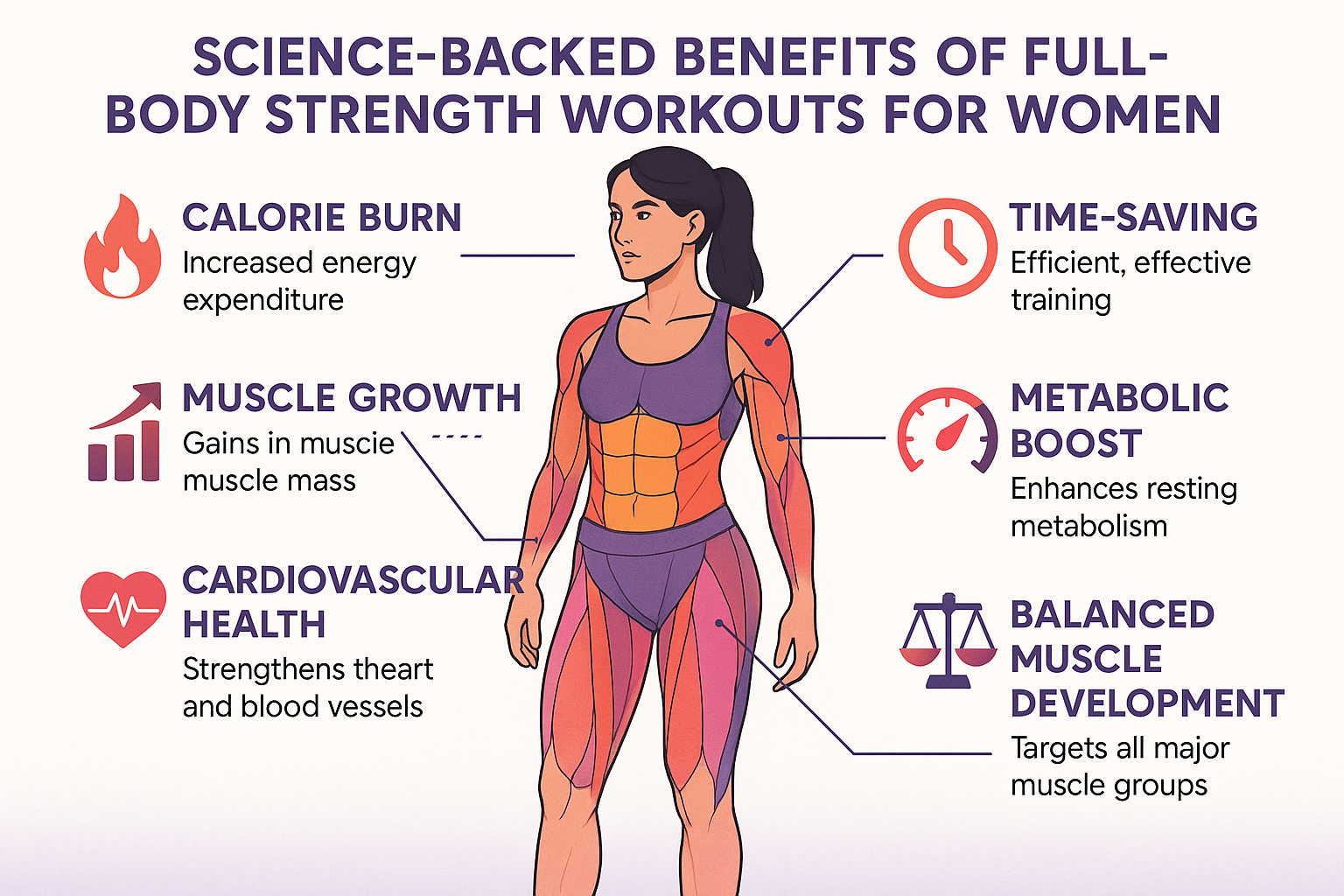
Let me break down exactly what makes Full-Body Strength Workouts so powerful. Unlike traditional split routines, where you might dedicate Monday to chest, Tuesday to back, and so on, full-body training takes an entirely different approach. In each session, you’re engaging all major muscle groups—your legs, glutes, back, chest, shoulders, arms, and core.
The magic happens through compound movements. These are exercises that recruit multiple joints and muscle groups working together. Think squats, deadlifts, rows, presses, and lunges. When you perform a squat, you’re not just working your quads—you’re engaging your glutes, hamstrings, core, and even your upper back for stability.
The Science Behind Total-Body Training
Research backs up what many of us have experienced firsthand. A 2015 study published in the Journal of Strength and Conditioning Research found that training each muscle group three times per week resulted in significantly greater muscle thickness than once-per-week training [1]. This frequent stimulation creates optimal conditions for muscle growth and strength development.
Furthermore, a 2016 study examining equal-volume resistance training protocols discovered that full-body training increased one-rep max (1RM) strength similarly to split-body training while producing positive changes in body composition [2]. Translation? You get stronger AND leaner with this approach.
The neuromuscular benefits are equally impressive. When you regularly perform movements that require multiple muscle groups to coordinate, your nervous system becomes more efficient at recruiting muscle fibers. This enhanced neuromuscular coordination results in greater force output and improved overall athletic performance.
The Transformative Benefits of Full-Body Strength Workouts
Now, let’s dive into why I’m so passionate about this training style. The benefits extend far beyond just building muscle—they transform how you move, feel, and live.
⏰ Time Efficiency That Fits Your Life
Here’s the reality: most women don’t have 2 hours a day to spend at the gym. Full-body workouts solve this problem beautifully. Instead of needing 5-6 gym sessions weekly to hit all muscle groups, you can achieve comprehensive training in just 2-3 sessions per week.
Each workout might last 45-60 minutes, but you’re accomplishing what would take much longer with traditional splits. This efficiency doesn’t mean you’re cutting corners—you’re simply working smarter. If you’re looking to get fit without sacrificing your entire schedule, this approach is game-changing.
🔥 Superior Calorie Burn and Metabolic Boost
When you engage more muscle mass during exercise, your body works harder. Period. Full-Body Strength Workouts elevate your heart rate significantly, creating a powerful metabolic stimulus that continues long after you’ve left the gym.
This phenomenon, called excess post-exercise oxygen consumption (EPOC), means your metabolism remains elevated for hours after your workout. You’re literally burning additional calories while sitting at your desk or relaxing on the couch. Combined with proper nutrition—perhaps incorporating principles from a sustainable weight loss strategy—this metabolic advantage supports fat loss while preserving precious muscle tissue.
💪 Balanced Muscle Development and Injury Prevention
One of my biggest concerns with body-part splits is the potential for muscle imbalances. When you train your chest twice as often as your back, or focus heavily on quads while neglecting hamstrings, you’re setting yourself up for postural issues and potential injuries.
Full-body training ensures balanced muscle development by targeting all major muscle groups in each session. Your body develops proportionally, with front and back, upper and lower, working in harmony. This balance translates to better posture, reduced injury risk, and a physique that looks athletic and proportional.
🏃♀️ Enhanced Functional Strength for Real Life
Let’s be honest—when was the last time you needed to do an isolated bicep curl in daily life? Probably never. But lifting a heavy box from the floor? Carrying groceries? Playing with your kids? These activities require multiple muscle groups working together.
Functional strength from full-body training involves movements that mimic real-life actions, such as lifting, bending, twisting, and pushing. You’re not just building muscles that look good—you’re developing strength that makes everyday tasks easier and safer. This practical application is why I believe full-body training is superior for most women’s goals.
🧠 Improved Mind-Muscle Connection
The repeated engagement of all muscle groups develops better body awareness and a muscular mind-body connection. You become more attuned to how your body moves through space, which muscles are working, and how to execute movements with proper form.
This heightened awareness improves exercise execution, helps you identify and correct imbalances, and reduces injury risk. Over time, you’ll notice better coordination not just in the gym, but in sports, recreational activities, and daily movements.
❤️ Cardiovascular and Muscular Endurance
The dynamic, multi-muscle nature of Full-Body Strength Workouts provides a unique conditioning stimulus. Your heart rate stays elevated throughout the session as you move from one compound exercise to another, often with minimal rest.
This combination of strength and cardiovascular training builds both muscular and cardiovascular endurance simultaneously. You’re essentially getting two workouts in one—resistance training for strength and muscle, plus cardiovascular conditioning for heart health and stamina. For additional cardiovascular benefits, you might also explore cardio workouts at home to complement your strength training.
🔄 Faster Recovery and Training Frequency
Interestingly, full-body workouts can facilitate faster recovery than high-volume split routines. Because you’re distributing workload across various muscle groups rather than hammering one area intensely, you avoid excessive soreness in any single muscle group.
This distributed fatigue means you can train more frequently without overtraining. While a leg-focused split might leave you unable to walk for days, a full-body session challenges your legs moderately, allowing for quicker recovery and more frequent training sessions throughout the week.
Essential Components of Effective Full-Body Strength Workouts
Creating an effective full-body routine isn’t complicated, but it does require understanding some key principles. Let me walk you through the essential components.
The Big Six Movement Patterns
Every comprehensive full-body workout should include these fundamental movement patterns:
| Movement Pattern | Primary Muscles | Example Exercises |
|---|---|---|
| Squat | Quads, glutes, hamstrings | Barbell squat, goblet squat, Bulgarian split squat |
| Hinge | Hamstrings, glutes, lower back | Deadlift, Romanian deadlift, hip thrust |
| Push (Horizontal) | Chest, shoulders, triceps | Push-up, bench press, dumbbell press |
| Push (Vertical) | Shoulders, triceps, upper chest | Overhead press, Arnold press, push press |
| Pull (Horizontal) | Back, biceps, rear delts | Bent-over row, seated row, inverted row |
| Pull (Vertical) | Lats, biceps, upper back | Pull-up, lat pulldown, chin-up |
By incorporating at least one exercise from each category, you ensure complete muscular development and balanced strength across all planes of movement.
Compound Exercises: Your Foundation
Compound movements are the cornerstone of practical full-body training. These multi-joint exercises recruit numerous muscle groups simultaneously, providing maximum efficiency and hormonal response.
Research shows that exercises engaging more muscle mass provide a stronger anabolic stimulus for muscle growth through greater acute increases in testosterone and growth hormone following exercise [3]. This hormonal advantage accelerates your results significantly.
Some of my favorite compound exercises include:
- Squats (front, back, goblet variations)
- Deadlifts (conventional, sumo, Romanian)
- Lunges (forward, reverse, walking)
- Rows (barbell, dumbbell, cable)
- Presses (bench, overhead, incline)
- Pull-ups/Chin-ups (or assisted variations)
Progressive Overload: The Growth Principle
Here’s a truth bomb: if you’re not progressively challenging your muscles, you’re not growing stronger. Progressive overload means gradually increasing the demands on your musculoskeletal system over time.
This can happen through:
- ✅ Increasing weight/resistance
- ✅ Adding more repetitions
- ✅ Performing additional sets
- ✅ Reducing rest periods
- ✅ Improving exercise tempo
- ✅ Enhancing range of motion
Track your workouts diligently. Write down weights, sets, and reps. Each session, aim to improve in some measurable way. This consistent progression is what transforms your body over the course of weeks and months.
Building Your Perfect Full-Body Strength Workout Routine
Ready to create your own program? Let’s construct a practical, effective routine you can start today.
Sample Beginner Full-Body Workout
If you’re new to strength training or returning after a break, start here. Perform this workout 2-3 times per week, with at least 1 rest day between sessions.
Workout A:
- Goblet Squat – 3 sets × 10-12 reps
- Dumbbell Romanian Deadlift – 3 sets × 10-12 reps
- Push-ups (modified if needed) – 3 sets × 8-15 reps
- Dumbbell Row – 3 sets × 10-12 reps per arm
- Dumbbell Shoulder Press – 3 sets × 10-12 reps
- Plank – 3 sets × 30-45 seconds
Rest 60-90 seconds between sets. Focus on perfect form over heavy weights initially. If you’re working out at home, check out this guide on how to get fit at home for equipment-free alternatives.
Intermediate Full-Body Workout Split
Once you’ve built a foundation (typically after 8-12 weeks), progress to an alternating split to add variety and volume:
Workout A (Lower Focus):
- Barbell Back Squat – 4 sets × 8-10 reps
- Romanian Deadlift – 3 sets × 10-12 reps
- Bench Press – 3 sets × 8-10 reps
- Lat Pulldown – 3 sets × 10-12 reps
- Dumbbell Lateral Raise – 3 sets × 12-15 reps
- Cable Core Rotation – 3 sets × 12 reps per side
Workout B (Upper Focus):
- Deadlift – 4 sets × 6-8 reps
- Bulgarian Split Squat – 3 sets × 10 reps per leg
- Overhead Press – 4 sets × 8-10 reps
- Bent-Over Barbell Row – 4 sets × 8-10 reps
- Walking Lunges – 3 sets × 12 steps per leg
- Hanging Knee Raises – 3 sets × 10-15 reps
Alternate between Workout A and B, training 3 times weekly (e.g., Monday-A, Wednesday-B, Friday-A, then Monday-B, etc.).
Advanced Full-Body Training Strategies
For experienced lifters, consider these advanced techniques to maximize your Full-Body Strength Workouts:
Supersets: Pair exercises targeting opposing muscle groups (like push-ups and rows) with minimal rest between them. This increases workout density and cardiovascular demand.
Cluster Sets: Perform heavy compound lifts with built-in micro-rest periods (e.g., three reps, rest 20 seconds, 3 reps, rest 20 seconds, three reps = 1 cluster set).
Wave Loading: Vary rep ranges within the same workout (e.g., Set 1: 5 reps, Set 2: 3 reps, Set 3: 8 reps) to target different muscle fiber types.
Tempo Manipulation: Control the eccentric (lowering) phase of exercises (e.g., 3-second descent on squats) to increase time under tension.
Nutrition Strategies to Support Your Full-Body Training
Training is only half the equation. Your nutrition determines whether you build muscle, lose fat, or both. Let me share what works.
Protein: Your Muscle-Building Foundation
Aim for 0.7-1 gram of protein per pound of body weight daily. This provides amino acids necessary for muscle repair and growth. Quality sources include:
- 🥩 Lean meats (chicken, turkey, lean beef)
- 🐟 Fish and seafood
- 🥚 Eggs and egg whites
- 🥛 Greek yogurt and cottage cheese
- 🌱 Plant-based options (tofu, tempeh, legumes)
Distribute protein across 3-4 meals for optimal muscle protein synthesis throughout the day.
Carbohydrates: Fuel for Performance
Don’t fear carbs! They’re essential for fueling intense workouts and supporting recovery. Focus on complex carbohydrates around your training sessions:
- 🍚 Rice (white or brown)
- 🥔 Potatoes and sweet potatoes
- 🌾 Oats and whole grains
- 🍌 Fruits (especially bananas and berries)
Time your most considerable carbohydrate portions around your workouts for maximum performance and recovery. If you’re following a lower-carb approach, explore how many carbs in a low carb diet to find your optimal balance.
Healthy Fats: Hormonal Support
Dietary fats support hormone production, including testosterone and growth hormone—both crucial for muscle building. Include sources like:
- 🥑 Avocados
- 🌰 Nuts and seeds
- 🐟 Fatty fish (salmon, mackerel)
- 🫒 Olive oil and coconut oil
Aim for 20-30% of total calories from healthy fats.
Hydration and Recovery Nutrition
Water is critical for performance, recovery, and overall health. Drink half your body weight in ounces daily (e.g., 150 lbs = 75 oz water), plus extra during and after workouts.
Post-workout nutrition should include both protein and carbohydrates within 1-2 hours of training. A simple option might be a delicious smoothie with protein powder, banana, and berries.
Common Mistakes and How to Avoid Them
Even with the best intentions, certain pitfalls can derail your progress. Here’s what to watch for:
❌ Mistake #1: Neglecting Progressive Overload
The Problem: Doing the exact weights, sets, and reps week after week produces zero adaptation.
The Solution: Track every workout. Aim to increase weight, reps, or sets every 1-2 weeks. Even minor improvements (adding 2.5 lbs or one extra rep) compound into significant gains over time.
❌ Mistake #2: Sacrificing Form for Weight
The Problem: Lifting heavy with poor technique increases injury risk and reduces muscle activation.
The Solution: Master movement patterns with lighter weights first. Film yourself or work with a trainer to ensure proper form. Only increase weight when you can maintain perfect technique throughout all reps.
❌ Mistake #3: Skipping Warm-Ups
The Problem: Jumping straight into heavy lifts with cold muscles invites injury and reduces performance.
The Solution: Spend 5-10 minutes on dynamic warm-ups, including:
- Light cardio (jumping jacks, walking, cycling)
- Joint rotations (shoulders, hips, ankles)
- Movement-specific warm-up sets with lighter weights
❌ Mistake #4: Inadequate Recovery
The Problem: Training too frequently without proper rest leads to overtraining, fatigue, and stalled progress.
The Solution: Schedule at least one full rest day between full-body sessions. Prioritize 7-9 hours of high-quality sleep each night. If you’re struggling with sleep, learn about how much sleep women need for optimal recovery.
❌ Mistake #5: Ignoring Nutrition
The Problem: You can’t out-train a poor diet. Inadequate nutrition sabotages muscle growth and recovery.
The Solution: Follow the nutrition guidelines above. Consider working with a nutritionist or using a calorie calculator to determine your specific needs based on your goals.
❌ Mistake #6: Lack of Exercise Variety
The Problem: Performing identical exercises every session can lead to plateaus and boredom.
The Solution: Rotate exercise variations every 4-6 weeks. Swap barbell squats for front squats, switch from barbell rows to dumbbell rows, and alternate between different pressing angles. This variation provides fresh stimulus while preventing mental burnout.
Adapting Full-Body Workouts for Different Goals
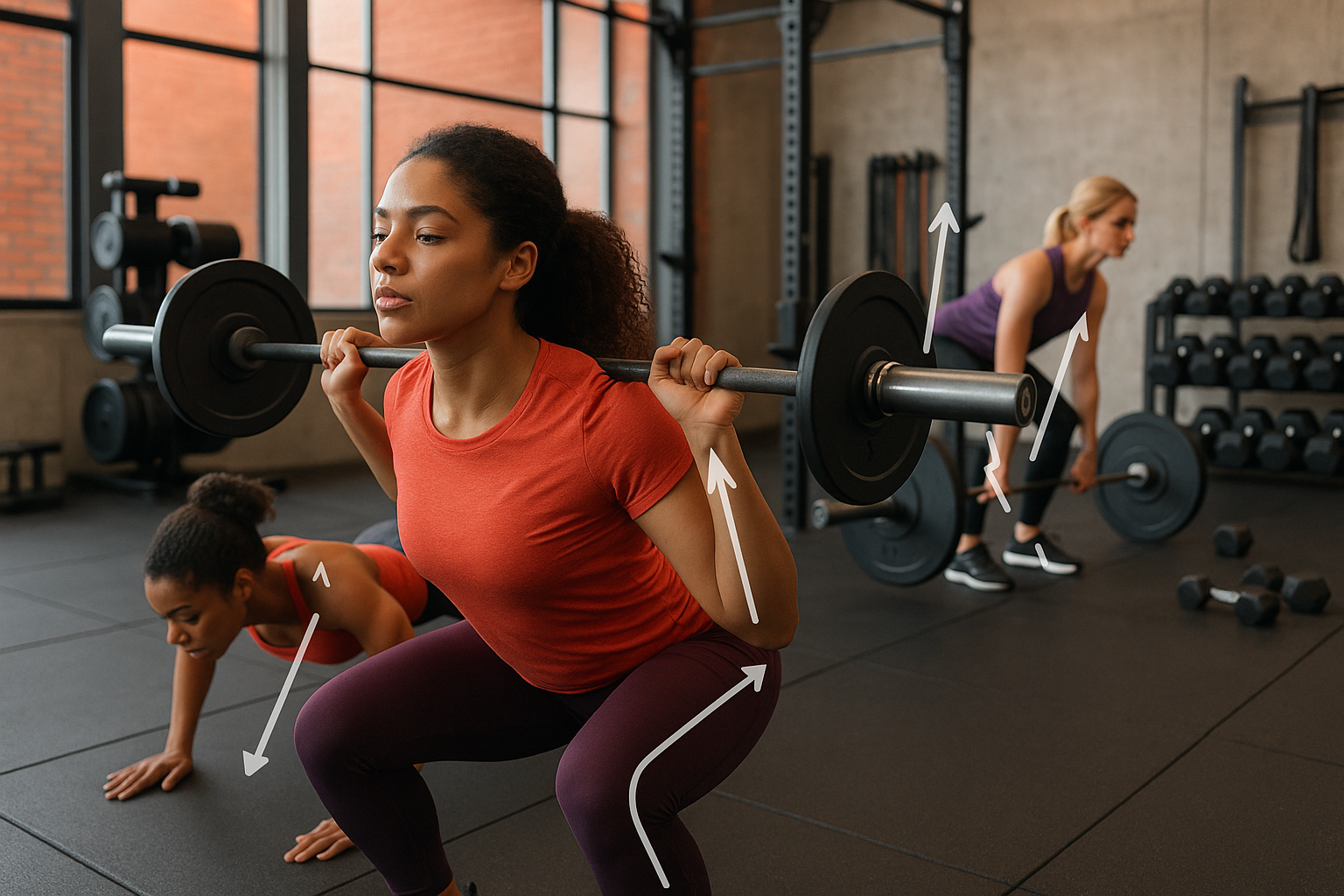
The beauty of Full-Body Strength Workouts lies in their versatility. Let’s customize the approach for specific objectives.
For Fat Loss and Body Recomposition
When fat loss is your primary goal, structure your full-body workouts to maximize calorie burn:
- Increase workout density: Reduce rest periods to 30-60 seconds between sets
- Incorporate supersets and circuits: Keep your heart rate elevated throughout
- Add metabolic finishers: End sessions with 5-10 minutes of high-intensity work
- Maintain strength focus: Don’t abandon heavy weights—they preserve muscle during calorie deficits
Combine your training with a moderate caloric deficit (300-500 calories below maintenance) and adequate protein intake. For additional strategies, explore the best weight loss workout approaches.
For Muscle Building and Strength
To maximize muscle growth and strength gains:
- Prioritize progressive overload: Consistently increase weights and volume
- Extend rest periods: Allow 2-3 minutes between heavy compound sets
- Increase training frequency: Consider 3-4 full-body sessions weekly
- Eat in a slight surplus: Consume 200-300 calories above maintenance with high protein
Focus on the 6-12 rep range for most exercises, occasionally incorporating heavier sets of 3-5 reps for strength development.
For Athletic Performance
If sports performance is your goal:
- Emphasize explosive movements: Include power cleans, jump squats, and medicine ball throws
- Train movement patterns: Focus on exercises mimicking your sport’s demands
- Develop work capacity: Use conditioning circuits between strength blocks
- Periodize your training: Vary intensity and volume based on your competitive season
For General Health and Fitness
For overall wellness and functional fitness:
- Maintain balanced programming: Include all six movement patterns equally
- Focus on form and control: Prioritize quality movement over maximal loads
- Include mobility work: Add stretching and flexibility exercises
- Keep it enjoyable: Vary exercises to maintain long-term adherence
Combine your strength training with other activities you enjoy, like yoga or walking, for a well-rounded fitness lifestyle.
My Personal Journey with Full-Body Strength Training
Let me get personal for a moment. Five years ago, I was stuck in a rut. I’d spend hours doing isolated exercises—bicep curls on Monday, tricep extensions on Tuesday, endless crunches for abs. My progress had stalled, I was constantly sore, and honestly, I was bored.
Then I discovered Full-Body Strength Workouts, and everything changed. Initially, I was skeptical. How could training everything in one session be more effective than my carefully planned split routine? But I committed to trying it for 12 weeks.
The results shocked me. Within the first month, I noticed:
- Increased strength across all major lifts
- Better muscle definition despite eating more calories
- More energy throughout the day
- Improved athletic performance in recreational sports
- Freedom from constant muscle soreness
But the most significant change wasn’t physical—it was mental. I actually looked forward to my workouts again. The variety kept things interesting, and the efficiency gave me more time for other aspects of my life.
Today, full-body training remains my foundation. Whether I’m focused on building strength, leaning out, or simply maintaining fitness during busy periods, this approach adapts beautifully to my changing goals and circumstances.
Frequently Asked Questions About Full-Body Strength Workouts
How often should I do full-body workouts?
For most women, 2-3 sessions per week provide optimal results. This frequency allows adequate recovery while providing sufficient training stimulus. Beginners should start with 2 sessions weekly, while advanced lifters can handle 3-4 sessions with proper programming and recovery.
Can I build muscle with full-body workouts?
Absolutely! Research demonstrates that training muscle groups 2-3 times weekly (as occurs with full-body routines) produces superior muscle growth compared to once-weekly training [1]. The key is progressive overload and adequate nutrition.
Should I do cardio on the same day as full-body workouts?
It depends on your goals. If building strength and muscle is your priority, separate cardio and strength training by at least 6 hours, or perform cardio on off days. For fat loss, adding 15-20 minutes of low-intensity cardio after strength training works well. Consider incorporating walking for weight loss on your rest days.
What if I’m too sore to train again?
Moderate soreness is normal, but excessive soreness may indicate you did too much volume. Reduce the number of sets initially and gradually build up. Active recovery like light walking, stretching, or yoga can help reduce soreness. If soreness persists beyond 3-4 days, take an extra rest day.
Can I do full-body workouts at home without equipment?
Yes! Bodyweight exercises like push-ups, squats, lunges, planks, and inverted rows (using a sturdy table) create effective full-body workouts. As you progress, investing in resistance bands or a set of dumbbells significantly expands your options.
How long should each workout last?
A well-designed full-body session typically lasts 45-75 minutes, including warm-up and cool-down. If your workouts consistently exceed 90 minutes, you’re likely including too many exercises or resting too long between sets.
Will full-body workouts make me bulky?
No. Building significant muscle mass requires years of dedicated training, specific nutrition, and often genetic predisposition. Full-body workouts will help you build lean, toned muscle that creates an athletic, defined physique—not excessive bulk.
What’s better: full-body or split routines?
Neither is inherently superior—it depends on your goals, schedule, and preferences. Full-body workouts excel for beginners, those with limited time, those with fat-loss goals, and general fitness. Splits can work well for advanced lifters with specific physique goals and ample training time. For most women, full-body training offers better results with greater efficiency.
Taking Action: Your Next Steps
Knowledge without action changes nothing. Here’s precisely how to begin your Full-Body Strength Workouts journey today:
Step 1: Assess Your Starting Point
Before diving in, honestly evaluate:
- Your current fitness level
- Available equipment and training location
- Schedule and time availability
- Primary goals (strength, fat loss, general fitness)
This assessment helps you choose the appropriate workout template and set realistic expectations.
Step 2: Choose Your Program
Select one of the sample workouts provided earlier based on your experience level. Commit to following it consistently for at least 8-12 weeks before making significant changes. Consistency trumps perfection.
Step 3: Schedule Your Sessions
Block out specific times for your 2-3 weekly workouts. Treat these appointments as non-negotiable commitments to yourself. Morning sessions often work best for consistency, but choose times that realistically fit your lifestyle.
Step 4: Gather Necessary Equipment
Minimal equipment is needed to start:
- Home training: Resistance bands, dumbbells (2-3 pairs), exercise mat
- Gym training: Access to barbells, dumbbells, cable machines, and basic equipment
Don’t let equipment limitations delay your start. Begin with what you have and upgrade gradually.
Step 5: Track Your Progress
Create a simple workout log (notebook or phone app) to record:
- Exercises performed
- Weight used
- Sets and reps completed
- How you felt during the session
- Any notes about form or challenges
This data becomes invaluable for ensuring progressive overload and celebrating improvements.
Step 6: Dial In Your Nutrition
Use the nutrition guidelines provided earlier to support your training. You don’t need perfection—aim for consistency with protein intake, adequate calories for your goals, and proper hydration. For comprehensive nutrition guidance, explore optimal nutrition for women’s health.
Step 7: Prioritize Recovery
Schedule rest days, prioritize sleep, and manage stress. Recovery is when your body actually builds strength and muscle. Training provides the stimulus; recovery provides the adaptation.
Step 8: Reassess and Adjust
After 8-12 weeks, evaluate your progress:
- Have you gotten stronger? (increased weights/reps)
- Has your body composition improved?
- How do you feel physically and mentally?
- What’s working well? What needs adjustment?
Use this information to refine your approach for the next training block.
Conclusion: Embrace the Power of Full-Body Training
We’ve covered extensive ground today, from the science-backed benefits of Full-Body Strength Workouts to practical programming strategies you can implement immediately. Let’s recap the essential points:
Full-body training offers unmatched efficiency, allowing you to build strength, muscle, and fitness in just 2-3 weekly sessions. The compound movements that form the foundation of these workouts engage multiple muscle groups simultaneously, creating superior hormonal responses, greater calorie burn, and greater functional strength than isolation exercises.
Research consistently demonstrates that training muscle groups 2-3 times weekly produces better results than traditional once-per-week splits [1][2]. This increased frequency, combined with the metabolic demands of multi-joint exercises, makes full-body training ideal for fat loss, muscle building, and athletic performance.
The balanced approach ensures proportional development across all major muscle groups, reducing injury risk while building practical strength that translates to real-world activities. Whether you’re lifting groceries, playing with children, or pursuing athletic goals, full-body training prepares your body for the demands of life.
Perhaps most importantly, this training style is sustainable. The time efficiency, variety, and faster recovery make it easier to maintain long-term consistency—the true secret to lasting transformation.
Your journey to a stronger, more capable body starts with a single decision: to begin. You don’t need perfect circumstances, expensive equipment, or unlimited time. You need commitment to showing up consistently and progressively challenging yourself.
The workouts I’ve shared provide a proven roadmap. The principles of progressive overload, balanced programming, and adequate recovery give you the tools for success. Now it’s your turn to take action.
Start this week. Choose your program, schedule your first session, and take that crucial first step. Your future self—stronger, more confident, and empowered—is waiting. 💪✨
References
[1] Schoenfeld, B. J., Ratamess, N. A., Peterson, M. D., Contreras, B., & Tiryaki-Sonmez, G. (2015). Influence of Resistance Training Frequency on Muscular Adaptations in Well-Trained Men. Journal of Strength and Conditioning Research, 29(7), 1821-1829.
[2] Zaroni, R. S., Brigatto, F. A., Schoenfeld, B. J., Braz, T. V., Camargo, C. Q., Germano, M. D., Marchetti, P. H., Aoki, M. S., & Lopes, C. R. (2019). High Resistance-Training Frequency Enhances Muscle Thickness in Resistance-Trained Men. Journal of Strength and Conditioning Research, 33, S140-S151.
[3] Kraemer, W. J., & Ratamess, N. A. (2005). Hormonal responses and adaptations to resistance exercise and training. Sports Medicine, 35(4), 339-361.
[sendfox_signup title="Enjoyed This? Get More Tips" description="Join our newsletter for weekly fitness tips and motivation that actually work."]