

Pre-Workout & Supplements Guide: Complete Advice on Supplements and Pre-Workout Nutrition for 2025
Picture this: You're standing in the supplement aisle, overwhelmed by hundreds of colorful bottles promising incredible results. Sound familiar? You're not alone. With the global sports nutrition market expected to reach $81.5 billion by 2025, navigating the world of pre-workout supplements and nutrition can feel like solving a complex puzzle [1]. This comprehensive pre-workout & supplements guide will cut through the marketing noise and provide you with evidence-based advice on supplements and pre-workout nutrition to help you make informed decisions that actually support your fitness goals.
Key Takeaways
• Timing matters most – The when and how of supplement intake can be more important than what you take
• Food first approach – Whole foods should form the foundation of your pre-workout nutrition strategy
• Individual variation – What works for others may not work for you; start with basics and adjust gradually
• Quality over quantity – A few well-researched supplements beat a cabinet full of unproven products
• Safety first – Always consult healthcare providers before starting new supplement regimens, especially if you have health conditions
Understanding Pre-Workout Nutrition Fundamentals
Before diving into specific supplements, it's crucial to understand that pre-workout nutrition forms the foundation of any effective fitness routine. Your body needs the right fuel at the right time to perform optimally and recover effectively.
The science behind pre-workout nutrition is straightforward: your muscles need energy (primarily from carbohydrates), your body needs hydration, and certain nutrients can enhance performance, focus, and endurance. However, the timing and composition of your pre-workout meal or supplement can make or break your training session.
The Three Pillars of Pre-Workout Success
1. Energy Availability 🔋
Your muscles rely on glycogen (stored carbohydrates) for high-intensity exercise. Without adequate fuel, you'll experience fatigue, reduced performance, and potentially muscle breakdown.
2. Hydration Status 💧
Even mild dehydration (2% of body weight) can significantly impact performance, cognitive function, and temperature regulation during exercise.
3. Nutrient Timing ⏰
The timing of when you consume nutrients can be as important as what you consume. This concept, known as nutrient timing, can optimize energy availability and minimize digestive discomfort during exercise.
Essential Pre-Workout Supplements: What Actually Works
When it comes to pre-workout supplements, the market is saturated with products making bold claims. However, only a handful of ingredients have substantial scientific backing. Let me break down the supplements that actually deliver results.
Caffeine: The Gold Standard
Dosage: 3-6mg per kg of body weight (roughly 200-400mg for most adults)
Timing: 30-45 minutes before exercise
Benefits: Increased alertness, reduced perceived exertion, enhanced fat oxidation
Caffeine remains the most researched and effective pre-workout supplement. It works by blocking adenosine receptors in your brain, reducing fatigue perception and increasing focus [2]. For those interested in pre-workout options specifically designed for women, caffeine-based formulas often provide excellent results.
Creatine Monohydrate: The Strength Builder
Dosage: 3-5g daily (timing doesn't matter)
Benefits: Increased power output, faster recovery between sets, enhanced muscle growth
Creatine is one of the most studied supplements in sports nutrition. It helps regenerate ATP (your body's energy currency) during high-intensity exercise, making it particularly beneficial for strength training and explosive movements.
Beta-Alanine: The Endurance Enhancer
Dosage: 2-5g daily (can be split into smaller doses)
Timing: Consistent daily intake is more important than pre-workout timing
Benefits: Reduced muscle fatigue, improved muscular endurance
Beta-alanine works by increasing muscle carnosine levels, which helps buffer acid buildup during intense exercise. You might experience a harmless tingling sensation when first using this supplement.
Citrulline Malate: The Pump Provider
Dosage: 6-8g taken 30-60 minutes before exercise
Benefits: Enhanced blood flow, reduced muscle soreness, improved exercise capacity
Citrulline converts to arginine in the body, promoting nitric oxide production and improved blood flow to working muscles. This can enhance the "pump" feeling and potentially improve performance.
<!DOCTYPE html>
<html lang="en">
<head>
    <meta charset="UTF-8">
    <meta name="viewport" content="width=device-width, initial-scale=1.0">
    <title>Pre-Workout Supplement Calculator</title>
    <style>
        .cg-element-container {
            max-width: 800px;
            margin: 20px auto;
            padding: 20px;
            background: linear-gradient(135deg, #667eea 0%, #764ba2 100%);
            border-radius: 15px;
            box-shadow: 0 10px 30px rgba(0,0,0,0.2);
            font-family: 'Arial', sans-serif;
            color: white;
        }
        .cg-element-header {
            text-align: center;
            margin-bottom: 30px;
        }
        .cg-element-header h2 {
            margin: 0;
            font-size: 28px;
            text-shadow: 2px 2px 4px rgba(0,0,0,0.3);
        }
        .cg-element-input-group {
            background: rgba(255,255,255,0.1);
            padding: 20px;
            border-radius: 10px;
            margin-bottom: 20px;
            backdrop-filter: blur(10px);
        }
        .cg-element-input-row {
            display: flex;
            flex-wrap: wrap;
            gap: 15px;
            margin-bottom: 15px;
            align-items: center;
        }
        .cg-element-input-row label {
            font-weight: bold;
            min-width: 120px;
            font-size: 14px;
        }
        .cg-element-input-row input, .cg-element-input-row select {
            flex: 1;
            min-width: 150px;
            padding: 10px;
            border: none;
            border-radius: 5px;
            font-size: 14px;
        }
        .cg-element-button {
            background: #ff6b6b;
            color: white;
            border: none;
            padding: 15px 30px;
            border-radius: 25px;
            font-size: 16px;
            font-weight: bold;
            cursor: pointer;
            transition: all 0.3s ease;
            display: block;
            margin: 20px auto;
        }
        .cg-element-button:hover {
            background: #ff5252;
            transform: translateY(-2px);
            box-shadow: 0 5px 15px rgba(0,0,0,0.2);
        }
        .cg-element-results {
            background: rgba(255,255,255,0.15);
            padding: 25px;
            border-radius: 10px;
            margin-top: 20px;
            backdrop-filter: blur(10px);
        }
        .cg-element-supplement-card {
            background: rgba(255,255,255,0.1);
            padding: 15px;
            border-radius: 8px;
            margin-bottom: 15px;
            border-left: 4px solid #4ecdc4;
        }
        .cg-element-supplement-name {
            font-weight: bold;
            font-size: 16px;
            margin-bottom: 5px;
        }
        .cg-element-dosage {
            font-size: 18px;
            color: #4ecdc4;
            font-weight: bold;
        }
        .cg-element-timing {
            font-size: 12px;
            opacity: 0.9;
            margin-top: 5px;
        }
        .cg-element-hidden {
            display: none;
        }
        @media (max-width: 600px) {
            .cg-element-input-row {
                flex-direction: column;
                align-items: stretch;
            }
            .cg-element-input-row label {
                min-width: auto;
                margin-bottom: 5px;
            }
        }
    </style>
</head>
<body>
    <div class="cg-element-container">
        <div class="cg-element-header">
            <h2>🏋️ Pre-Workout Supplement Calculator</h2>
            <p>Get personalized dosage recommendations based on your body weight and fitness goals</p>
        </div>

        <div class="cg-element-input-group">
            <div class="cg-element-input-row">
                <label for="cg-weight">Body Weight:</label>
                <input type="number" id="cg-weight" placeholder="Enter weight" min="30" max="200">
                <select id="cg-weight-unit">
                    <option value="kg">kg</option>
                    <option value="lbs">lbs</option>
                </select>
            </div>

            <div class="cg-element-input-row">
                <label for="cg-experience">Experience Level:</label>
                <select id="cg-experience">
                    <option value="">Select experience</option>
                    <option value="beginner">Beginner (0-6 months)</option>
                    <option value="intermediate">Intermediate (6 months - 2 years)</option>
                    <option value="advanced">Advanced (2+ years)</option>
                </select>
            </div>

            <div class="cg-element-input-row">
                <label for="cg-goal">Primary Goal:</label>
                <select id="cg-goal">
                    <option value="">Select goal</option>
                    <option value="strength">Strength & Power</option>
                    <option value="endurance">Endurance & Cardio</option>
                    <option value="general">General Fitness</option>
                    <option value="weight-loss">Weight Loss</option>
                </select>
            </div>

            <div class="cg-element-input-row">
                <label for="cg-caffeine-tolerance">Caffeine Tolerance:</label>
                <select id="cg-caffeine-tolerance">
                    <option value="">Select tolerance</option>
                    <option value="low">Low (rarely drink coffee)</option>
                    <option value="moderate">Moderate (1-2 cups daily)</option>
                    <option value="high">High (3+ cups daily)</option>
                </select>
            </div>
        </div>

        <button class="cg-element-button" onclick="calculateSupplements()">Calculate My Supplements</button>

        <div id="cg-results" class="cg-element-results cg-element-hidden">
            <h3>Your Personalized Pre-Workout Stack:</h3>
            <div id="cg-supplement-list"></div>
            <div style="margin-top: 20px; padding: 15px; background: rgba(255,193,7,0.2); border-radius: 8px; border-left: 4px solid #ffc107;">
                <strong>⚠️ Important:</strong> Start with lower doses and gradually increase. Consult with a healthcare provider before beginning any supplement regimen.
            </div>
        </div>
    </div>

    <script>
        function calculateSupplements() {
            const weight = parseFloat(document.getElementById('cg-weight').value);
            const weightUnit = document.getElementById('cg-weight-unit').value;
            const experience = document.getElementById('cg-experience').value;
            const goal = document.getElementById('cg-goal').value;
            const caffeineToleranceLevel = document.getElementById('cg-caffeine-tolerance').value;

            if (!weight || !experience || !goal || !caffeineToleranceLevel) {
                alert('Please fill in all fields to get your personalized recommendations.');
                return;
            }

            // Convert weight to kg if needed
            const weightKg = weightUnit === 'lbs' ? weight * 0.453592 : weight;

            const supplements = [];

            // Caffeine calculation
            let caffeineMultiplier;
            switch(caffeineToleranceLevel) {
                case 'low': caffeineMultiplier = 2.5; break;
                case 'moderate': caffeineMultiplier = 4; break;
                case 'high': caffeineMultiplier = 5.5; break;
            }

            const caffeineDose = Math.round(weightKg * caffeineMultiplier);
            supplements.push({
                name: 'Caffeine',
                dosage: `${Math.min(caffeineDose, 400)}mg`,
                timing: '30-45 minutes before workout',
                note: caffeineDose > 400 ? ' (capped at safe maximum)' : ''
            });

            // Creatine (standard for all)
            supplements.push({
                name: 'Creatine Monohydrate',
                dosage: experience === 'beginner' ? '3g daily' : '5g daily',
                timing: 'Any time of day (consistency matters more than timing)',
                note: ''
            });

            // Goal-specific supplements
            if (goal === 'strength' || goal === 'general') {
                supplements.push({
                    name: 'Beta-Alanine',
                    dosage: experience === 'beginner' ? '2g daily' : '3-4g daily',
                    timing: 'Split into 2 doses throughout the day',
                    note: ' (may cause harmless tingling)'
                });
            }

            if (goal === 'endurance' || goal === 'strength') {
                supplements.push({
                    name: 'Citrulline Malate',
                    dosage: '6-8g',
                    timing: '30-60 minutes before workout',
                    note: ''
                });
            }

            if (goal === 'weight-loss') {
                supplements.push({
                    name: 'Green Tea Extract',
                    dosage: '400-500mg',
                    timing: '30 minutes before workout',
                    note: ' (for additional fat oxidation support)'
                });
            }

            // Display results
            displayResults(supplements);
        }

        function displayResults(supplements) {
            const resultDiv = document.getElementById('cg-results');
            const supplementList = document.getElementById('cg-supplement-list');

            supplementList.innerHTML = '';

            supplements.forEach(supplement => {
                const card = document.createElement('div');
                card.className = 'cg-element-supplement-card';
                card.innerHTML = `
                    <div class="cg-element-supplement-name">${supplement.name}</div>
                    <div class="cg-element-dosage">${supplement.dosage}${supplement.note}</div>
                    <div class="cg-element-timing">${supplement.timing}</div>
                `;
                supplementList.appendChild(card);
            });

            resultDiv.classList.remove('cg-element-hidden');
            resultDiv.scrollIntoView({ behavior: 'smooth', block: 'nearest' });
        }
    </script>
</body>
</html>
Pre-Workout Nutrition Timing and Meal Planning
The timing of your pre-workout nutrition can significantly impact your performance and comfort during exercise. Here's a comprehensive breakdown of optimal timing strategies based on different scenarios.
The 3-Hour Window Strategy
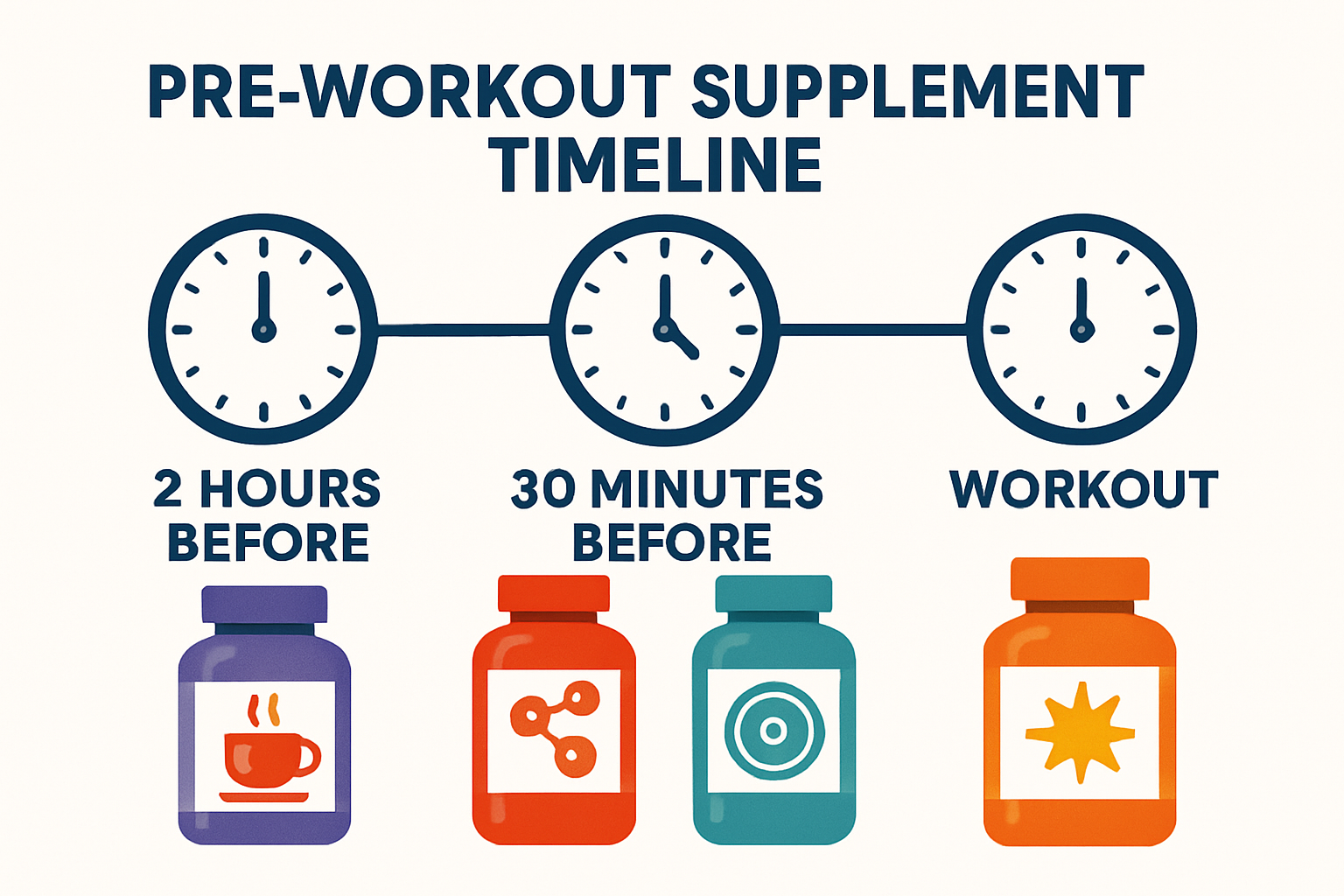
3-4 Hours Before: Large, balanced meal
- Include complex carbohydrates, lean protein, and minimal fat
- Example: Grilled chicken with quinoa and steamed vegetables
- This timing allows for complete digestion and optimal energy availability
1-2 Hours Before: Moderate snack or small meal
- Focus on easily digestible carbohydrates with some protein
- Example: Greek yogurt with berries and honey
- Avoid high-fiber or high-fat foods that may cause digestive issues
30-60 Minutes Before: Light, quick-digesting options
- Simple carbohydrates for immediate energy
- Example: Banana with a small amount of almond butter
- This is also the optimal window for most pre-workout supplements
Hydration Protocol
Proper hydration starts well before your workout. Follow this timeline:
- 2-3 hours before: 17-20 oz of water
- 20-30 minutes before: 8 oz of water
- During exercise: 7-10 oz every 10-20 minutes
- Post-exercise: 150% of fluid lost through sweat
For those following specific dietary approaches, understanding how nutrition timing fits with your weight loss diet plan can help optimize both performance and body composition goals.
Building Your Personalized Supplement Stack
Creating an effective supplement stack isn't about taking everything available – it's about selecting the right combination for your specific goals, experience level, and individual response patterns.
The Beginner's Foundation Stack
If you're new to supplements, start with these proven basics:
- Caffeine (100-200mg)
- Creatine Monohydrate (3g daily)
- Whey Protein (if needed to meet protein targets)
This simple stack provides the most bang for your buck and allows you to assess individual tolerance before adding more complex ingredients.
The Performance-Focused Stack
For intermediate to advanced trainees looking to maximize performance:
- Caffeine (200-400mg based on tolerance)
- Creatine Monohydrate (5g daily)
- Beta-Alanine (3-4g daily)
- Citrulline Malate (6-8g pre-workout)
- Rhodiola Rosea (300-400mg for stress adaptation)
The Endurance Athlete's Stack
For those focused on cardio workouts and endurance:
- Caffeine (200-300mg)
- Beta-Alanine (4-5g daily)
- Beetroot Juice (500ml, 2-3 hours before exercise)
- Sodium Bicarbonate (0.3g per kg body weight for events >1 minute)
Common Supplement Myths and Misconceptions
Let's address some persistent myths that continue to circulate in the fitness community:
Myth 1: "More is Always Better"
Reality: Most supplements follow a dose-response curve with diminishing returns. Taking mega-doses rarely provides additional benefits and may increase the risk of side effects.
Myth 2: "You Need to Cycle Creatine"
Reality: There's no scientific evidence supporting the need to cycle creatine. Continuous supplementation is safe and more effective than cycling on and off [3].
Myth 3: "Pre-Workout Supplements Are Necessary for Results"
Reality: While supplements can enhance performance, they're not mandatory for achieving fitness goals. A well-planned diet and training program are far more important than any supplement.
Myth 4: "Natural Pre-Workout Options Don't Work"
Reality: Whole food options like coffee, bananas, and beetroot juice can be highly effective pre-workout choices. Sometimes simple is better.
Safety Considerations and Red Flags
Before diving into any supplement regimen, it's crucial to understand potential risks and safety considerations.
When to Consult a Healthcare Provider
- Pre-existing medical conditions (especially heart, kidney, or liver issues)
- Current medications (many supplements can interact with prescription drugs)
- Pregnancy or breastfeeding
- Age under 18 or over 65
- History of eating disorders
Supplement Quality and Third-Party Testing
Not all supplements are created equal. Look for:
- NSF or Informed Sport certification
- Third-party testing for purity
- Clear ingredient labels
- Reputable manufacturers
- Avoid proprietary blends (you should know exactly what you're taking)
Red Flag Ingredients to Avoid
- DMAA (1,3-dimethylamylamine) – Banned by FDA
- Ephedra – Associated with serious cardiovascular events
- Synephrine in high doses – Can cause elevated heart rate and blood pressure
- Yohimbine HCl – Can cause anxiety and panic attacks in sensitive individuals
Natural Pre-Workout Alternatives
Not everyone needs or wants synthetic supplements. Here are evidence-based natural alternatives that can effectively enhance your workout performance.
Coffee: The Original Pre-Workout
A simple cup of coffee 30-45 minutes before exercise can provide:
- 95mg caffeine per 8oz cup
- Antioxidants and chlorogenic acids
- Improved fat oxidation
- Enhanced cognitive function
Beetroot Juice: Nature's Nitric Oxide Booster
Beetroot juice contains natural nitrates that convert to nitric oxide in the body, potentially:
- Improving blood flow
- Reducing oxygen cost of exercise
- Enhancing endurance performance
- Lowering blood pressure
Dosage: 500ml of beetroot juice 2-3 hours before exercise
Green Tea: The Gentle Energizer
Green tea provides a more moderate caffeine boost (25-50mg per cup) plus:
- L-theanine for calm focus
- EGCG for fat oxidation
- Antioxidants for recovery support
For those interested in incorporating more natural approaches, exploring delicious smoothie recipes can provide both nutrition and natural energy for workouts.
Optimizing Supplements for Different Training Goals
Your supplement strategy should align with your specific training objectives. Here's how to tailor your approach:
Strength and Power Training
Primary Focus: Maximizing force production and recovery between sets
Key Supplements:
- Creatine: Essential for ATP regeneration
- Caffeine: Enhances neural drive and reduces perceived exertion
- Beta-Alanine: Improves performance in the 1-4 minute range
Endurance Training
Primary Focus: Sustaining performance over extended periods
Key Supplements:
- Caffeine: Reduces perceived exertion and spares glycogen
- Beta-Alanine: Delays muscular fatigue
- Citrulline: Improves oxygen delivery to muscles
Weight Loss and Body Composition
Primary Focus: Maximizing calorie burn while preserving muscle mass
Key Supplements:
- Caffeine: Increases metabolic rate and fat oxidation
- Green Tea Extract: Additional thermogenic support
- Protein Powder: Helps maintain muscle during caloric restriction
For those specifically focused on weight loss, understanding how supplements fit into your overall weight loss workout strategy is crucial for success.
Pre-Workout Nutrition for Special Populations
Different groups may have unique considerations when it comes to pre-workout nutrition and supplementation.
Women's Specific Considerations
Women may need to consider:
- Iron status: Heavy menstruation can impact iron levels and energy
- Hormonal fluctuations: Performance and energy can vary throughout the menstrual cycle
- Calcium and vitamin D: Important for bone health, especially in weight-bearing activities
- Lower body weight: May require adjusted supplement dosages
Older Adults (50+)
As we age, several factors change:
- Decreased caffeine tolerance: May need lower doses
- Medication interactions: Higher likelihood of prescription drug use
- Slower metabolism: May need adjusted timing
- Bone health: Calcium and vitamin D become more critical
For women over 50, understanding how pre-workout nutrition fits with a weight loss diet for women over 50 can help optimize both health and fitness outcomes.
Vegetarians and Vegans
Plant-based athletes should pay special attention to:
- B12 supplementation: Critical for energy metabolism
- Iron status: Plant-based iron is less readily absorbed
- Creatine: Vegetarians typically have lower baseline creatine levels
- Complete protein sources: Ensuring adequate amino acid profiles
Monitoring and Adjusting Your Supplement Strategy
Creating an effective supplement routine requires ongoing monitoring and adjustment. Here's how to optimize your approach over time.
Tracking Key Metrics
Performance Indicators:
- Workout duration and intensity
- Strength gains and progression
- Energy levels throughout the day
- Sleep quality and recovery
Health Markers:
- Resting heart rate
- Blood pressure (if using stimulants)
- Digestive comfort
- Mood and anxiety levels
When to Adjust Your Stack
Consider modifying your supplement routine when:
- Tolerance develops: You need increasing doses for the same effect
- Side effects emerge: Jitters, sleep issues, or digestive problems
- Goals change: Shifting from strength to endurance training
- Life circumstances change: Increased stress, schedule changes, or aging
The Importance of Cycling
While not necessary for all supplements, some may benefit from periodic breaks:
- Caffeine: 1-2 week breaks every few months to reset tolerance
- Stimulant-based pre-workouts: Regular cycling prevents dependence
- Beta-alanine: Can be used continuously but some prefer 8-12 week cycles
Budget-Friendly Supplement Strategies
Effective supplementation doesn't have to break the bank. Here are strategies for maximizing value:
Priority Ranking by Cost-Effectiveness
- Creatine Monohydrate – Extremely cost-effective, proven results
- Caffeine tablets – Much cheaper than pre-workout formulas
- Whey protein – Cost-effective protein source
- Beta-alanine powder – More economical than capsules
DIY Pre-Workout Formula
Create your own cost-effective pre-workout:
- Caffeine tablet: 200mg ($0.05 per serving)
- Creatine powder: 5g ($0.10 per serving)
- Beta-alanine powder: 3g ($0.15 per serving)
- Citrulline powder: 6g ($0.25 per serving)
Total cost: ~$0.55 per serving vs. $1.50-3.00 for commercial pre-workouts
Buying in Bulk
- Purchase larger containers for better per-serving costs
- Split bulk orders with training partners
- Look for sales and stock up on stable supplements like creatine
The Future of Pre-Workout Supplementation
As we move through 2025, several trends are shaping the supplement industry:
Personalized Nutrition
Genetic testing is becoming more accessible, allowing for personalized supplement recommendations based on individual genetic variations in caffeine metabolism, creatine response, and other factors.
Sustainable and Clean Ingredients
There's a growing demand for:
- Organic and sustainably sourced ingredients
- Minimal processing and artificial additives
- Transparent supply chains
- Environmentally friendly packaging
Technology Integration
Smart supplements that adjust dosing based on:
- Sleep quality data
- Heart rate variability
- Training load and recovery metrics
- Environmental factors
Novel Ingredients
Emerging research is exploring:
- Nitrate-rich vegetables beyond beetroot
- Adaptogenic herbs for stress management
- Nootropics for cognitive enhancement
- Time-release formulations for sustained energy
Conclusion
Navigating the world of pre-workout supplements and nutrition doesn't have to be overwhelming. The key is starting with the fundamentals: proper timing, adequate hydration, and evidence-based supplements that align with your specific goals.
Remember that supplements are meant to supplement, not replace, a well-designed training program and balanced diet. Focus on the basics first – getting fit through consistent exercise and proper nutrition will always be more important than any supplement.
Your next steps:
- Assess your current routine – What's working and what isn't?
- Start simple – Begin with caffeine and creatine if you're new to supplements
- Track your response – Monitor how different supplements affect your performance and well-being
- Adjust gradually – Make one change at a time to identify what works for you
- Consult professionals – Work with healthcare providers and qualified nutritionists when needed
The supplement industry will continue to evolve, but the principles of safe, effective supplementation remain constant. Focus on quality, consistency, and individual response rather than chasing the latest trends. Your body will thank you for the thoughtful approach, and your fitness goals will be well within reach.
Whether you're just starting your fitness journey or looking to optimize an existing routine, remember that the best supplement strategy is one you can maintain consistently while supporting your overall health and well-being.
References
[1] Grand View Research. (2024). Sports Nutrition Market Size, Share & Trends Analysis Report.
[2] Grgic, J., et al. (2019). Wake up and smell the coffee: caffeine supplementation and exercise performance. British Journal of Sports Medicine, 53(5), 271-278.
[3] Kreider, R.B., et al. (2017). International Society of Sports Nutrition position stand: safety and efficacy of creatine supplementation in exercise, sport, and medicine. Journal of the International Society of Sports Nutrition, 14, 18.
SEO Meta Title: Pre-Workout & Supplements Guide 2025: Complete Nutrition Advice
SEO Meta Description: Complete pre-workout supplements guide with expert advice on nutrition timing, dosages, and evidence-based recommendations for peak performance in 2025.
Frequently Asked Questions
It’s best to have a balanced meal with carbohydrates and protein about 1-2 hours before exercising. This combination provides energy and helps improve performance.
Supplements can enhance your nutrition, but they are not strictly necessary. Focus on a balanced diet first; supplements can complement your efforts if needed.
Popular pre-workout supplements include caffeine for energy and beta-alanine for endurance. Always consult with a healthcare professional to find what works best for you.
Aim to drink about 16-20 ounces of water about two hours before your workout. Staying hydrated is key to optimal performance and recovery.
Working out on an empty stomach can be fine for some, especially for light exercises, but it may not provide enough energy for intense workouts. Listen to your body and find what feels best for you.
 DK Gets Fit Team