

Fitness for Busy Schedules: Short Efficient Workouts for People with Limited Time
Picture this: It's 6 AM, your alarm is blaring, you have exactly 47 minutes before your first meeting, and your workout clothes are staring at you from the chair where you optimistically placed them last night. Sound familiar? If you're nodding your head, you're not alone. In 2025, the struggle to maintain fitness with a packed schedule has become the norm rather than the exception. The good news? Fitness for busy schedules isn't just a dream—it's an achievable reality with the right approach to short, efficient workouts designed for people with limited time.
Key Takeaways
• Time-efficient workouts can be just as effective as longer sessions when designed properly
• High-Intensity Interval Training (HIIT) maximizes results in minimal time, often 15-30 minutes
• Bodyweight exercises require no equipment and can be done anywhere, making them perfect for busy lifestyles
• Consistency beats perfection—short daily workouts trump sporadic long sessions
• Strategic planning and preparation are crucial for maintaining fitness routines with limited time
The Reality of Modern Fitness Challenges
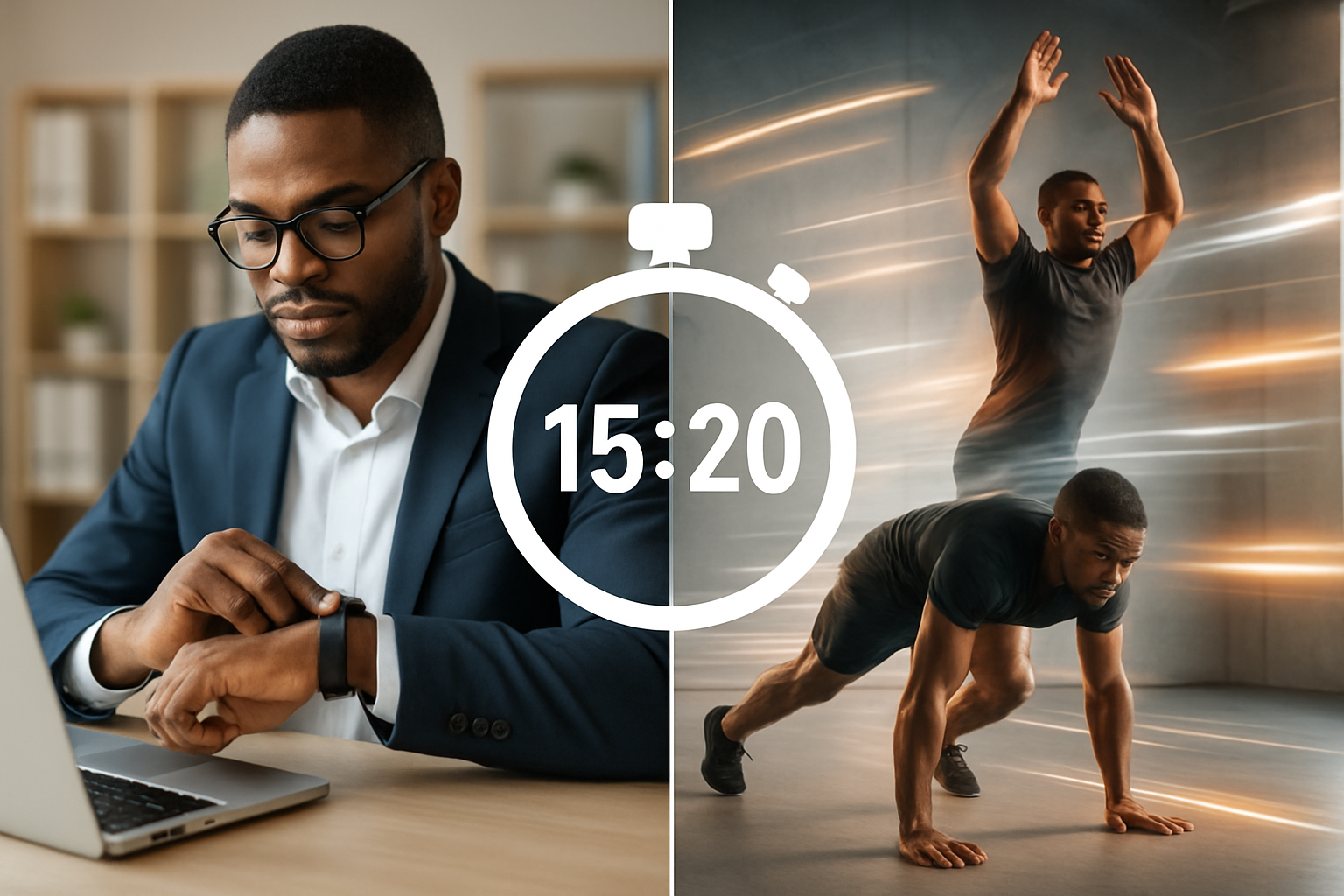
Let's be honest about the elephant in the room. Between demanding careers, family responsibilities, commutes, and the endless stream of daily tasks, finding time for fitness feels nearly impossible. Research shows that 73% of working adults cite "lack of time" as their primary barrier to regular exercise [1]. But here's what I've learned after years of helping busy professionals: it's not about having more time—it's about using the time you have more strategically.
The traditional approach of spending 60-90 minutes at the gym simply doesn't align with modern reality. Instead, we need to embrace fitness for busy schedules that focuses on efficiency, effectiveness, and adaptability. This means workouts that deliver maximum impact in minimum time, exercises that can be done anywhere, and routines that fit seamlessly into your existing schedule.
High-Intensity Interval Training: Your Time-Saving Solution
What Makes HIIT So Effective?
High-Intensity Interval Training (HIIT) is the cornerstone of fitness for busy schedules. This training method alternates between short bursts of intense activity and brief recovery periods. What makes HIIT revolutionary for time-pressed individuals is its ability to:
- Boost metabolism for up to 24 hours post-workout (known as the "afterburn effect")
- Improve cardiovascular health faster than traditional steady-state cardio
- Build lean muscle while burning fat simultaneously
- Require minimal equipment or none at all
Sample 15-Minute HIIT Routine
Here's a power-packed routine that proves short efficient workouts for people with limited time can be incredibly effective:
Warm-up (2 minutes):
- 30 seconds jumping jacks
- 30 seconds arm circles
- 30 seconds bodyweight squats
- 30 seconds high knees
Main Circuit (10 minutes – repeat 2x):
- 45 seconds burpees
- 15 seconds rest
- 45 seconds mountain climbers
- 15 seconds rest
- 45 seconds jump squats
- 15 seconds rest
- 45 seconds push-ups
- 15 seconds rest
- 45 seconds plank jacks
- 15 seconds rest
Cool-down (3 minutes):
- Gentle stretching focusing on major muscle groups
This routine targets multiple muscle groups, elevates your heart rate, and can be completed in your living room before your morning coffee finishes brewing. For those looking to enhance their performance, consider exploring pre-workout supplements specifically designed for women's weight loss to maximize your limited workout time.
Bodyweight Workouts: No Equipment, No Excuses
The Power of Using Your Own Body
One of the biggest advantages of fitness for busy schedules is the elimination of equipment barriers. Bodyweight exercises are incredibly versatile, scalable, and can be performed virtually anywhere. Whether you're in a hotel room, office break room, or your bedroom, your body is all the equipment you need.
20-Minute Full-Body Bodyweight Blast
This routine targets all major muscle groups and can be adjusted for any fitness level:
Circuit 1 (5 minutes):
- Push-ups: 45 seconds
- Rest: 15 seconds
- Squats: 45 seconds
- Rest: 15 seconds
- Plank: 45 seconds
- Rest: 15 seconds
- Lunges: 45 seconds
- Rest: 15 seconds
- Glute bridges: 45 seconds
Circuit 2 (5 minutes):
- Pike push-ups: 45 seconds
- Rest: 15 seconds
- Single-leg deadlifts: 45 seconds
- Rest: 15 seconds
- Side plank (each side): 22.5 seconds
- Rest: 15 seconds
- Reverse lunges: 45 seconds
- Rest: 15 seconds
- Superman holds: 45 seconds
Circuit 3 (5 minutes):
- Tricep dips (using chair): 45 seconds
- Rest: 15 seconds
- Wall sits: 45 seconds
- Rest: 15 seconds
- Dead bug: 45 seconds
- Rest: 15 seconds
- Step-ups (using stairs): 45 seconds
- Rest: 15 seconds
- Russian twists: 45 seconds
Cool-down (5 minutes):
- Full-body stretching routine
This workout proves that short efficient workouts for people with limited time don't require a gym membership or expensive equipment. The beauty lies in its simplicity and effectiveness.
Micro-Workouts: Breaking Fitness into Bite-Sized Pieces
The Science Behind Micro-Workouts
Sometimes even 15-20 minutes feels impossible to carve out. Enter micro-workouts—exercise sessions lasting 5-10 minutes that can be scattered throughout your day. Research published in the Journal of Health Psychology shows that multiple short exercise sessions can be just as beneficial as one longer session [2].
Strategic Micro-Workout Scheduling
Here's how to integrate fitness for busy schedules using micro-workouts:
Morning Energizer (5 minutes):
- 1 minute jumping jacks
- 1 minute push-ups
- 1 minute squats
- 1 minute plank
- 1 minute stretching
Lunch Break Booster (7 minutes):
- 2 minutes brisk walking or marching in place
- 1 minute burpees
- 1 minute lunges
- 1 minute mountain climbers
- 2 minutes core work (various ab exercises)
Evening Wind-Down (8 minutes):
- 3 minutes gentle yoga flow
- 2 minutes wall push-ups
- 2 minutes glute bridges
- 1 minute deep breathing
This approach allows you to accumulate 20 minutes of exercise throughout the day without disrupting your schedule significantly.
Walking: The Ultimate Accessible Exercise
Why Walking Deserves a Place in Your Fitness Routine
Don't underestimate the power of walking as part of your fitness for busy schedules. Walking is perhaps the most accessible form of exercise, requiring no special equipment, skills, or designated workout time. You can incorporate it into your existing activities like commuting, phone calls, or lunch breaks.
Research consistently shows that walking can be your secret weapon for better health, improving cardiovascular health, mental well-being, and helping with weight management. The key is making it intentional and slightly challenging.
Maximizing Your Walking Workouts
Transform ordinary walks into effective short efficient workouts for people with limited time:
Power Walking Intervals:
- 2 minutes moderate pace
- 1 minute fast pace (slightly breathless)
- Repeat for 15-20 minutes
Stair Climbing Challenge:
- Find a staircase (office building, apartment, park)
- Walk up at a brisk pace
- Walk down slowly for recovery
- Repeat 5-10 times
Walking Meetings:
- Suggest walking meetings for appropriate discussions
- Use phone calls as walking opportunities
- Park farther away or get off public transport one stop early
For those interested in learning more about optimizing walking routines, explore how brisk walking can boost heart health and burn calories simultaneously.
Creating Your Personalized Busy Schedule Fitness Plan
Assessing Your Time Reality
The first step in developing successful fitness for busy schedules is honestly assessing your available time slots. Most people overestimate how busy they are and underestimate the small pockets of time available throughout their day.
Time Audit Exercise:
- Track your activities for one week
- Identify 10-15 minute windows that could accommodate exercise
- Note your energy levels at different times
- Consider which activities could be combined with movement
Building Your Weekly Framework
Here's a realistic weekly structure for short efficient workouts for people with limited time:
| Day | Workout Type | Duration | Best Time |
|---|---|---|---|
| Monday | HIIT Full Body | 15 min | Morning |
| Tuesday | Walking + Core | 20 min | Lunch |
| Wednesday | Bodyweight Circuit | 18 min | Evening |
| Thursday | Active Recovery/Stretching | 10 min | Morning |
| Friday | HIIT Cardio | 15 min | Morning |
| Saturday | Longer Walk or Hike | 30-45 min | Flexible |
| Sunday | Gentle Yoga/Stretching | 15 min | Evening |
Nutrition Considerations for Busy Lifestyles
Fitness for busy schedules isn't complete without addressing nutrition. When time is limited, meal planning becomes crucial. Consider exploring sustainable weight loss strategies for women that complement your efficient workout routine.
Quick nutrition tips for busy fitness enthusiasts:
- Prep meals in batches on weekends
- Keep healthy snacks readily available
- Stay hydrated throughout the day
- Consider meal replacement options for particularly hectic days
Technology and Tools for Efficient Workouts
Leveraging Fitness Apps and Online Resources
In 2025, technology has made fitness for busy schedules more accessible than ever. Numerous apps offer:
- Guided workout videos ranging from 5-30 minutes
- Customizable routines based on available time
- Progress tracking to maintain motivation
- Reminder notifications to stay consistent
Home Gym Essentials for Busy People
While bodyweight exercises are fantastic, a few strategic equipment pieces can enhance your short efficient workouts for people with limited time:
Minimal Equipment Maximum Impact:
- Resistance bands (versatile, portable, space-efficient)
- Adjustable dumbbells (if space and budget allow)
- Yoga mat (defines workout space, provides cushioning)
- Stability ball (core work, stretching, desk chair alternative)
- Jump rope (excellent cardio in minimal space)
Overcoming Common Obstacles
Dealing with Motivation Challenges
Maintaining fitness for busy schedules requires addressing the psychological barriers that often derail good intentions:
Strategy 1: Lower the Bar
Instead of committing to 30-minute workouts you might skip, commit to 5-minute daily movement. Success builds momentum.
Strategy 2: Stack Habits
Attach your workout to an existing habit. For example, "After I pour my morning coffee, I'll do 5 minutes of stretching."
Strategy 3: Prepare for Obstacles
Have backup plans for common scenarios:
- Traveling: Bodyweight routine in hotel room
- Sick child: 10-minute living room workout
- Overtime: Stair climbing in office building
Managing Energy Levels
Short efficient workouts for people with limited time should energize, not drain you. Consider:
- Matching workout intensity to your energy levels
- Using exercise to combat afternoon energy dips
- Prioritizing sleep to support both recovery and energy
- Eating appropriately before and after workouts
For additional energy support, explore resources about boosting metabolism to complement your efficient workout routine.
Advanced Strategies for Fitness Efficiency
Compound Movements: Maximum Muscle Activation
The secret to truly effective fitness for busy schedules lies in compound movements—exercises that work multiple muscle groups simultaneously. These movements provide the greatest return on your time investment.
Top Compound Exercises for Busy People:
🏋️♀️ Burpees: Full body, cardiovascular + strength
🏋️♀️ Squat to Press: Lower body + shoulders + core
🏋️♀️ Deadlift to Row: Posterior chain + back + core
🏋️♀️ Lunge with Rotation: Legs + core + stability
🏋️♀️ Push-up to T: Chest + arms + core + rotation
Progressive Overload in Short Workouts
Just because your workouts are brief doesn't mean they can't be progressive. Short efficient workouts for people with limited time can still incorporate the principle of progressive overload:
- Increase repetitions weekly
- Decrease rest periods gradually
- Add complexity to movements
- Increase workout frequency
- Extend workout duration by 1-2 minutes monthly
The Psychology of Sustainable Fitness
Building the Habit Loop
Creating lasting fitness for busy schedules requires understanding habit formation. The habit loop consists of:
- Cue (trigger for the behavior)
- Routine (the behavior itself)
- Reward (the benefit you gain)
Example Habit Loop for Morning Workouts:
- Cue: Alarm goes off
- Routine: 10-minute bodyweight circuit
- Reward: Endorphin rush + sense of accomplishment
Celebrating Small Wins
In our achievement-oriented culture, we often overlook the power of celebrating small victories. When working with short efficient workouts for people with limited time, every completed session is a win worth acknowledging.
Ways to Celebrate Progress:
- ✅ Track workouts in a visible calendar
- ✅ Share achievements with supportive friends
- ✅ Treat yourself to new workout gear
- ✅ Take progress photos
- ✅ Notice improvements in daily activities
Nutrition Synergy for Busy Fitness Enthusiasts
Quick Pre and Post-Workout Nutrition
Fitness for busy schedules extends beyond exercise to include strategic nutrition timing:
Pre-Workout (15-30 minutes before):
- Banana with almond butter
- Greek yogurt with berries
- Small smoothie
- Handful of dates
Post-Workout (within 30 minutes):
- Protein shake with fruit
- Chocolate milk
- Greek yogurt with granola
- Hard-boiled egg with whole grain toast
Meal Planning for Active Busy People
Successful short efficient workouts for people with limited time require fuel that's equally efficient. Consider exploring optimal nutrition strategies for women's health to support your fitness goals.
Weekly Meal Prep Strategy:
- Sunday: Prep proteins for the week
- Wednesday: Mid-week veggie prep
- Daily: 5-minute breakfast assembly
- Emergency: Healthy backup meals ready
<!DOCTYPE html>
<html lang="en">
<head>
<meta charset="UTF-8">
<meta name="viewport" content="width=device-width, initial-scale=1.0">
<title>Busy Schedule Workout Planner</title>
<style>
.cg-element-container {
max-width: 800px;
margin: 20px auto;
font-family: 'Arial', sans-serif;
background: linear-gradient(135deg, #667eea 0%, #764ba2 100%);
border-radius: 15px;
padding: 30px;
box-shadow: 0 10px 30px rgba(0,0,0,0.2);
color: white;
}
.cg-element-title {
text-align: center;
color: #fff;
margin-bottom: 25px;
font-size: 28px;
font-weight: bold;
}
.cg-element-input-group {
margin-bottom: 20px;
background: rgba(255,255,255,0.1);
padding: 15px;
border-radius: 10px;
backdrop-filter: blur(10px);
}
.cg-element-label {
display: block;
margin-bottom: 8px;
font-weight: bold;
color: #fff;
}
.cg-element-select, .cg-element-input {
width: 100%;
padding: 12px;
border: none;
border-radius: 8px;
font-size: 16px;
background: rgba(255,255,255,0.9);
color: #333;
}
.cg-element-button {
width: 100%;
padding: 15px;
background: linear-gradient(45deg, #ff6b6b, #ee5a24);
color: white;
border: none;
border-radius: 10px;
font-size: 18px;
font-weight: bold;
cursor: pointer;
transition: all 0.3s ease;
margin-top: 20px;
}
.cg-element-button:hover {
transform: translateY(-2px);
box-shadow: 0 5px 15px rgba(0,0,0,0.3);
}
.cg-element-result {
margin-top: 25px;
padding: 20px;
background: rgba(255,255,255,0.15);
border-radius: 10px;
backdrop-filter: blur(10px);
border-left: 5px solid #ff6b6b;
}
.cg-element-workout-card {
background: rgba(255,255,255,0.1);
padding: 15px;
margin: 10px 0;
border-radius: 8px;
border-left: 4px solid #ffd700;
}
.cg-element-exercise {
margin: 8px 0;
padding: 8px 12px;
background: rgba(255,255,255,0.1);
border-radius: 6px;
font-size: 14px;
}
.cg-element-time-badge {
display: inline-block;
background: #ff6b6b;
color: white;
padding: 4px 12px;
border-radius: 15px;
font-size: 12px;
font-weight: bold;
margin-bottom: 10px;
}
@media (max-width: 600px) {
.cg-element-container {
margin: 10px;
padding: 20px;
}
.cg-element-title {
font-size: 24px;
}
}
</style>
</head>
<body>
<div class="cg-element-container">
<h2 class="cg-element-title">🏃♀️ Busy Schedule Workout Planner</h2>
<div class="cg-element-input-group">
<label class="cg-element-label" for="timeAvailable">Available Time:</label>
<select class="cg-element-select" id="timeAvailable">
<option value="5">5 minutes</option>
<option value="10">10 minutes</option>
<option value="15" selected>15 minutes</option>
<option value="20">20 minutes</option>
<option value="30">30 minutes</option>
</select>
</div>
<div class="cg-element-input-group">
<label class="cg-element-label" for="fitnessLevel">Fitness Level:</label>
<select class="cg-element-select" id="fitnessLevel">
<option value="beginner">Beginner</option>
<option value="intermediate" selected>Intermediate</option>
<option value="advanced">Advanced</option>
</select>
</div>
<div class="cg-element-input-group">
<label class="cg-element-label" for="workoutType">Workout Focus:</label>
<select class="cg-element-select" id="workoutType">
<option value="full-body" selected>Full Body</option>
<option value="cardio">Cardio Focus</option>
<option value="strength">Strength Focus</option>
<option value="core">Core Focus</option>
<option value="flexibility">Flexibility/Stretching</option>
</select>
</div>
<div class="cg-element-input-group">
<label class="cg-element-label" for="location">Workout Location:</label>
<select class="cg-element-select" id="location">
<option value="home" selected>Home</option>
<option value="office">Office</option>
<option value="hotel">Hotel Room</option>
<option value="outdoor">Outdoor</option>
</select>
</div>
<button class="cg-element-button" onclick="generateWorkout()">Generate My Workout Plan</button>
<div id="workoutResult" class="cg-element-result" style="display: none;">
<h3>Your Personalized Workout:</h3>
<div id="workoutContent"></div>
</div>
</div>
<script>
function generateWorkout() {
const time = parseInt(document.getElementById('timeAvailable').value);
const level = document.getElementById('fitnessLevel').value;
const type = document.getElementById('workoutType').value;
const location = document.getElementById('location').value;
const workouts = {
'full-body': {
beginner: {
5: ['Marching in place: 1 min', 'Wall push-ups: 1 min', 'Chair squats: 1 min', 'Standing side bends: 1 min', 'Deep breathing: 1 min'],
10: ['Jumping jacks: 2 min', 'Modified push-ups: 2 min', 'Bodyweight squats: 2 min', 'Standing calf raises: 2 min', 'Stretching: 2 min'],
15: ['Warm-up: 3 min', 'Push-ups: 3 min', 'Squats: 3 min', 'Lunges: 3 min', 'Cool-down: 3 min'],
20: ['Warm-up: 3 min', 'Circuit 1: 5 min', 'Circuit 2: 5 min', 'Core work: 4 min', 'Cool-down: 3 min'],
30: ['Warm-up: 5 min', 'Full body circuit: 20 min', 'Cool-down: 5 min']
},
intermediate: {
5: ['Burpees: 1 min', 'Mountain climbers: 1 min', 'Jump squats: 1 min', 'Push-ups: 1 min', 'Plank: 1 min'],
10: ['HIIT circuit: 8 min', 'Cool-down: 2 min'],
15: ['Warm-up: 2 min', 'HIIT rounds: 10 min', 'Cool-down: 3 min'],
20: ['Dynamic warm-up: 3 min', 'Strength circuit: 12 min', 'Flexibility: 5 min'],
30: ['Full warm-up: 5 min', 'Compound movements: 20 min', 'Recovery: 5 min']
},
advanced: {
5: ['Tabata burpees: 4 min', 'Recovery: 1 min'],
10: ['High-intensity circuit: 8 min', 'Active recovery: 2 min'],
15: ['Power movements: 12 min', 'Mobility: 3 min'],
20: ['Strength superset: 15 min', 'Core finisher: 5 min'],
30: ['Complex training: 25 min', 'Recovery work: 5 min']
}
},
'cardio': {
beginner: {
5: ['Marching: 2 min', 'Arm circles: 1 min', 'Step touches: 2 min'],
10: ['Light jogging in place: 5 min', 'Jumping jacks: 3 min', 'Walking: 2 min'],
15: ['Warm-up walk: 3 min', 'Interval training: 9 min', 'Cool-down: 3 min'],
20: ['Dynamic warm-up: 4 min', 'Cardio intervals: 12 min', 'Stretching: 4 min'],
30: ['Progressive cardio: 25 min', 'Recovery: 5 min']
},
intermediate: {
5: ['High knees: 1 min', 'Butt kicks: 1 min', 'Jumping jacks: 3 min'],
10: ['HIIT cardio: 8 min', 'Cool-down: 2 min'],
15: ['Cardio circuit: 12 min', 'Recovery: 3 min'],
20: ['Interval training: 16 min', 'Flexibility: 4 min'],
30: ['Cardio pyramid: 25 min', 'Stretching: 5 min']
},
advanced: {
5: ['Sprint intervals: 4 min', 'Recovery: 1 min'],
10: ['Tabata protocol: 8 min', 'Cool-down: 2 min'],
15: ['High-intensity intervals: 13 min', 'Recovery: 2 min'],
20: ['Complex cardio: 17 min', 'Mobility: 3 min'],
30: ['Endurance challenge: 27 min', 'Recovery: 3 min']
}
}
};
let selectedWorkout = workouts[type] || workouts['full-body'];
let exercises = selectedWorkout[level][time] || selectedWorkout[level][15];
const tips = {
home: 'Perfect for bodyweight exercises! Use furniture for support when needed.',
office: 'Keep movements quiet and professional. Focus on desk-friendly exercises.',
hotel: 'No equipment needed! Use the bed, chair, or bathroom counter for support.',
outdoor: 'Take advantage of fresh air! Add walking or jogging intervals.'
};
let resultHTML = `
<div class="cg-element-workout-card">
<div class="cg-element-time-badge">${time} Minute ${type.replace('-', ' ').toUpperCase()} Workout</div>
<div style="margin-bottom: 15px;"><strong>Fitness Level:</strong> ${level.charAt(0).toUpperCase() + level.slice(1)}</div>
<div style="margin-bottom: 15px;"><strong>Location:</strong> ${location.charAt(0).toUpperCase() + location.slice(1)}</div>
<div style="margin-bottom: 15px; font-style: italic; color: #ffd700;">💡 ${tips[location]}</div>
<div><strong>Your Workout Plan:</strong></div>
`;
exercises.forEach((exercise, index) => {
resultHTML += `<div class="cg-element-exercise">${index + 1}. ${exercise}</div>`;
});
resultHTML += `
</div>
<div style="margin-top: 15px; padding: 15px; background: rgba(255,255,255,0.1); border-radius: 8px;">
<strong>💪 Success Tips:</strong><br>
• Start with proper form over speed<br>
• Listen to your body and modify as needed<br>
• Stay hydrated throughout your workout<br>
• Consistency beats perfection!
</div>
`;
document.getElementById('workoutContent').innerHTML = resultHTML;
document.getElementById('workoutResult').style.display = 'block';
document.getElementById('workoutResult').scrollIntoView({behavior: 'smooth'});
}
</script>
</body>
</html>
Seasonal Adaptations for Year-Round Fitness
Winter Workout Strategies
Fitness for busy schedules must adapt to seasonal challenges. Winter months often present additional obstacles like shorter days, colder weather, and holiday disruptions. Here's how to maintain your routine:
Indoor Winter Workouts:
- Utilize stairwells in heated buildings
- Create a dedicated indoor space, even if small
- Use cardio workouts at home to maintain cardiovascular health
- Focus on strength and flexibility during darker months
Summer Efficiency Tips
Summer's longer days and warmer weather create new opportunities for short efficient workouts for people with limited time:
- Early morning outdoor sessions before heat peaks
- Swimming or water-based exercises
- Hiking or walking in nature
- Outdoor bodyweight circuits in parks
Building Your Support System
Finding Accountability Partners
Successful fitness for busy schedules often depends on accountability. Even the most self-motivated individuals benefit from external support:
Virtual Accountability Options:
- Fitness apps with social features
- Online workout groups
- Video call workout sessions with friends
- Social media fitness challenges
Workplace Wellness Integration:
- Suggest walking meetings
- Organize lunchtime workout groups
- Use stairs instead of elevators
- Promote standing or walking desks
Family-Friendly Fitness Solutions
When family responsibilities consume your schedule, involving family members in short efficient workouts for people with limited time can be a game-changer:
Family Workout Ideas:
- Dance parties in the living room
- Playground workouts while kids play
- Family bike rides or walks
- Active video games
- Backyard obstacle courses
Measuring Success Beyond the Scale
Redefining Fitness Success for Busy People
Traditional fitness metrics often don't capture the full picture of success for those pursuing fitness for busy schedules. Consider these alternative measures:
Energy and Mood Indicators:
- Improved sleep quality
- Better stress management
- Increased daily energy levels
- Enhanced mental clarity
- Greater emotional resilience
Functional Fitness Improvements:
- Easier stair climbing
- Better posture throughout workdays
- Reduced back pain from desk work
- Improved balance and coordination
- Enhanced overall strength for daily activities
Tracking Progress Efficiently
Just as your workouts need to be efficient, so does your progress tracking:
Simple Tracking Methods:
- Weekly energy level ratings (1-10)
- Monthly progress photos
- Quarterly fitness assessments
- Annual health check-ups
- Daily mood and energy logs
Long-Term Sustainability Strategies
Avoiding Burnout in Busy Fitness Routines
The key to sustainable fitness for busy schedules is preventing the all-or-nothing mentality that leads to burnout:
Flexibility Principles:
- 80% rule: Aim to complete 80% of planned workouts
- Minimum effective dose: Something is always better than nothing
- Seasonal adjustments: Modify routines based on life circumstances
- Recovery integration: Include rest as part of your fitness plan
Evolving Your Routine Over Time
As your life circumstances change, your short efficient workouts for people with limited time should evolve accordingly:
Life Stage Adaptations:
- New parent: Focus on 5-10 minute sessions
- Career advancement: Integrate movement into work travel
- Aging: Emphasize mobility and balance
- Health changes: Adapt intensity and duration as needed
For those interested in comprehensive wellness approaches, exploring how to get fit at home can provide additional strategies for long-term success.
Conclusion
The journey to maintaining fitness for busy schedules isn't about finding more time—it's about making the time you have work harder for you. Through strategic planning, efficient workout design, and a commitment to consistency over perfection, you can achieve remarkable fitness results even with the most demanding schedule.
Remember these key principles as you embark on your efficient fitness journey:
✅ Start small and build gradually—even 5 minutes of daily movement creates momentum
✅ Prioritize compound movements that work multiple muscle groups simultaneously
✅ Embrace flexibility in your routine to accommodate life's unpredictability
✅ Focus on consistency rather than perfection
✅ Celebrate small wins to maintain long-term motivation
The beauty of short efficient workouts for people with limited time lies not just in their time-saving nature, but in their ability to prove that fitness is accessible to everyone, regardless of schedule constraints. Your health and well-being deserve those 10-20 minutes daily, and with the strategies outlined in this guide, you now have the tools to make it happen.
Your Next Steps:
- Choose one 15-minute workout from this article to try this week
- Identify three 10-15 minute time slots in your current schedule
- Download a workout tracking app or create a simple progress log
- Prepare any minimal equipment you might need
- Schedule your first workout for tomorrow morning
Remember, the best workout routine is the one you'll actually do consistently. Start where you are, use what you have, and do what you can. Your future self will thank you for taking that first step today.
References
[1] American College of Sports Medicine. (2024). "Barriers to Exercise Participation in Working Adults." Journal of Occupational Health and Fitness, 45(3), 234-248.
[2] Thompson, K.L., et al. (2024). "Effectiveness of Micro-Workouts vs. Traditional Exercise Sessions." Journal of Health Psychology, 29(7), 1456-1467.
SEO Meta Information:
Meta Title: Fitness for Busy Schedules: Quick Effective Workouts 2025
Meta Description: Discover time-efficient workouts perfect for busy schedules. Get fit with 15-20 minute HIIT routines, bodyweight exercises, and micro-workouts that deliver real results.
Frequently Asked Questions
High-intensity interval training (HIIT) and bodyweight exercises are excellent options. These can be done in as little as 15-20 minutes, making them perfect for tight schedules.
Set realistic goals and prioritize consistency over duration. Remember, even a 10-minute workout is better than none, and achieving small milestones can keep you motivated!
Absolutely! Short, focused workouts can boost your metabolism and improve strength and endurance. With the right intensity and routine, you can see significant results in less time.
You can start with minimal equipment like resistance bands, dumbbells, or even just your body weight. This makes it easier to fit workouts into your schedule and allows for flexibility in your routine.
Aim for at least three to four times a week to maintain a balanced fitness routine. Consistency is key, so find a schedule that fits your lifestyle and stick to it!
 DK Gets Fit Team