


When Is the Best Time to Exercise to Lose Weight: The Science-Backed Guide to Optimal Workout Timing

Picture this: two people follow identical workout routines and diets, but one exercises at 7 AM while the other hits the gym at 7 PM. Surprisingly, research shows they might see dramatically different weight loss results. The timing of your exercise could be the missing piece in your weight-loss puzzle, and understanding when to exercise to lose weight might just transform your fitness journey.
Key Takeaways
• Morning workouts (6-8 AM) are most effective for rapid fat burning and reducing cholesterol levels
• Afternoon exercise (2-6 PM) maximizes physical performance when body temperature peaks
• Evening workouts may provide better fat metabolism and blood sugar control for some individuals
• Consistency matters more than timing – the best workout time is when you can stick to your routine
• Individual factors like age, fitness level, and health goals should guide your optimal exercise timing
The Science Behind Exercise Timing and Weight Loss 🕐
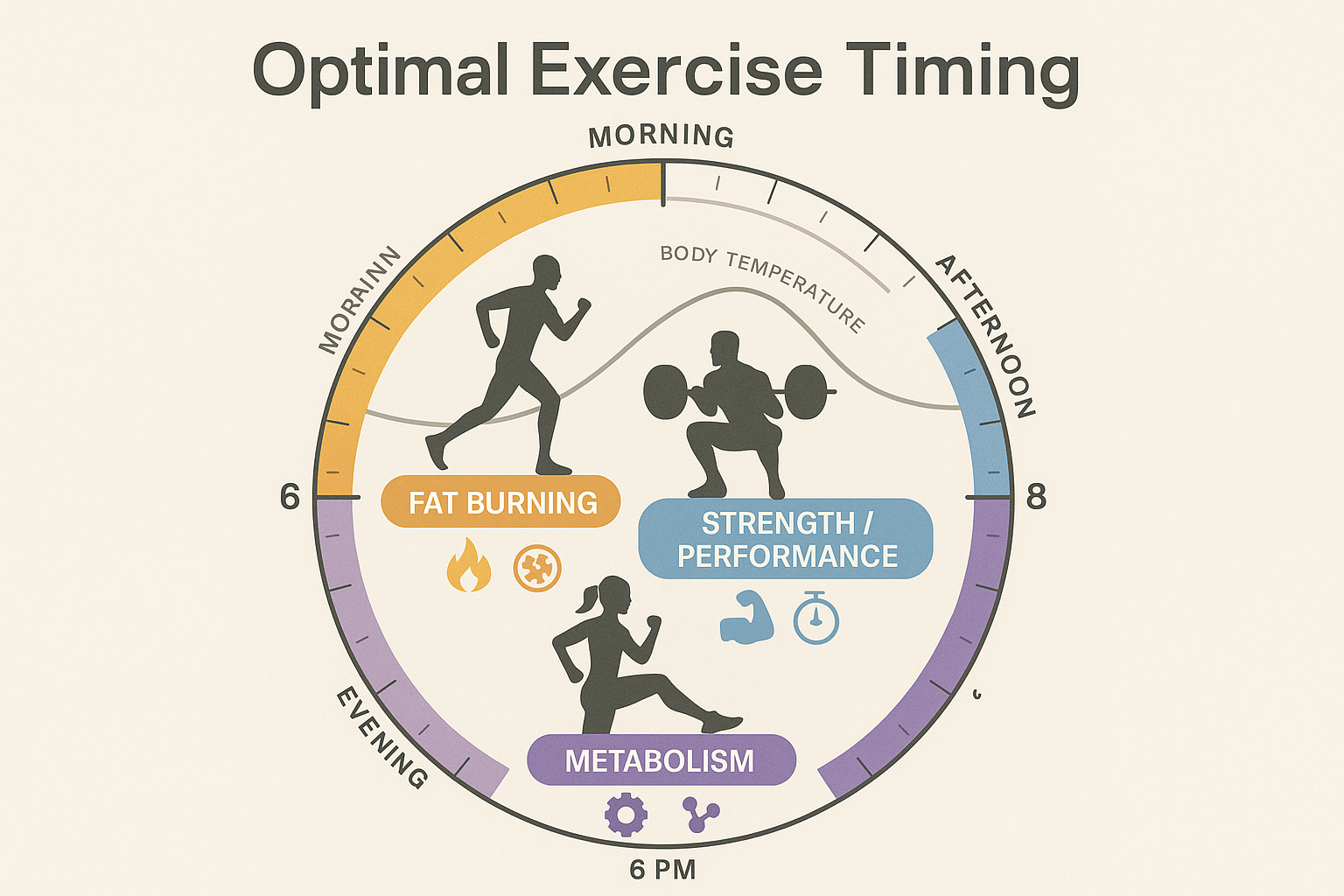
When considering when to exercise to lose weight, it’s essential to understand how our bodies respond differently throughout the day. Our circadian rhythms – the internal biological clock that regulates sleep, hormone production, and metabolism – play a crucial role in determining when our bodies are primed for physical activity.
Research has revealed fascinating insights into the timing of exercise. A comprehensive study of 5,285 people found that those who exercised between 7-9 AM had significantly lower waist circumference and body mass index compared to midday or evening exercisers. This suggests that morning workouts may offer distinct advantages for weight management.
The body’s core temperature fluctuates throughout the day, typically reaching its lowest point in early morning and peaking in late afternoon. This temperature variation affects muscle function, flexibility, and overall exercise performance. When body temperature is higher, muscles contract more efficiently, and oxygen delivery to working muscles improves.
Hormonal fluctuations also influence exercise effectiveness. Cortisol levels peak in the morning, which can enhance fat burning when combined with exercise. Growth hormone, crucial for muscle development and fat metabolism, follows its own daily rhythm that can be optimized through strategic workout timing.
For those interested in maximizing their morning routine, incorporating walking workouts can be an excellent starting point that aligns with the body’s natural rhythms.
Morning Workouts: The Fat-Burning Power Hour ☀️
Morning exercise, particularly between 6-8 AM, has emerged as a champion for weight loss in multiple research studies. When you wake up, your body has been fasting for 8-12 hours, meaning glycogen stores are depleted. This creates an ideal environment for fat burning, as your body must tap into fat reserves for energy.
Benefits of Morning Exercise for Weight Loss:
- Enhanced fat oxidation: Lower glycogen levels force the body to burn fat for fuel
- Improved insulin sensitivity: Morning workouts help regulate blood sugar throughout the day
- Metabolic boost: Exercise-induced metabolic elevation lasts longer when performed in the morning
- Better sleep quality: Morning exercise helps regulate circadian rhythms for improved nighttime rest
- Consistency advantage: Fewer scheduling conflicts in early morning hours
Research findings show that morning exercisers experience more significant reductions in plasma cholesterol and triglycerides. The combination of fasted cardio and optimal hormone levels creates a perfect storm for accelerated weight loss.
However, morning workouts aren’t without challenges. Body temperature is lowest upon waking, which means muscles are stiffer and the risk of injury may be slightly higher. A proper warm-up becomes even more critical for morning exercisers.
Those new to morning exercise might benefit from starting with gentle walking routines before progressing to more intense activities. This approach helps the body adapt while still capitalizing on morning fat-burning advantages.
Morning Workout Tips:
- Hydrate immediately upon waking to combat overnight dehydration
- Extend warm-up time to compensate for lower body temperature
- Start gradually if transitioning from evening workouts
- Prepare the night before to minimize morning decision-making
- Consider light pre-workout fuel if exercising for more than 60 minutes
Afternoon Excellence: Peak Performance Window 🌞
The afternoon hours, specifically between 2 and 6 PM, are when the human body reaches its peak physical performance. During this window, body temperature peaks, creating optimal conditions for strength, power, and endurance activities.
Why Afternoon Exercise Excels:
Body temperature optimization: Higher core temperature means muscles are more pliable, reducing injury risk and improving performance. Research indicates people feel approximately 20% stronger during peak body temperature hours.
Enhanced lung function: Respiratory efficiency improves in the afternoon, allowing for better oxygen delivery to working muscles. This translates to improved endurance and the ability to sustain higher exercise intensities.
Optimal flexibility: Joint mobility and muscle elasticity reach daily peaks during afternoon hours, making it an ideal time for activities requiring a range of motion.
Cardiovascular readiness: Heart rate variability and blood pressure patterns align favorably for exercise during mid-to-late afternoon hours.
A significant study found that afternoon exercise, particularly around 3 PM, provided the most pronounced benefits for reducing heart disease risk and early death, especially in men and seniors. This timing advantage appears related to the body’s natural performance rhythms.
For those looking to maximize afternoon workouts, incorporating high-intensity cardio routines during this peak performance window can yield exceptional results.
Afternoon Workout Strategies:
- Schedule strength training when muscles are naturally strongest
- Plan high-intensity sessions to capitalize on peak performance
- Focus on skill-based activities when coordination is optimal
- Time pre-workout nutrition 1-2 hours before exercise
- Stay hydrated, as the afternoon heat can increase fluid needs
Evening Exercise: Metabolic Magic After Dark 🌙
Evening workouts, particularly around 6:30 PM, have gained attention for their unique metabolic benefits. While conventional wisdom once suggested avoiding late-day exercise, recent research reveals compelling advantages for weight loss and metabolic health.
Evening Exercise Advantages:
Superior fat metabolism: Studies involving overweight and obese men aged 30-45 found that evening exercise on a high-fat diet improved fat metabolism and blood sugar control compared to morning sessions.
Improved oxygen uptake: In the evening, oxygen uptake kinetics are more favorable, allowing the body to use fuel more efficiently during exercise. This enhanced efficiency can lead to greater caloric burn and improved endurance.
Stress relief benefits: Evening workouts provide an excellent outlet for daily stress, potentially reducing cortisol levels that can interfere with weight loss.
Extended afterburn: The post-exercise metabolic boost from evening workouts can continue into sleep hours, potentially enhancing overnight fat burning.
However, timing becomes crucial with evening exercise. Working out too close to bedtime can interfere with sleep quality, which is essential for weight management and recovery.
For women specifically, evening workouts can be enhanced with appropriate pre-workout supplementation that supports energy and fat burning without disrupting sleep patterns.
Evening Workout Guidelines:
- Finish exercise 3-4 hours before bedtime to avoid sleep disruption
- Focus on moderate-intensity activities if exercising within 2 hours of sleep
- Include proper cool-down routines to help the body transition toward rest
- Monitor caffeine intake from pre-workout supplements in evening sessions
- Consider relaxing activities like yoga or stretching for very late sessions
Consistency vs. Timing: What Matters Most? ⚖️
While research provides compelling evidence for optimal exercise timing, the most critical factor for weight loss success remains consistency. A workout performed regularly at a “suboptimal” time will consistently outperform sporadic exercise at the “perfect” time.
The Consistency Principle:
Habit formation: Regular exercise at the same time daily helps establish strong neural pathways that make workouts feel automatic rather than forced.
Metabolic adaptation: The body adapts to regular exercise patterns, becoming more efficient at burning calories and building muscle regardless of timing.
Lifestyle integration: Sustainable weight loss requires exercise routines that fit seamlessly into daily life, which varies significantly among individuals.
Long-term adherence: Research consistently shows that people who maintain exercise routines for years prioritize convenience and enjoyment over theoretical optimization.
Finding Your Optimal Time:
Consider these personal factors when determining when is the best time to exercise to lose weight for your unique situation:
- Natural energy patterns: Are you naturally energetic in the morning or evening?
- Work schedule: When do you have the most reliable free time?
- Family obligations: What time allows for consistent, uninterrupted workouts?
- Sleep preferences: How does exercise timing affect your sleep quality?
- Social factors: When can you exercise with friends or family for motivation?
For those struggling to establish consistency, starting with home-based cardio workouts can remove barriers and make it easier to maintain regular exercise regardless of timing.
Special Considerations for Different Demographics 👥
Women’s Exercise Timing Considerations
Women face unique considerations when determining optimal exercise timing due to hormonal fluctuations throughout the menstrual cycle. Estrogen and progesterone levels affect energy, strength, and fat-burning capacity.
Follicular phase (days 1-14): Higher estrogen levels may enhance morning workout effectiveness and carbohydrate utilization.
Luteal phase (days 15-28): Increased progesterone might make evening workouts more comfortable and improve fat oxidation.
Women over 50 face additional considerations related to menopause and changing metabolism. A comprehensive approach combining exercise timing with appropriate nutrition strategies becomes even more critical.
Age-Related Timing Factors
Young adults (18-30): Generally adapt well to any exercise timing but may benefit from evening workouts due to naturally delayed circadian rhythms.
Middle-aged adults (30-50): Often find morning workouts more sustainable as family and work responsibilities increase.
Seniors (50+): May experience the greatest benefits from afternoon exercise when body temperature and joint mobility are optimal, reducing injury risk.
Fitness Level Considerations
Beginners: Should prioritize consistency over timing optimization, choosing whatever time allows for regular exercise.
Intermediate: Can begin experimenting with timing to enhance results while maintaining established routines.
Advanced: May benefit from periodizing workout timing based on specific training goals and competition schedules.
Combining Exercise Timing with Nutrition Strategies 🍎
The relationship between exercise timing and nutrition creates powerful synergies for weight loss. When you eat relative to when you exercise can significantly impact results.
Pre-Exercise Nutrition Timing:
Morning workouts: Consider fasted cardio for enhanced fat burning, or consume a small amount of easily digestible carbohydrates if energy is low.
Afternoon workouts: Eat a balanced meal 2-3 hours prior, or a light snack 30-60 minutes before exercise.
Evening workouts: Time dinner appropriately to fuel performance without causing digestive discomfort.
Post-Exercise Nutrition:
The post-workout nutrition window remains essential regardless of the timing of exercise. Consuming protein and carbohydrates within 2 hours of exercise supports recovery and muscle protein synthesis.
For comprehensive nutrition support, exploring evidence-based weight loss diet strategies can complement optimal exercise timing for maximum results.
Time-Restricted Eating Considerations:
Research shows that combining time-restricted eating (an 8-hour eating window) with regular exercise produces greater fat loss without sacrificing lean muscle mass compared to exercise alone. The timing of both eating and exercise windows can be coordinated for enhanced benefits.
Creating Your Personalized Exercise Schedule 📅
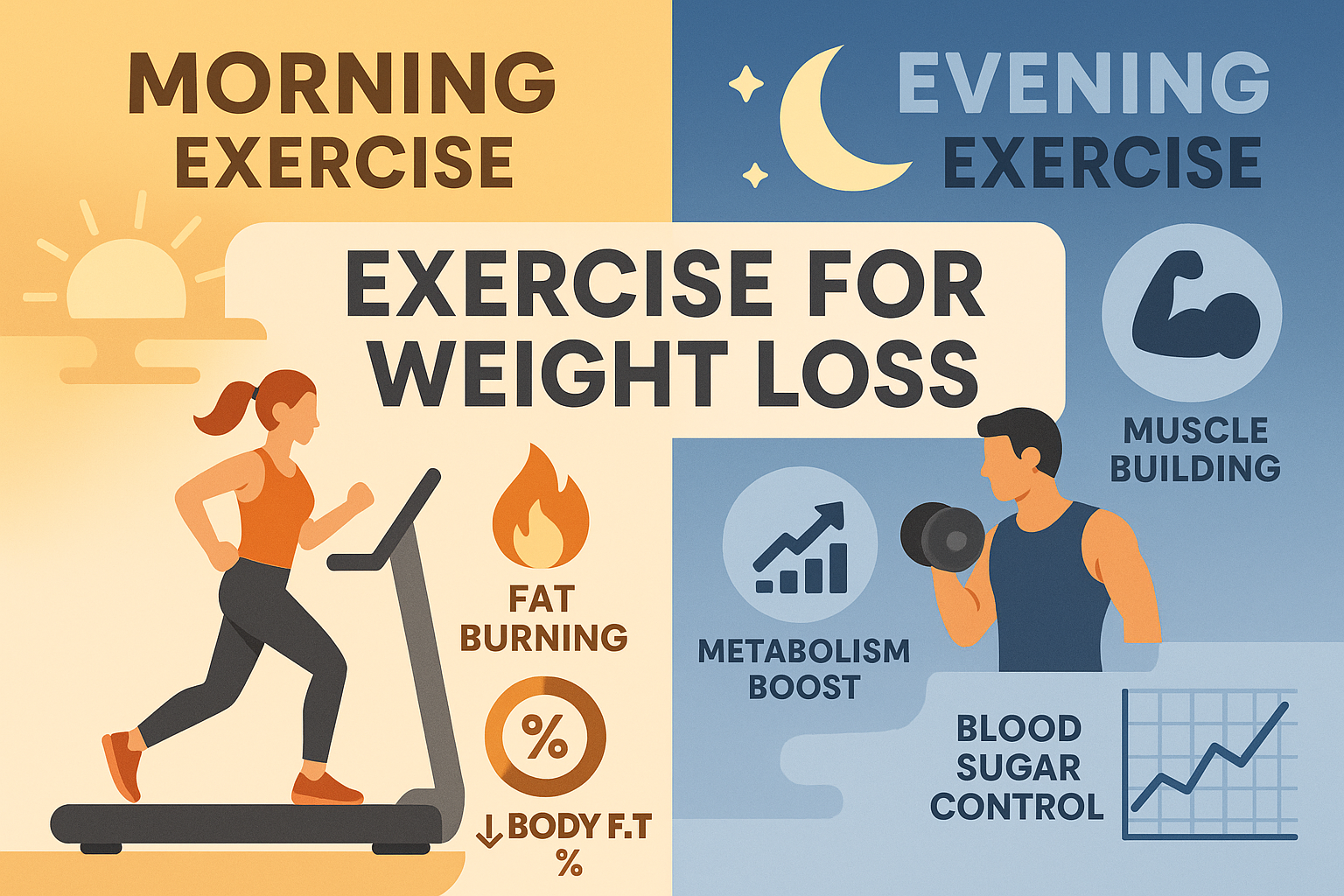
Developing an effective exercise schedule requires balancing scientific evidence with personal preferences and practical constraints. Here’s a framework for creating your optimal routine:
Step 1: Assess Your Current Patterns
- Track your natural energy levels throughout the day for one week
- Note when you feel most motivated to exercise
- Identify your most consistent available time slots
- Consider your current sleep and meal timing
Step 2: Experiment with Different Times
- Try morning workouts for 2 weeks, tracking energy and results
- Test afternoon sessions for 2 weeks, noting performance differences
- Experiment with evening exercise for 2 weeks, monitoring sleep impact
Step 3: Evaluate and Adjust
- Compare how you felt during each timing period
- Assess which timing produced the best adherence
- Consider any changes in sleep quality, energy, or mood
- Factor in practical considerations like family schedule and work demands
Sample Weekly Schedule Options:
Morning Focused (6:30-7:30 AM):
- Monday: Cardio workout
- Tuesday: Strength training
- Wednesday: Active recovery walk
- Thursday: HIIT session
- Friday: Full-body strength
- Weekend: Longer outdoor activities
Afternoon Optimized (3:00-4:00 PM):
- Monday: High-intensity strength training
- Tuesday: Cardio intervals
- Wednesday: Flexibility and mobility
- Thursday: Compound strength movements
- Friday: Sport-specific activities
- Weekend: Extended endurance activities
Evening Balanced (6:00-7:00 PM):
- Monday: Moderate cardio
- Tuesday: Upper body strength
- Wednesday: Yoga or stretching
- Thursday: Lower body strength
- Friday: Fun group fitness class
- Weekend: Recreational activities
Troubleshooting Common Timing Challenges 🔧
Challenge: “I’m Not a Morning Person”
Solution: Gradually shift your schedule 15 minutes earlier each week. Prepare workout clothes the night before and use a sunrise alarm clock to ease the transition.
Challenge: “Afternoon Workouts Interfere with Work”
Solution: Consider lunch-hour sessions, walking meetings, or desk exercises. Even 20-30 minutes can be beneficial.
Challenge: “Evening Exercise Keeps Me Awake”
Solution: Finish workouts 3+ hours before bedtime, focus on moderate intensity, and include relaxation techniques in your cool-down.
Challenge: “My Schedule is Unpredictable”
Solution: Develop short backup routines for different times of day. Having 15, 30, and 45-minute options increases flexibility.
Challenge: “I Travel Frequently”
Solution: Create portable routines that work in hotel rooms or small spaces. Bodyweight exercises and walking programs adapt well to travel.
The Role of Sleep in Exercise Timing 😴
Sleep quality and exercise timing share a bidirectional relationship that significantly affects weight-loss success. Poor sleep can derail even the best exercise routine, while inappropriate timing of exercise can disrupt sleep patterns.
How Exercise Timing Affects Sleep:
- Morning exercise: Generally improves sleep quality and helps regulate circadian rhythms
- Afternoon exercise: Usually has neutral to positive effects on sleep
- Late evening exercise: May delay sleep onset and reduce sleep quality
How Sleep Quality Affects Exercise Performance:
- Poor sleep: Reduces motivation, impairs performance, and increases injury risk
- Quality sleep: Enhances recovery, improves energy, and supports consistent exercise habits
For those struggling with sleep issues, understanding optimal sleep requirements is crucial to supporting exercise goals and weight-loss efforts.
Advanced Timing Strategies for Accelerated Results ⚡
Periodized Exercise Timing
Advanced exercisers can manipulate workout timing throughout the week to optimize different adaptations:
Monday/Wednesday/Friday: Morning fasted cardio for fat burning
Tuesday/Thursday: Afternoon strength training for maximum performance
Saturday: Longer endurance activities when time allows
Sunday: Evening gentle activities for recovery and stress relief
Seasonal Timing Adjustments
Consider adjusting exercise timing based on seasonal factors:
Summer: Earlier morning or later evening to avoid heat
Winter: Afternoon workouts when vitamin D synthesis is possible
Daylight Saving Time: Gradual adjustment periods to maintain consistency
Competition-Specific Timing
Athletes and competitive fitness enthusiasts should time training sessions to align with competition schedules, gradually adjusting their circadian rhythms for optimal performance.
Technology and Tracking for Optimal Timing 📱
Modern technology can help optimize exercise timing through:
Fitness Trackers and Smartwatches:
- Heart rate variability monitoring to identify optimal training times
- Sleep tracking to understand how exercise timing affects rest
- Activity reminders to maintain consistency
Apps and Tools:
- Circadian rhythm tracking apps
- Workout scheduling and reminder systems
- Progress tracking to compare different timing strategies
Biometric Monitoring:
- Body temperature tracking devices
- Continuous glucose monitors for metabolic insights
- Stress level monitoring to optimize workout timing
Conclusion: Finding Your Perfect Exercise Timing Sweet Spot
Understanding when is the best time to exercise to lose weight involves balancing scientific evidence with personal preferences, lifestyle constraints, and individual biology. While research provides valuable insights about optimal timing windows, the most important factor remains consistency in your exercise routine.
Morning workouts excel for fat burning and establishing consistent habits, particularly beneficial for those seeking rapid body composition changes. Afternoon sessions capitalize on peak physical performance when your body is primed for strength and endurance activities. Evening exercise offers unique metabolic benefits and stress relief, though timing relative to bedtime requires careful consideration.
The key to success lies in experimenting with different timing options while prioritizing adherence above all else. A consistent workout routine will consistently outperform sporadic exercise at the theoretically “perfect” time.
Your Next Steps:
- Assess your current schedule and identify 2-3 potential workout windows
- Experiment for 2 weeks with each timing option, tracking energy, performance, and adherence
- Choose the timing that feels most sustainable and enjoyable
- Gradually optimize your routine based on results and lifestyle changes
- Stay flexible and adjust as needed while maintaining consistency
Remember, the journey to weight loss success is highly individual. Whether you’re incorporating walking workouts into your morning routine, maximizing afternoon performance with strength training, or finding evening balance with gentle activities, the best exercise timing is the one that you’ll stick with long-term.
Your weight loss journey is unique, and finding the optimal exercise timing is just one piece of the puzzle. Combined with appropriate nutrition strategies and consistent effort, the right workout timing can accelerate your progress toward a healthier, stronger you.
References
[1] Chtourou, H., & Souissi, N. (2012). The effect of training at a specific time of day: A review. Journal of Strength and Conditioning Research, 26(7), 1984-2005.
[2] Brooker, P. G., et al. (2019). Morning exercise reduces abdominal fat and blood pressure in women; evening exercise increases muscular performance in women and lowers blood pressure in men. Frontiers in Physiology, 10, 1648.
[3] Savikj, M., et al. (2019). Afternoon exercise is more efficacious than morning exercise at improving blood glucose levels in individuals with type 2 diabetes. Diabetologia, 62(2), 233-237.
[4] Albalak, G., et al. (2022). Timing of objectively-collected physical activity in relation to body weight and metabolic health in sedentary older adults. International Journal of Obesity, 46(3), 515-522.
[5] Schroeder, E. C., et al. (2015). Comparative effectiveness of aerobic, resistance, and combined training on cardiovascular disease risk factors. PLoS One, 10(5), e0124097.
Frequently Asked Questions
Yes, some studies suggest that exercising in the morning can enhance fat burning, while others indicate that performance peaks in the afternoon. Ultimately, the best time is when you feel most energized and can commit consistently.
Exercising on an empty stomach, or ‘fasted cardio’, may help some people burn fat. However, it’s essential to listen to your body and ensure you have enough energy for effective workouts.
Absolutely! Working out in the evening can be just as effective for weight loss, especially if that’s when you feel most motivated and can focus. The key is finding a routine that fits your lifestyle.
Aim for at least 150 minutes of moderate aerobic activity each week, combined with strength training. Consistency and combining different types of exercise are essential for sustainable weight loss.
Many women find that their energy levels fluctuate with their menstrual cycle. Adjusting your workout intensity and timing based on how you feel can enhance your performance and motivation.
