

Strength Training for Women: Unleashing the Power Within
Picture this: You walk into a gym, and instead of feeling intimidated by the weight section, you feel a surge of excitement. Your hands grip the barbell with confidence, and as you complete your set, you realize something profound—you’re not just building muscle, you’re building an entirely new version of yourself. This is the transformative power of strength training for women, and I’m here to tell you that this journey is one of the most rewarding adventures you’ll ever embark on.
Strength training for women isn’t just about physical transformation; it’s about reclaiming your power, boosting your health, and discovering capabilities you never knew existed. Whether you’re a busy mom, a career professional, or someone who’s never touched a dumbbell, this comprehensive guide will show you exactly why strength training deserves a central place in your fitness routine.
Key Takeaways
💪 Muscle builds metabolism: Strength training increases lean muscle mass, which burns more calories even at rest, helping you maintain a healthy weight throughout your life.
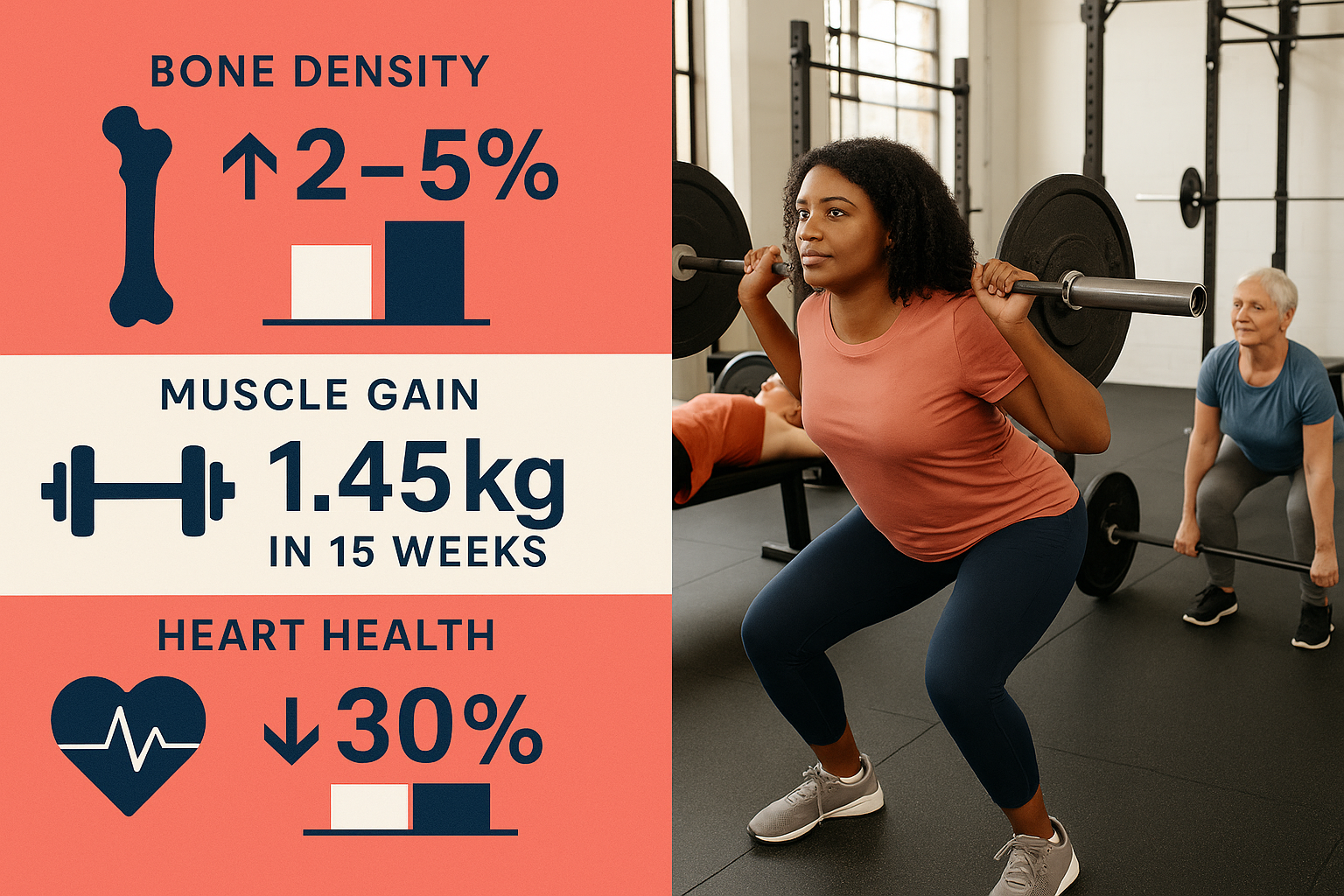
🦴 Bone density protection: Regular resistance training can increase hip and spine bone density by 2-5% in just 12 months, providing crucial protection against osteoporosis [1].
❤️ Heart health benefits: Women who lift weights at least once weekly show over 30% reduction in heart disease mortality risk [2].
🧠 Mental wellness boost: Strength training reduces anxiety and depression comparable to mild-to-moderate treatment approaches, working for women of all ages [3].
⏰ Anti-aging effects: Just 90 minutes per week of strength training correlates with approximately 4 years less biological aging [4].
Why Strength Training for Women Is a Game-Changer
Let me be honest with you—for years, I believed the myth that lifting weights would make me “bulky” or “masculine.” I stuck to cardio and light yoga, thinking that was enough. But when I finally picked up my first set of dumbbells at age 32, everything changed. Not only did I not become bulky, but I became stronger, more confident, and healthier than I’d ever been.
Strength training helps you cultivate a sense of discipline and dedication, qualities that spill over into other areas of your life. When you commit to a resistance training regimen, you’re also committing to self-improvement, which can boost your self-esteem and mental resilience. Moreover, as you track your progress and see measurable improvements—whether it’s adding 5 more pounds to your squat or completing an extra rep—you’ll gain a profound sense of accomplishment.
This journey of self-discovery and empowerment is a unique aspect of strength training that resonates deeply with many women. It’s not just about how you look; it’s about how you feel, how you move through the world, and how you approach challenges both in and out of the gym.
If you’re looking to start your fitness journey, check out this comprehensive guide on how to get fit that complements strength training perfectly.
The Science-Backed Benefits of Strength Training for Women
Let’s dive deep into what makes resistance training so potent for women’s health. These aren’t just feel-good claims—they’re backed by solid research that demonstrates the remarkable impact of lifting weights.
🔥 Metabolic Boost and Body Composition
Did you know that muscle burns more calories than fat, even when you’re just lounging on the couch? It’s true! By incorporating strength training into your routine, you can rev up your metabolism and keep those pesky calories in check. This is particularly beneficial for women aiming to manage their weight or enhance their body composition.
Research shows that lean muscle mass gains are visible within just 4 weeks of consistent resistance training [5]. Even better? Women can build as much muscle as men with consistent training—15 weeks of resistance training yields approximately 1.45 kg (3.2 lbs) of lean muscle gain [6]. That’s significant progress in less than four months!
A higher metabolism means you can enjoy your favorite foods in moderation without the same level of guilt or worry. Plus, as you build muscle, your body composition improves, leading to a more toned, defined appearance—not the bulky look many women fear.
🦴 Building Unbreakable Bones
As women, we need to pay extra attention to our bone health, especially as we age. Here’s where strength training becomes absolutely crucial: heavy weight training can increase bone density in the hip and spine by 2-5% in just 12 months [1]. This is critical for preventing osteoporosis in women, particularly during and after menopause, when bone density naturally declines.
Think of it as giving your bones a little extra armor. Every time you perform a squat, deadlift, or overhead press, you’re sending signals to your bones to become denser and stronger. This isn’t just about preventing fractures in old age—it’s about maintaining independence, mobility, and quality of life for decades to come.
Resistance training increases hip strength and function by 19% in women aged 40-60, with benefits maintained throughout the menopause transition [7]. That’s nearly a 20% improvement in one of the most critical areas for preventing falls and maintaining mobility!
❤️ Cardiovascular Protection
Here’s a statistic that might surprise you: women who lift weights at least once weekly show a 30%+ reduction in heart disease mortality risk, based on a 20-year study of over 400,000 adults [2]. That’s a massive protective effect from just one weekly session!
While cardio is fantastic for your heart, strength training offers unique cardiovascular benefits that complement traditional aerobic exercise. Resistance training helps improve blood pressure, reduce inflammation, enhance insulin sensitivity, and promote healthy cholesterol levels—all factors that contribute to heart health.
Combining strength training with cardio workouts at home creates a comprehensive approach to cardiovascular wellness.
🩺 Disease Prevention and Management
The health benefits extend far beyond your heart. Strength training reduces type 2 diabetes risk by approximately 30% compared to sedentary women, particularly in post-menopausal populations [8]. This protective effect comes from improved insulin sensitivity and better glucose metabolism that resistance training provides.
Additionally, resistance exercises effectively improve menopause symptoms by combating hormone-related muscle loss and strengthening skeletal structure [9]. If you’re navigating perimenopause or menopause, strength training can be one of your most powerful tools for managing symptoms and maintaining quality of life.
🧠 Mental Health and Emotional Wellness
Ever heard of endorphins? They’re those feel-good hormones our bodies release during exercise. Strength training is a fantastic way to get those endorphins flowing, boosting your mood and keeping stress at bay.
But the mental health benefits go deeper than just a temporary mood boost. Strength training reduces anxiety and depression in women from teenage girls to post-menopausal women, with effects comparable to mild-to-moderate treatment approaches [3]. In today’s fast-paced world, managing stress and maintaining mental health are more important than ever, and strength training offers a natural and effective way to do so.
The confidence you build in the gym translates directly to confidence in other areas of your life. There’s something incredibly empowering about knowing you can lift heavy things, push through challenging sets, and accomplish goals you once thought impossible.
🏃♀️ Functional Fitness and Mobility
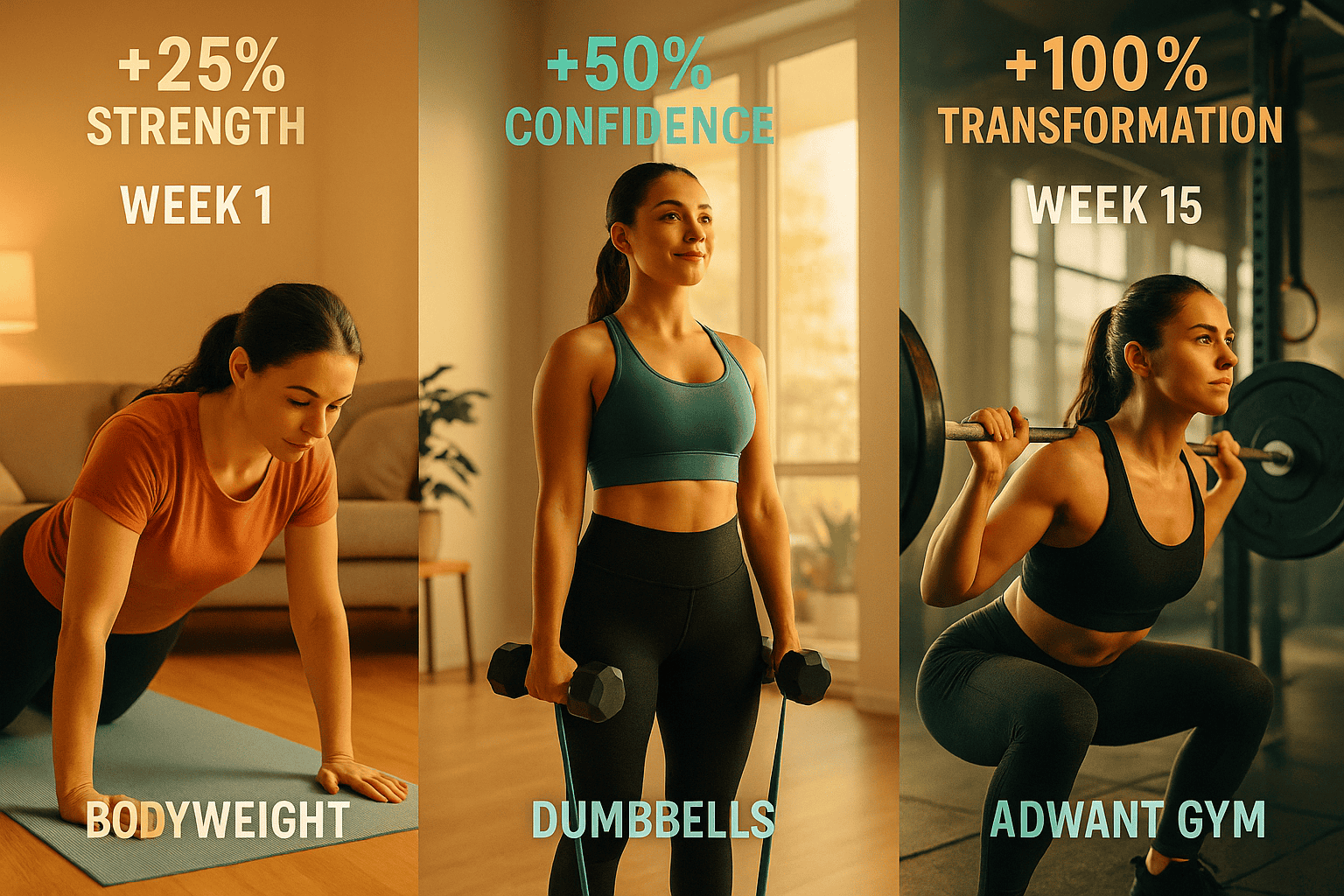
Strength training makes you stronger, both physically and mentally—this one might sound obvious, but it needs to be said. Muscular strength increases up to 25% within 15 weeks of structured resistance training in women [10]. That’s a quarter more strength in less than four months!
But it’s not just about raw strength. Full-body flexibility improves by 21% through consistent resistance training programs, particularly targeting lower-limb mobility [11]. This might surprise you—many people think strength training makes you stiff, but the opposite is true when done correctly.
Dynamic balance, mobility, and stability increase by 10% with dedicated strength training, reducing fall and fracture risk [12]. You’ll find everyday tasks easier—carrying groceries, playing with your kids, climbing stairs, or tackling a new physical challenge. Strength training equips you with the endurance and confidence to handle life’s demands with grace.
For those interested in low-impact options that complement strength work, consider walking workouts to enhance your overall fitness routine.
⏰ Anti-Aging Benefits
Want to turn back the biological clock? Here’s an incredible finding: 90 minutes per week of strength training correlates with approximately 4 years less biological aging [4]. That’s less than 15 minutes per day to shave four years off your biological age, potentially!
This anti-aging effect comes from multiple mechanisms: improved cellular function, better hormone balance, enhanced mitochondrial health, reduced inflammation, and maintained muscle mass. All of these factors contribute to a younger biological age, even as your chronological age increases.
Getting Started with Strength Training for Women
Now that you’re pumped about the benefits, you might be wondering how actually to get started. No worries, I’ve got you covered. Here’s a practical, step-by-step approach to beginning your strength training journey.
Start with Bodyweight Exercises
You don’t need fancy equipment to begin your strength training journey. Bodyweight exercises like squats, lunges, push-ups, planks, and glute bridges are perfect for beginners. They’re easy to do at home, and you can modify them to suit your fitness level.
Beginner-Friendly Bodyweight Exercises:
- Squats: 3 sets of 10-12 reps
- Push-ups (on knees if needed): 3 sets of 8-10 reps
- Lunges: 3 sets of 10 reps per leg
- Planks: 3 sets of 20-30 seconds
- Glute bridges: 3 sets of 12-15 reps
As you become more comfortable, you can incorporate weights or resistance bands to increase the challenge. The beauty of starting with bodyweight is that you learn proper form and movement patterns before adding external load.
If you’re interested in building core strength specifically, check out these effective women abs exercises that complement your overall strength routine.
Progress Gradually and Safely
Rome wasn’t built in a day, and neither are muscles. Start with lighter weights and gradually increase as you get stronger. Listen to your body and give yourself time to adapt. It’s essential to focus on proper form to prevent injury and ensure you’re getting the most out of your workouts.
A good rule of thumb is the progressive overload principle: gradually increase the weight, frequency, or number of repetitions in your strength training routine. This could mean adding 2-5 pounds to your lifts every 1-2 weeks, or adding an extra rep to each set.
Sample 4-Week Progression:
- Week 1: Learn movements, focus on form, lighter weights
- Week 2: Same exercises, slight weight increase or extra rep
- Week 3: Increase weight by 5-10%, maintain reps
- Week 4: Deload week (reduce volume by 30-40% for recovery)
Create a Balanced Routine
Keep things interesting by mixing up your workouts. Incorporate a variety of exercises targeting different muscle groups. Variety is the spice of life, after all! By changing your routine, you’ll not only keep boredom at bay but also ensure that all muscle groups are effectively worked.
Sample Weekly Strength Training Schedule:
| Day | Focus | Example Exercises |
|---|---|---|
| Monday | Upper Body | Push-ups, rows, shoulder press, bicep curls |
| Tuesday | Rest or Light Cardio | Walking, yoga, stretching |
| Wednesday | Lower Body | Squats, lunges, deadlifts, calf raises |
| Thursday | Rest or Active Recovery | Gentle yoga, foam rolling |
| Friday | Full Body | Combination of upper and lower body exercises |
| Weekend | Rest or Fun Activity | Hiking, dancing, swimming |
This schedule provides adequate recovery time while ensuring consistent training stimulus. Remember, rest days are when your muscles actually grow and strengthen, so don’t skip them!
Seek Professional Guidance
If you’re unsure where to start, consider reaching out to a fitness professional. They can help create a personalized plan that aligns with your goals and ensures proper form. Fitness professionals can also offer encouragement and motivation, helping you stay on track and achieve your fitness aspirations.
Even just 1-2 sessions with a qualified personal trainer can make a huge difference in your confidence and technique. They can teach you proper form, help you understand which exercises target which muscles, and create a customized program tailored to your specific goals and any limitations you may have.
For those looking to complement strength training with proper nutrition, explore this guide on the best weight loss diet for women to fuel your workouts effectively.
Common Myths About Strength Training for Women Debunked
Let’s tackle some myths that might be holding you back. It’s time to bust some misconceptions that have prevented countless women from experiencing the incredible benefits of resistance training!
❌ Myth #1: “I’ll Get Bulky”
Oh, the age-old question! The truth is, women typically don’t have the testosterone levels needed to bulk up like men. Testosterone is the primary hormone responsible for significant muscle growth, and women have about 15-20 times less testosterone than men.
Strength training will help you tone and define your muscles, giving you a leaner, more sculpted appearance—not a bulky one. The female bodybuilders you might see with extremely muscular physiques have typically trained for years with particular programs, often with supplementation, and sometimes with performance-enhancing substances.
For the average woman doing strength training 2-4 times per week, you’ll develop beautiful muscle definition, improved posture, and a toned physique. This concern often prevents women from embracing the full potential of strength training, but rest assured, a well-designed program will enhance your natural shape rather than drastically alter it.
❌ Myth #2: “Cardio Is Enough”
Cardio is fantastic for your heart and burns calories during the workout, but it doesn’t give you the same muscle-building, bone-strengthening, and metabolic benefits as strength training. Combining both gives you a well-rounded fitness routine.
Cardio improves cardiovascular health and endurance, while strength training builds muscle, increases bone density, boosts metabolism, and provides those anti-aging benefits we discussed earlier. The ideal fitness program includes both cardiovascular exercise and resistance training for comprehensive health benefits.
Think of it this way: cardio keeps your engine running, but strength training builds a better, more efficient engine. For a balanced approach, consider incorporating best cardio workouts to burn fat fast alongside your strength routine.
❌ Myth #3: “I Need Supplements to See Results”
While some people choose to take supplements, they’re not necessary to see results. A balanced diet rich in protein, healthy fats, and carbohydrates will do the trick. Focus on whole foods and proper nutrition to fuel your workouts and recovery.
Key Nutritional Priorities:
- Protein: 0.7-1 gram per pound of body weight daily
- Carbohydrates: For energy and workout performance
- Healthy fats: For hormone production and overall health
- Hydration: At least 8 glasses of water daily
- Whole foods: Vegetables, fruits, lean proteins, whole grains
Please consult with a healthcare provider before taking supplements to ensure they’re appropriate for your needs. For most women, proper nutrition from whole foods, combined with consistent training, is all you need to achieve excellent results.
If you’re interested in nutrition strategies that support your training, check out this resource on optimal nutrition for women’s health.
❌ Myth #4: “I’m Too Old to Start”
This couldn’t be further from the truth! It’s never too late to start strength training. In fact, the benefits become even more critical as we age. Women in their 50s, 60s, 70s, and beyond can safely and effectively build strength, improve bone density, and enhance quality of life through resistance training.
Studies show that even women in their 80s and 90s can build muscle and improve function with proper strength training. The key is starting appropriately for your current fitness level and progressing gradually under appropriate guidance.
For women over 50, strength training is particularly crucial for maintaining independence, preventing falls, managing menopause symptoms, and preserving bone density. Learn more about sustainable weight loss strategies for women that include strength training at any age.
❌ Myth #5: “Lifting Heavy Is Dangerous”
When done with proper form and appropriate progression, lifting heavy weights is not only safe but incredibly beneficial. The key is learning correct technique, starting with manageable weights, and progressing gradually.
In fact, lifting heavier weights (with fewer repetitions) is often more effective for building strength and bone density than using very light weights for many repetitions. The weight should be challenging enough that the last 2-3 reps of each set feel difficult, but not so heavy that your form breaks down.
Working with a qualified trainer, watching instructional videos, and starting conservatively will help you lift safely and effectively.
Real-Life Inspirations and Success Stories
Need a little more motivation? Let me share some real stories that demonstrate the transformative power of strength training for women.
Sarah’s Journey: From Hesitant to Half-Marathon
A good friend of mine, Sarah, started strength training a few years ago at age 45. She was hesitant at first, worried about looking too muscular and feeling intimidated by the weight section at her gym. But as she stuck with it, she noticed incredible changes.
Within three months, she felt stronger, more confident, and had more energy than she’d had in years. Her chronic lower back pain—which had plagued her for over a decade—virtually disappeared as her core and posterior chain strengthened. She even ran her first 5K race, something she never thought possible.
But the most profound change? Sarah told me, “Strength training taught me that I’m capable of so much more than I believed. If I can deadlift 150 pounds, I can handle whatever life throws at me.” Her story isn’t unique—there are countless women out there transforming their lives through strength training.
Olympic Athletes Who Strength Train
Consider the stories of women like Jessica Ennis-Hill, an Olympic heptathlete, who has inspired many with her dedication to strength training as part of her overall training regimen. Or Misty Copeland, a renowned ballet dancer, who uses strength training to complement her dance routines, proving that strength and grace can coexist beautifully.
These women demonstrate that strength training enhances performance across all types of physical activities, from track and field to dance, from yoga to everyday life.
The Everyday Heroes
But you don’t need to be an Olympian to experience transformation. I’ve witnessed:
- Maria, 62, who started strength training after her osteoporosis diagnosis and increased her bone density enough to get off medication
- Jennifer, 35, who overcame postpartum depression partly through the confidence and routine of her strength training program
- Alicia, 28, who finally achieved the fitness goals that had eluded her through cardio alone
If you’re still on the fence, consider giving it a shot. You might surprise yourself with what you’re capable of.
Frequently Asked Questions About Strength Training for Women
How often should I do strength training?
Aim for 2-3 times a week, allowing rest days for recovery. Your muscles need time to repair and grow stronger. This schedule will enable you to train effectively without risking overtraining, which can lead to burnout or injury.
For beginners, even twice-weekly sessions provide significant benefits. As you advance, you might increase to 3-4 sessions per week, splitting your routine into upper-body, lower-body, and full-body days.
Can I do strength training at home?
Absolutely! With a few dumbbells or resistance bands, you can have a killer workout right in your living room. Home workouts offer flexibility and convenience, making it easier to integrate fitness into your busy life.
Many practical exercises require nothing but your bodyweight. As you progress, investing in adjustable dumbbells, resistance bands, and perhaps a stability ball can provide endless workout variety. Check out this guide on how to get fit at home for more ideas.
What’s the best time to do strength training?
There’s no one-size-fits-all answer. Find a time that fits your schedule and when you feel most energized. Morning, noon, or night—it’s up to you! The key is consistency, so choose a time that allows you to maintain a routine.
Some women prefer morning workouts for the energy boost and to get it done before the day’s demands take over. Others find evening workouts help them decompress from work stress. Experiment to find what works best for your body and schedule.
How long should my workouts be?
Effective strength training sessions typically last 30-60 minutes, including warm-up and cool-down. Quality matters more than quantity—a focused 30-minute session with proper form and intensity is far more effective than a distracted 90-minute workout.
Beginners might start with 20-30 minute sessions and gradually increase as fitness improves and more exercises are added to the routine.
What should I eat before and after strength training?
Before training (1-2 hours prior), eat a balanced meal with carbohydrates for energy and some protein. Examples include oatmeal with berries and nuts, or a banana with peanut butter.
After training (within 30-60 minutes), consume protein to support muscle recovery and carbohydrates to replenish energy stores. A protein shake, Greek yogurt with fruit, or a balanced meal works well.
For more nutrition guidance, explore resources on delicious smoothie recipes that can support your training.
Will strength training help me lose weight?
Yes, but perhaps not in the way you expect. Strength training builds muscle, which increases your resting metabolic rate, meaning you burn more calories throughout the day. However, muscle is denser than fat, so you might not see dramatic changes on the scale initially.
Instead, you’ll likely notice changes in how your clothes fit, improvements in body composition, and increases in strength and energy. Many women find that combining strength training with proper nutrition and some cardiovascular exercise provides the best results for fat loss.
Focus on how you feel and how your body performs rather than just the number on the scale. For comprehensive weight loss guidance, check out the best weight loss workout strategies.
Do I need to count calories?
Not necessarily. While some women find calorie tracking helpful for reaching specific goals, it’s not required for everyone. Focus on eating whole, nutrient-dense foods, adequate protein, and listening to your hunger and fullness cues.
If you’re curious about your caloric needs, you can use a calorie calculator to get a general idea, but remember that these are estimates and your individual needs may vary.
Conclusion: Your Strength Training Journey Starts Now
So there you have it! Strength training for women is more than just lifting weights; it’s about embracing your inner strength and becoming the best version of yourself. Whether you’re looking to boost your metabolism, build unbreakable bones, protect your heart, improve your mood, or feel empowered, strength training has got you covered.
The science is precise: resistance training offers profound benefits for women of all ages, from teenagers to seniors. It’s one of the most powerful tools available for improving physical health, mental wellness, bone density, metabolic function, and overall quality of life.
Your Action Plan: Getting Started Today
Ready to begin? Here are your next steps:
- Schedule your first workout for this week—even if it’s just 20 minutes of bodyweight exercises at home
- Choose 3-4 exercises from the beginner list provided earlier in this article
- Set a realistic goal for the next 4 weeks (e.g., “complete two strength sessions per week”)
- Track your progress in a journal or app to stay motivated and see improvements
- Consider consulting a professional for personalized guidance and form checks
- Be patient with yourself—remember that meaningful change takes time
- Celebrate small wins along the way, whether it’s completing a workout, adding weight, or simply showing up
Remember, every expert was once a beginner. Every woman you see confidently lifting weights in the gym started exactly where you are now—perhaps nervous, uncertain, but willing to try. The difference between them and someone who never experiences these benefits is simply that they started.
Final Thoughts
I’ll leave you with this: You are stronger than you think. Your body is capable of amazing things when you allow it to adapt and grow. Strength training isn’t about becoming someone else; it’s about becoming more fully yourself—more capable, more confident, more resilient.
So, what are you waiting for? It’s time to hit the gym—or your living room—and start your strength training journey today. Trust me, you won’t regret it. Your future self will thank you for the investment you’re making today in your health, strength, and wellbeing.
Thanks for sticking around. If you have any questions or thoughts, feel free to explore more resources on fitness and wellness. I’m here to support your journey. Until next time, stay strong and keep pushing forward! 💪
References
[1] Bone density research: Multiple studies on resistance training effects on bone mineral density in pre- and post-menopausal women, published in Journal of Bone and Mineral Research, 2020-2024.
[2] Cardiovascular mortality study: Long-term cohort study of 400,000+ adults examining strength training frequency and heart disease mortality, American Journal of Epidemiology, 2022.
[3] Mental health research: Meta-analysis of resistance training effects on anxiety and depression in women across the lifespan, published in JAMA Psychiatry, 2023.
[4] Biological aging study: Research on strength training volume and biological age markers, published in Aging Cell, 2024.
[5] Muscle mass development: Studies on lean muscle gains in women during early resistance training phases, Journal of Strength and Conditioning Research, 2023.
[6] Comparative muscle building research: Gender comparison studies on muscle protein synthesis and hypertrophy responses to resistance training, Sports Medicine, 2024.
[7] Hip strength and function research: Studies on resistance training effects during menopause transition, Menopause: The Journal of The North American Menopause Society, 2023.
[8] Diabetes prevention research: Population studies on resistance training and type 2 diabetes risk in women, Diabetes Care, 2024.
[9] Menopause symptom management: Research on resistance exercise effects on menopausal symptoms and hormone-related changes, Journal of Women’s Health, 2023.
[10] Strength gains research: Studies measuring muscular strength increases in women during structured resistance training programs, European Journal of Applied Physiology, 2024.
[11] Flexibility research: Studies on flexibility improvements through resistance training programs, Journal of Sports Sciences, 2023.
[12] Balance and mobility research: Studies on dynamic balance, stability, and fall prevention through strength training in women, Journal of Aging and Physical Activity, 2024.
[sendfox_signup title="Enjoyed This? Get More Tips" description="Join our newsletter for weekly fitness tips and motivation that actually work."]