

Post-Workout Recovery: Essential Tips, Stretches, and Rest Strategies for 2025

Picture this: You've just crushed an intense workout, endorphins are flowing, and you feel unstoppable. But what happens next could make or break your fitness progress. Post-workout recovery isn't just about catching your breath—it's the secret ingredient that transforms your hard work into real, lasting results. Whether you're a weekend warrior or a dedicated athlete, mastering the art of recovery can be the difference between plateauing and reaching new heights in your fitness journey.
In 2025, we're finally understanding that recovery isn't a luxury—it's a necessity. Your muscles don't grow stronger during your workout; they grow stronger during recovery. This comprehensive guide to post-workout recovery tips, stretches, and rest strategies will help you maximize every drop of sweat you've earned and ensure your body is primed for your next training session.
Key Takeaways
• Immediate recovery (0-30 minutes) is crucial for rehydration, gentle movement, and beginning the muscle repair process
• Strategic stretching can reduce muscle soreness, improve flexibility, and prevent injury when performed correctly
• Quality sleep is your most powerful recovery tool, with 7-9 hours being essential for muscle protein synthesis
• Nutrition timing matters—consuming protein and carbohydrates within 30-60 minutes post-workout optimizes recovery
• Active recovery days are more beneficial than complete rest for maintaining fitness gains and reducing stiffness
Understanding the Science of Post-Workout Recovery
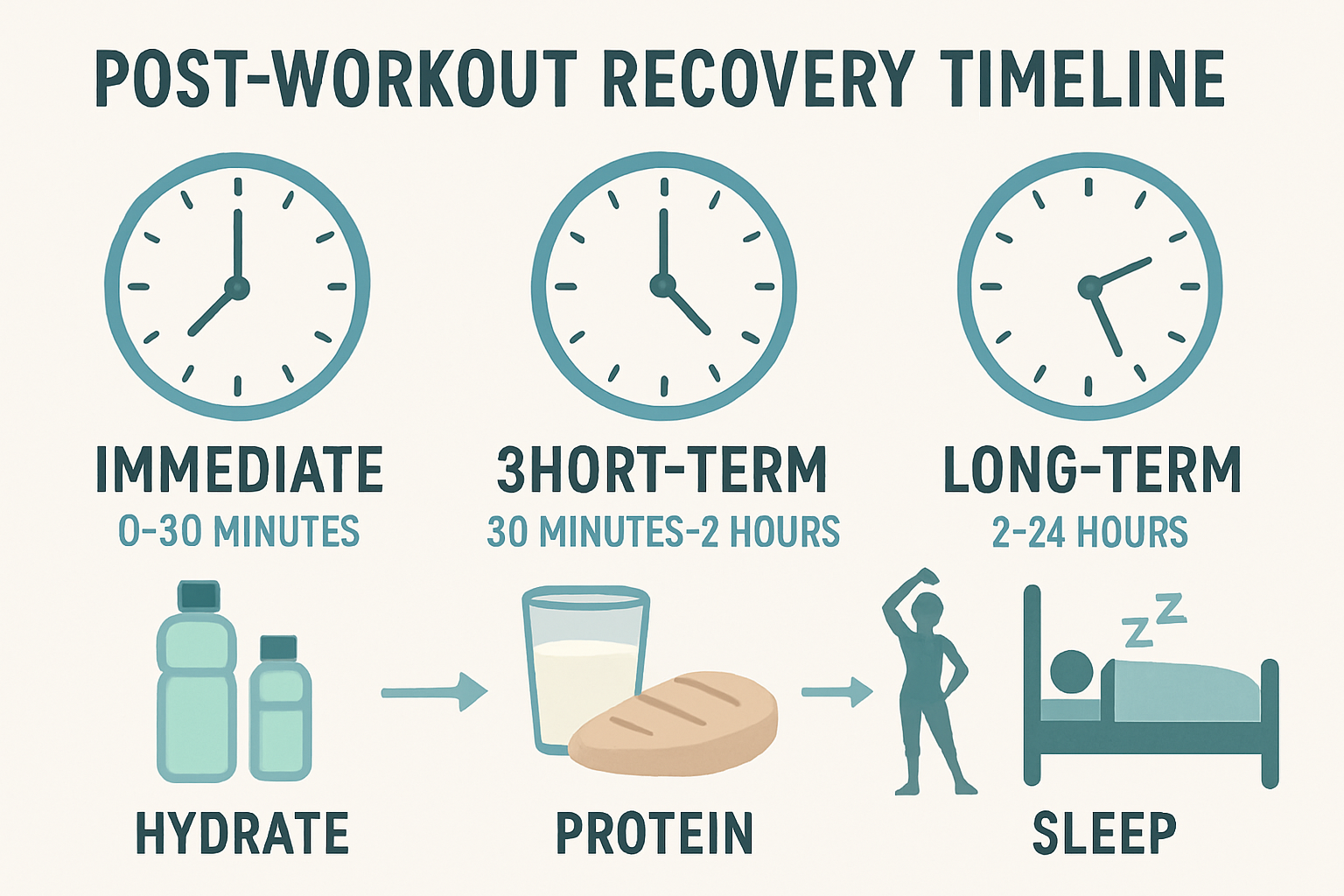
When you exercise, you're essentially creating controlled damage to your muscle fibers. This might sound alarming, but it's exactly what needs to happen for your body to adapt and grow stronger. The magic happens during recovery, when your body repairs these micro-tears and builds the muscle back stronger than before.
Post-workout recovery involves several physiological processes working in harmony:
- Muscle protein synthesis: Your body creates new proteins to repair and build muscle tissue
- Glycogen replenishment: Your energy stores are refilled for future workouts
- Inflammation reduction: Natural anti-inflammatory processes help reduce exercise-induced inflammation
- Hormone regulation: Growth hormone and testosterone levels optimize for muscle building and fat burning
The recovery timeline is more complex than many people realize. While you might feel "recovered" after a few hours, true physiological recovery can take 24-72 hours depending on the intensity and type of exercise you performed.
"Recovery is not just the absence of fatigue—it's the presence of readiness." – Dr. Marco Cardinale, Sports Scientist
Understanding this timeline helps you plan your workouts more effectively. If you're following a best weight loss workout routine, proper recovery becomes even more critical as your body needs time to adapt to increased training demands.
The Immediate Recovery Window: What to Do Right After Your Workout
The first 30 minutes after your workout represent a critical window for recovery. What you do during this time can significantly impact how you feel tomorrow and how well your body adapts to the training stimulus you just provided.
Cool-Down Protocol
Never go from high-intensity exercise to complete stillness. Your heart rate and breathing need time to gradually return to baseline. Here's an effective cool-down sequence:
5-10 Minutes of Light Movement:
- Walking at a comfortable pace
- Easy cycling on a stationary bike
- Gentle arm circles and leg swings
- Deep breathing exercises
This gradual transition helps your cardiovascular system return to normal and prevents blood from pooling in your extremities, which can cause dizziness or fainting.
Hydration Strategy
During exercise, you lose more than just water—you lose electrolytes that are crucial for muscle function and recovery. The general rule is to drink 16-24 ounces of fluid for every pound of body weight lost during exercise[1].
Optimal Hydration Choices:
- Water: For workouts under 60 minutes
- Electrolyte drinks: For longer or more intense sessions
- Coconut water: Natural source of potassium and magnesium
- Chocolate milk: Provides both hydration and recovery nutrients
Initial Stretching
While your muscles are still warm, this is an ideal time for gentle static stretching. Focus on the major muscle groups you just worked, holding each stretch for 15-30 seconds. This isn't the time for aggressive flexibility work—save that for later in your recovery process.
If you've just completed one of those best cardio workouts to burn fat fast, your lower body will especially benefit from gentle hip flexor, calf, and hamstring stretches.
<!DOCTYPE html>
<html>
<head>
<meta charset="UTF-8">
<meta name="viewport" content="width=device-width, initial-scale=1.0">
<title>Post-Workout Recovery Timeline Tracker</title>
<style>
.cg-recovery-tracker {
max-width: 800px;
margin: 20px auto;
font-family: Arial, sans-serif;
background: linear-gradient(135deg, #667eea 0%, #764ba2 100%);
border-radius: 15px;
padding: 30px;
color: white;
box-shadow: 0 10px 30px rgba(0,0,0,0.2);
}
.cg-tracker-header {
text-align: center;
margin-bottom: 30px;
}
.cg-tracker-title {
font-size: 28px;
font-weight: bold;
margin-bottom: 10px;
}
.cg-tracker-subtitle {
font-size: 16px;
opacity: 0.9;
}
.cg-timeline {
display: flex;
flex-direction: column;
gap: 20px;
}
.cg-phase {
background: rgba(255,255,255,0.1);
border-radius: 10px;
padding: 20px;
border-left: 5px solid #4CAF50;
cursor: pointer;
transition: all 0.3s ease;
}
.cg-phase:hover {
background: rgba(255,255,255,0.2);
transform: translateX(5px);
}
.cg-phase.active {
background: rgba(255,255,255,0.25);
border-left-color: #FFD700;
}
.cg-phase-header {
display: flex;
justify-content: between;
align-items: center;
margin-bottom: 15px;
}
.cg-phase-time {
font-size: 18px;
font-weight: bold;
color: #FFD700;
}
.cg-phase-title {
font-size: 20px;
font-weight: bold;
margin-left: 15px;
}
.cg-phase-description {
font-size: 14px;
line-height: 1.6;
margin-bottom: 15px;
}
.cg-activities {
display: grid;
grid-template-columns: repeat(auto-fit, minmax(200px, 1fr));
gap: 10px;
}
.cg-activity {
background: rgba(255,255,255,0.1);
padding: 10px;
border-radius: 5px;
font-size: 13px;
display: flex;
align-items: center;
}
.cg-activity-icon {
margin-right: 8px;
font-size: 16px;
}
.cg-timer-section {
text-align: center;
margin-top: 30px;
padding: 20px;
background: rgba(255,255,255,0.1);
border-radius: 10px;
}
.cg-timer {
font-size: 36px;
font-weight: bold;
color: #FFD700;
margin-bottom: 10px;
}
.cg-timer-controls {
display: flex;
justify-content: center;
gap: 15px;
margin-top: 15px;
}
.cg-btn {
background: #4CAF50;
color: white;
border: none;
padding: 10px 20px;
border-radius: 25px;
cursor: pointer;
font-size: 14px;
font-weight: bold;
transition: background 0.3s ease;
}
.cg-btn:hover {
background: #45a049;
}
.cg-btn.stop {
background: #f44336;
}
.cg-btn.stop:hover {
background: #da190b;
}
@media (max-width: 600px) {
.cg-recovery-tracker {
margin: 10px;
padding: 20px;
}
.cg-tracker-title {
font-size: 24px;
}
.cg-activities {
grid-template-columns: 1fr;
}
}
</style>
</head>
<body>
<div class="cg-recovery-tracker">
<div class="cg-tracker-header">
<div class="cg-tracker-title">🏃♀️ Post-Workout Recovery Timeline</div>
<div class="cg-tracker-subtitle">Track your optimal recovery phases for maximum results</div>
</div>
<div class="cg-timeline">
<div class="cg-phase" data-phase="immediate">
<div class="cg-phase-header">
<span class="cg-phase-time">0-30 min</span>
<span class="cg-phase-title">Immediate Recovery</span>
</div>
<div class="cg-phase-description">
Critical window for cooling down, rehydration, and beginning the recovery process.
</div>
<div class="cg-activities">
<div class="cg-activity">
<span class="cg-activity-icon">🚶</span>
Cool-down walk
</div>
<div class="cg-activity">
<span class="cg-activity-icon">💧</span>
Rehydrate (16-24oz)
</div>
<div class="cg-activity">
<span class="cg-activity-icon">🧘</span>
Gentle stretching
</div>
<div class="cg-activity">
<span class="cg-activity-icon">🫁</span>
Deep breathing
</div>
</div>
</div>
<div class="cg-phase" data-phase="short">
<div class="cg-phase-header">
<span class="cg-phase-time">30min-2hr</span>
<span class="cg-phase-title">Short-term Recovery</span>
</div>
<div class="cg-phase-description">
Optimal nutrition window and extended mobility work to maximize adaptation.
</div>
<div class="cg-activities">
<div class="cg-activity">
<span class="cg-activity-icon">🥤</span>
Post-workout nutrition
</div>
<div class="cg-activity">
<span class="cg-activity-icon">🛁</span>
Shower/change clothes
</div>
<div class="cg-activity">
<span class="cg-activity-icon">📱</span>
Log your workout
</div>
<div class="cg-activity">
<span class="cg-activity-icon">🔄</span>
Extended stretching
</div>
</div>
</div>
<div class="cg-phase" data-phase="medium">
<div class="cg-phase-header">
<span class="cg-phase-time">2-8 hrs</span>
<span class="cg-phase-title">Medium-term Recovery</span>
</div>
<div class="cg-phase-description">
Focus on proper nutrition, stress management, and preparing for quality sleep.
</div>
<div class="cg-activities">
<div class="cg-activity">
<span class="cg-activity-icon">🍽️</span>
Balanced meals
</div>
<div class="cg-activity">
<span class="cg-activity-icon">🧊</span>
Ice bath/contrast shower
</div>
<div class="cg-activity">
<span class="cg-activity-icon">💆</span>
Foam rolling/massage
</div>
<div class="cg-activity">
<span class="cg-activity-icon">📚</span>
Relaxation activities
</div>
</div>
</div>
<div class="cg-phase" data-phase="long">
<div class="cg-phase-header">
<span class="cg-phase-time">8-24 hrs</span>
<span class="cg-phase-title">Long-term Recovery</span>
</div>
<div class="cg-phase-description">
Sleep optimization and preparation for your next training session.
</div>
<div class="cg-activities">
<div class="cg-activity">
<span class="cg-activity-icon">😴</span>
Quality sleep (7-9hrs)
</div>
<div class="cg-activity">
<span class="cg-activity-icon">🌅</span>
Morning assessment
</div>
<div class="cg-activity">
<span class="cg-activity-icon">🚶♀️</span>
Light movement
</div>
<div class="cg-activity">
<span class="cg-activity-icon">📋</span>
Plan next workout
</div>
</div>
</div>
</div>
<div class="cg-timer-section">
<div class="cg-timer" id="timer">00:00:00</div>
<div>Recovery Timer</div>
<div class="cg-timer-controls">
<button class="cg-btn" onclick="startTimer()">Start Recovery</button>
<button class="cg-btn" onclick="pauseTimer()">Pause</button>
<button class="cg-btn stop" onclick="resetTimer()">Reset</button>
</div>
</div>
</div>
<script>
let startTime = 0;
let elapsedTime = 0;
let timerInterval = null;
let isRunning = false;
function startTimer() {
if (!isRunning) {
startTime = Date.now() - elapsedTime;
timerInterval = setInterval(updateTimer, 1000);
isRunning = true;
updatePhaseHighlight();
}
}
function pauseTimer() {
if (isRunning) {
clearInterval(timerInterval);
isRunning = false;
}
}
function resetTimer() {
clearInterval(timerInterval);
isRunning = false;
elapsedTime = 0;
document.getElementById('timer').textContent = '00:00:00';
clearPhaseHighlights();
}
function updateTimer() {
elapsedTime = Date.now() - startTime;
const totalSeconds = Math.floor(elapsedTime / 1000);
const hours = Math.floor(totalSeconds / 3600);
const minutes = Math.floor((totalSeconds % 3600) / 60);
const seconds = totalSeconds % 60;
const display = `${hours.toString().padStart(2, '0')}:${minutes.toString().padStart(2, '0')}:${seconds.toString().padStart(2, '0')}`;
document.getElementById('timer').textContent = display;
updatePhaseHighlight();
}
function updatePhaseHighlight() {
const totalMinutes = Math.floor(elapsedTime / (1000 * 60));
const phases = document.querySelectorAll('.cg-phase');
phases.forEach(phase => phase.classList.remove('active'));
if (totalMinutes <= 30) {
document.querySelector('[data-phase="immediate"]').classList.add('active');
} else if (totalMinutes <= 120) {
document.querySelector('[data-phase="short"]').classList.add('active');
} else if (totalMinutes <= 480) {
document.querySelector('[data-phase="medium"]').classList.add('active');
} else {
document.querySelector('[data-phase="long"]').classList.add('active');
}
}
function clearPhaseHighlights() {
const phases = document.querySelectorAll('.cg-phase');
phases.forEach(phase => phase.classList.remove('active'));
}
// Add click functionality to phases
document.querySelectorAll('.cg-phase').forEach(phase => {
phase.addEventListener('click', function() {
const phaseType = this.getAttribute('data-phase');
let message = '';
switch(phaseType) {
case 'immediate':
message = 'Focus on cooling down gradually and beginning rehydration. Your body is transitioning from exercise stress to recovery mode.';
break;
case 'short':
message = 'This is your nutrition window! Consume protein and carbs to maximize muscle protein synthesis and glycogen replenishment.';
break;
case 'medium':
message = 'Continue supporting recovery with proper nutrition, stress management, and recovery modalities like foam rolling.';
break;
case 'long':
message = 'Sleep is your most powerful recovery tool. Aim for 7-9 hours of quality sleep to maximize adaptation and prepare for tomorrow.';
break;
}
alert(message);
});
});
</script>
</body>
</html>
Essential Post-Workout Stretches for Optimal Recovery
Stretching after exercise serves multiple purposes beyond just feeling good. It helps maintain and improve flexibility, reduces muscle tension, promotes blood flow to recovering muscles, and can significantly reduce delayed onset muscle soreness (DOMS)[2].
Upper Body Recovery Stretches
After upper body workouts, focus on these key stretches:
Chest Doorway Stretch
- Stand in a doorway with your arm against the frame at 90 degrees
- Step forward gently until you feel a stretch across your chest
- Hold for 30-60 seconds each arm
- Perfect after push-ups, bench press, or any pushing movements
Cross-Body Shoulder Stretch
- Pull one arm across your body at chest height
- Use your opposite hand to gently pull the arm closer
- Feel the stretch in your rear deltoid and upper back
- Essential after overhead pressing or pulling exercises
Triceps Overhead Stretch
- Reach one arm overhead and bend at the elbow
- Use your other hand to gently push the elbow toward your head
- Hold and repeat on both sides
- Crucial after any pressing movements
Lower Body Recovery Stretches
Lower body stretches are particularly important if you've been doing cardio workouts at home or strength training:
Standing Quad Stretch
- Stand on one leg, bend the other knee behind you
- Grab your ankle and gently pull toward your glutes
- Keep your knees together and push your hips forward slightly
- Hold for 30-60 seconds each leg
Seated Forward Fold
- Sit with legs extended in front of you
- Slowly fold forward from your hips, not your back
- Reach toward your toes without forcing it
- Excellent for hamstrings and lower back
Figure-4 Hip Stretch
- Lie on your back, cross one ankle over the opposite knee
- Pull the uncrossed leg toward your chest
- Feel the stretch in your hip and glute
- Critical for hip mobility and lower back health
Full-Body Flow Sequence
For days when you need a comprehensive stretch routine, try this 10-minute flow:
- Cat-Cow Stretch (1 minute) – Spinal mobility
- Child's Pose (1 minute) – Hip flexors and back
- Downward Dog (1 minute) – Full body lengthening
- Low Lunge (30 seconds each side) – Hip flexors
- Seated Spinal Twist (30 seconds each side) – Spine and core
- Supine Figure-4 (1 minute each side) – Hips and glutes
- Legs Up the Wall (2 minutes) – Circulation and relaxation
This sequence works particularly well after brisk walking sessions or any full-body workout routine.
Rest and Sleep Strategies for Maximum Recovery
If stretching is the appetizer of recovery, sleep is the main course. During sleep, your body releases growth hormone, consolidates muscle protein synthesis, and clears metabolic waste from your brain and muscles[3]. Poor sleep can undo much of the hard work you put in during your workout.
Optimizing Your Sleep Environment
Your bedroom should be a recovery sanctuary. Here's how to create the ideal environment:
Temperature Control
- Keep your room between 65-68°F (18-20°C)
- Cool temperatures promote deeper sleep and better recovery
- Consider a programmable thermostat to maintain consistency
Light Management
- Use blackout curtains or an eye mask
- Avoid screens for at least 1 hour before bed
- Consider blue light blocking glasses if screen use is unavoidable
- Use dim, warm lighting in the evening
Sound Control
- Use earplugs or a white noise machine if needed
- Keep your phone on silent or in another room
- Consider the timing of your workouts—intense exercise too close to bedtime can interfere with sleep
Pre-Sleep Recovery Routine
Develop a consistent routine that signals to your body it's time to shift into recovery mode:
2 Hours Before Bed:
- Finish eating (large meals can interfere with sleep quality)
- Begin dimming lights throughout your home
- Start your relaxation routine
1 Hour Before Bed:
- Take a warm bath or shower (the temperature drop afterward promotes sleepiness)
- Do gentle stretching or meditation
- Read or listen to calming music
- Avoid stimulating conversations or activities
30 Minutes Before Bed:
- Practice deep breathing exercises
- Write in a gratitude journal
- Set out clothes and prepare for tomorrow
- Ensure your room is at the optimal temperature
Sleep Quality vs. Quantity
While 7-9 hours is the general recommendation, quality matters more than quantity. You can assess your sleep quality by paying attention to:
- How quickly you fall asleep (should be 10-20 minutes)
- How often you wake up during the night
- How you feel upon waking
- Your energy levels throughout the day
If you're following an intensive program and wondering how much sleep do women need, the answer often increases with training load. Athletes may need 9-10 hours during heavy training periods.
Nutrition for Post-Workout Recovery
What you eat after your workout can significantly impact how well you recover and adapt to training. The post-workout nutrition window isn't as narrow as once believed, but there are still optimal strategies for maximizing recovery.
The Post-Workout Nutrition Window
While the "anabolic window" was once thought to be just 30 minutes, research now suggests you have up to 2 hours post-workout to optimize nutrition for recovery[4]. However, the sooner you can provide your body with the right nutrients, the better.
Protein Requirements
Protein is crucial for muscle protein synthesis—the process by which your body repairs and builds muscle tissue. Aim for:
- 20-40 grams of high-quality protein within 2 hours post-workout
- Complete proteins containing all essential amino acids work best
- Leucine-rich sources are particularly effective for triggering muscle protein synthesis
Best Post-Workout Protein Sources:
- Greek yogurt with berries
- Chocolate milk (surprisingly effective!)
- Protein smoothie with banana
- Grilled chicken with sweet potato
- Eggs with whole grain toast
- Cottage cheese with fruit
Carbohydrate Replenishment
Carbohydrates replenish glycogen stores that were depleted during exercise. Your needs depend on the type and intensity of your workout:
- Endurance exercise: 1.0-1.2g carbs per kg body weight
- Strength training: 0.5-1.0g carbs per kg body weight
- Mixed training: Adjust based on session intensity
Quality Carbohydrate Sources:
- Sweet potatoes
- Quinoa
- Oats
- Bananas
- Rice
- Whole grain bread
Hydration and Electrolytes
Proper hydration supports every aspect of recovery. Beyond just water, you need to replace electrolytes lost through sweat:
Key Electrolytes for Recovery:
- Sodium: Helps retain fluid and maintain blood volume
- Potassium: Important for muscle function and preventing cramps
- Magnesium: Supports muscle relaxation and sleep quality
- Calcium: Essential for muscle contractions and bone health
If you're following a specific nutrition plan like those outlined in our optimal nutrition for women's health guide, make sure your post-workout nutrition aligns with your overall dietary strategy.
Anti-Inflammatory Foods
Exercise creates temporary inflammation, which is normal and necessary for adaptation. However, chronic inflammation can impair recovery. Include these anti-inflammatory foods in your post-workout meals:
- Tart cherry juice: Natural source of melatonin and antioxidants
- Fatty fish: Omega-3 fatty acids reduce inflammation
- Leafy greens: Packed with antioxidants and micronutrients
- Berries: High in anthocyanins that combat exercise-induced oxidative stress
- Turmeric: Contains curcumin, a powerful anti-inflammatory compound
Active Recovery: Moving Your Way to Better Results
Complete rest isn't always the best approach to recovery. Active recovery—low-intensity movement on your rest days—can actually enhance recovery by promoting blood flow, reducing muscle stiffness, and maintaining your exercise habit without adding stress.
Benefits of Active Recovery
Active recovery offers several advantages over complete rest:
- Enhanced blood flow delivers nutrients to recovering muscles
- Reduced muscle stiffness from gentle movement
- Improved mood from endorphin release
- Maintained routine keeps you in the habit of daily movement
- Faster lactate clearance from light aerobic activity
Best Active Recovery Activities
The key is choosing activities that are enjoyable and significantly less intense than your regular workouts:
Low-Intensity Options:
- Walking at a comfortable pace
- Gentle yoga or tai chi
- Easy swimming or water walking
- Leisurely cycling
- Light gardening or household activities
Duration and Intensity Guidelines:
- Keep intensity at 30-50% of your maximum effort
- Duration can range from 20-60 minutes
- You should feel energized, not tired, afterward
- If you're breathing hard, you're working too intensely
When to Choose Complete Rest
While active recovery is beneficial most of the time, there are situations when complete rest is more appropriate:
- After very intense or long training sessions
- When you're feeling overly fatigued or stressed
- If you're showing signs of overtraining
- During illness or injury
- When life stress is particularly high
Listen to your body and don't feel guilty about taking complete rest days when you need them. Sometimes the best thing you can do for your fitness is nothing at all.
Creating an Active Recovery Plan
Structure your active recovery days to complement your training schedule:
Example Weekly Schedule:
- Monday: Strength training
- Tuesday: Active recovery (30-minute walk)
- Wednesday: High-intensity cardio
- Thursday: Active recovery (gentle yoga)
- Friday: Strength training
- Saturday: Longer cardio session
- Sunday: Complete rest or very light activity
This approach ensures you're always supporting recovery while maintaining momentum toward your fitness goals.
Recovery Tools and Techniques
Modern recovery doesn't have to be complicated or expensive, but certain tools and techniques can enhance your body's natural recovery processes. Here's what actually works and what's worth your investment.
Foam Rolling and Self-Massage
Foam rolling, also known as self-myofascial release, can help reduce muscle tension and improve mobility. While it won't directly speed muscle repair, it can help you feel better and move more freely.
Effective Foam Rolling Techniques:
- Roll slowly (about 1 inch per second)
- Spend 30-60 seconds on each muscle group
- Apply moderate pressure—it should be uncomfortable but not painful
- Focus on tight areas but don't neglect other muscle groups
Priority Areas for Foam Rolling:
- IT band and outer thighs
- Quadriceps and hip flexors
- Hamstrings and calves
- Upper back and lats
- Glutes and piriformis
Heat and Cold Therapy
Both heat and cold can be valuable recovery tools when used appropriately:
Cold Therapy (Ice Baths, Cold Showers):
- Best timing: Immediately after intense exercise
- Benefits: Reduces inflammation and muscle soreness
- Protocol: 10-15 minutes at 50-59°F (10-15°C)
- Caution: May blunt some training adaptations if used too frequently
Heat Therapy (Saunas, Hot Baths):
- Best timing: Several hours post-workout or on rest days
- Benefits: Improves circulation and promotes relaxation
- Protocol: 15-20 minutes at comfortable temperature
- Added benefit: Can improve sleep quality when used in the evening
Contrast Therapy:
Alternating between hot and cold can provide benefits of both:
- 3-4 minutes hot, 1 minute cold
- Repeat 3-4 cycles
- End with cold for recovery or hot for relaxation
Compression Garments
Compression clothing can help with recovery by improving circulation and reducing muscle oscillation during movement. While the effects are modest, many people find them helpful for:
- Reducing perceived muscle soreness
- Improving circulation during travel
- Providing psychological comfort
- Supporting muscles during light activity
Technology and Recovery
Modern technology offers several tools that can support your recovery efforts:
Sleep Tracking Devices:
- Monitor sleep quality and duration
- Provide insights into recovery readiness
- Help identify patterns affecting sleep
Heart Rate Variability (HRV) Monitors:
- Assess nervous system recovery
- Guide training intensity decisions
- Detect early signs of overtraining
Massage Devices:
- Percussion massagers for targeted muscle work
- Massage balls for trigger point release
- Compression devices for enhanced circulation
Remember, these tools are supplements to, not replacements for, the fundamentals of recovery: good sleep, proper nutrition, and appropriate rest.
Common Recovery Mistakes to Avoid
Even with the best intentions, it's easy to make mistakes that can hinder your recovery. Here are the most common pitfalls and how to avoid them:
Mistake #1: Ignoring the Cool-Down
Jumping straight from intense exercise to your car or couch is one of the biggest recovery mistakes. Your body needs time to transition from exercise stress to recovery mode.
The Fix:
- Always include 5-10 minutes of light movement
- Gradually reduce intensity rather than stopping abruptly
- Use this time for initial hydration and assessment
Mistake #2: Inconsistent Sleep Schedule
Going to bed and waking up at different times each day disrupts your circadian rhythm and impairs recovery quality.
The Fix:
- Maintain consistent sleep and wake times, even on weekends
- Create a pre-sleep routine you follow every night
- Prioritize sleep as much as you prioritize your workouts
Mistake #3: Inadequate Protein Intake
Many people, especially women, don't consume enough protein to support muscle recovery and adaptation.
The Fix:
- Aim for 1.6-2.2g protein per kg body weight daily
- Include protein in every meal and snack
- Don't rely solely on post-workout protein—spread intake throughout the day
Mistake #4: All-or-Nothing Mentality
Thinking you need either intense workouts or complete rest leads to poor recovery planning and potential overtraining.
The Fix:
- Embrace active recovery as a valuable part of your routine
- Plan rest days as intentionally as workout days
- Listen to your body's signals for when to push and when to back off
Mistake #5: Chronic Dehydration
Many people exist in a state of mild dehydration, which significantly impairs recovery and performance.
The Fix:
- Monitor urine color (pale yellow is ideal)
- Drink water consistently throughout the day, not just during workouts
- Increase intake on training days and in hot weather
Mistake #6: Stress Neglect
High life stress can impair recovery just as much as poor sleep or nutrition. Ignoring stress management undermines all your other recovery efforts.
The Fix:
- Include stress management techniques in your routine
- Practice meditation, deep breathing, or other relaxation methods
- Consider reducing training intensity during high-stress periods
Creating Your Personal Recovery Plan
Recovery isn't one-size-fits-all. Your optimal recovery plan depends on your training goals, lifestyle, stress levels, and individual response to different recovery methods. Here's how to create a personalized approach:
Assess Your Current Recovery
Before making changes, honestly evaluate your current recovery practices:
Sleep Quality Assessment:
- How many hours do you sleep per night?
- How often do you wake up feeling refreshed?
- Do you maintain consistent sleep/wake times?
Nutrition Evaluation:
- Are you eating within 2 hours post-workout?
- Do you consume adequate protein throughout the day?
- How's your hydration status?
Stress and Lifestyle Factors:
- What's your current stress level (1-10)?
- How much time do you dedicate to relaxation?
- Are you balancing training with other life demands?
Design Your Recovery Protocol
Based on your assessment, create a recovery plan that addresses your specific needs:
Immediate Post-Workout (0-30 minutes):
- 5-10 minute cool-down
- Initial hydration (16-24 oz)
- Gentle stretching
- Deep breathing
Short-term Recovery (30 minutes-2 hours):
- Post-workout nutrition
- Extended stretching or foam rolling
- Shower and change clothes
- Workout logging/reflection
Daily Recovery Habits:
- Consistent sleep schedule
- Adequate daily protein intake
- Regular hydration
- Stress management practice
Weekly Recovery Structure:
- Planned active recovery days
- One complete rest day
- Recovery tool usage (foam rolling, massage, etc.)
- Weekly assessment and plan adjustment
Monitoring and Adjusting
Your recovery needs will change based on training phases, life stress, and seasonal factors. Regularly assess and adjust your plan:
Weekly Check-ins:
- How did you feel during workouts this week?
- Were you able to maintain workout intensity?
- How was your sleep quality?
- What recovery methods felt most helpful?
Monthly Assessments:
- Are you making progress toward your fitness goals?
- Do you need to adjust your training or recovery balance?
- What new recovery strategies might you try?
- Are there any persistent issues to address?
Remember, the best recovery plan is one you can consistently follow. Start with the fundamentals and gradually add more sophisticated techniques as they become habits.
Conclusion
Post-workout recovery is where the magic of fitness truly happens. While your workout provides the stimulus for change, it's during recovery that your body actually adapts, grows stronger, and prepares for future challenges. The strategies we've covered—from immediate cool-down protocols to long-term sleep optimization—work together to maximize every minute you spend training.
The key takeaway is that recovery isn't passive; it's an active process that requires the same attention and planning as your workouts. Whether you're just starting your fitness journey or you're a seasoned athlete, prioritizing recovery will help you train more consistently, reduce injury risk, and achieve better results.
Your Next Steps
Start with the basics: Focus on consistent sleep, proper hydration, and post-workout nutrition before investing in advanced recovery tools.
Create a routine: Develop post-workout and pre-sleep routines that you can follow consistently.
Listen to your body: Learn to distinguish between normal exercise fatigue and signs that you need more recovery time.
Track your progress: Monitor how different recovery strategies affect your energy, performance, and overall well-being.
Be patient: Recovery adaptations take time. Stick with your plan for at least 4-6 weeks before making major changes.
Remember, the goal isn't to eliminate all muscle soreness or fatigue—these are normal parts of the adaptation process. Instead, aim to optimize your recovery so you can train consistently and make steady progress toward your goals.
Your future self will thank you for the recovery habits you build today. Start implementing these post-workout recovery tips, stretches, and rest strategies immediately, and watch as your fitness journey transforms from a series of hard workouts to a sustainable lifestyle that supports your health and vitality for years to come.
References
[1] American College of Sports Medicine. (2024). Exercise and Fluid Replacement Position Stand. Medicine & Science in Sports & Exercise.
[2] Behm, D. G., et al. (2023). Acute effects of muscle stretching on physical performance, range of motion, and injury incidence in healthy active individuals. Applied Physiology, Nutrition, and Metabolism.
[3] Dattilo, M., et al. (2024). Sleep and muscle recovery: Endocrinological and molecular basis for a new and promising hypothesis. Medical Hypotheses.
[4] Schoenfeld, B. J., & Aragon, A. A. (2023). Nutrient timing revisited: is there a post-exercise anabolic window? Journal of the International Society of Sports Nutrition.
SEO Meta Information
Meta Title: Post-Workout Recovery: Essential Tips, Stretches & Rest Strategies 2025
Meta Description: Discover proven post-workout recovery tips, essential stretches, and rest strategies to maximize your fitness results. Complete guide to optimal recovery in 2025.
Frequently Asked Questions
Post-workout recovery is crucial as it helps your muscles repair and strengthens them after exertion. Proper recovery can also prevent injuries and improve your overall performance.
Effective post-workout stretches include hamstring stretches, quadriceps stretches, and shoulder openers. These stretches help improve flexibility and reduce muscle tightness.
The amount of rest needed varies by individual and workout intensity. Generally, 24 to 48 hours of recovery time is recommended before working the same muscle groups again.
Yes, it’s important to refuel your body after a workout. A balanced meal with carbohydrates and protein, such as a smoothie with fruit and yogurt, can help replenish energy and support muscle recovery.
Hydration is vital for recovery as it helps maintain optimal bodily functions and reduces muscle soreness. Drinking water or electrolyte-rich beverages after workouts aids in replenishing lost fluids.