

Picture this: walking into a gym and feeling completely confident about your workout plan, knowing exactly which exercises will help you build lean muscle, boost your metabolism, and transform your body composition. For too many women, this scenario feels like a distant dream rather than an achievable reality. However, the truth is that comprehensive strength training for women, with programs tailored to women, isn’t just possible—it’s revolutionizing how women approach fitness in 2026.
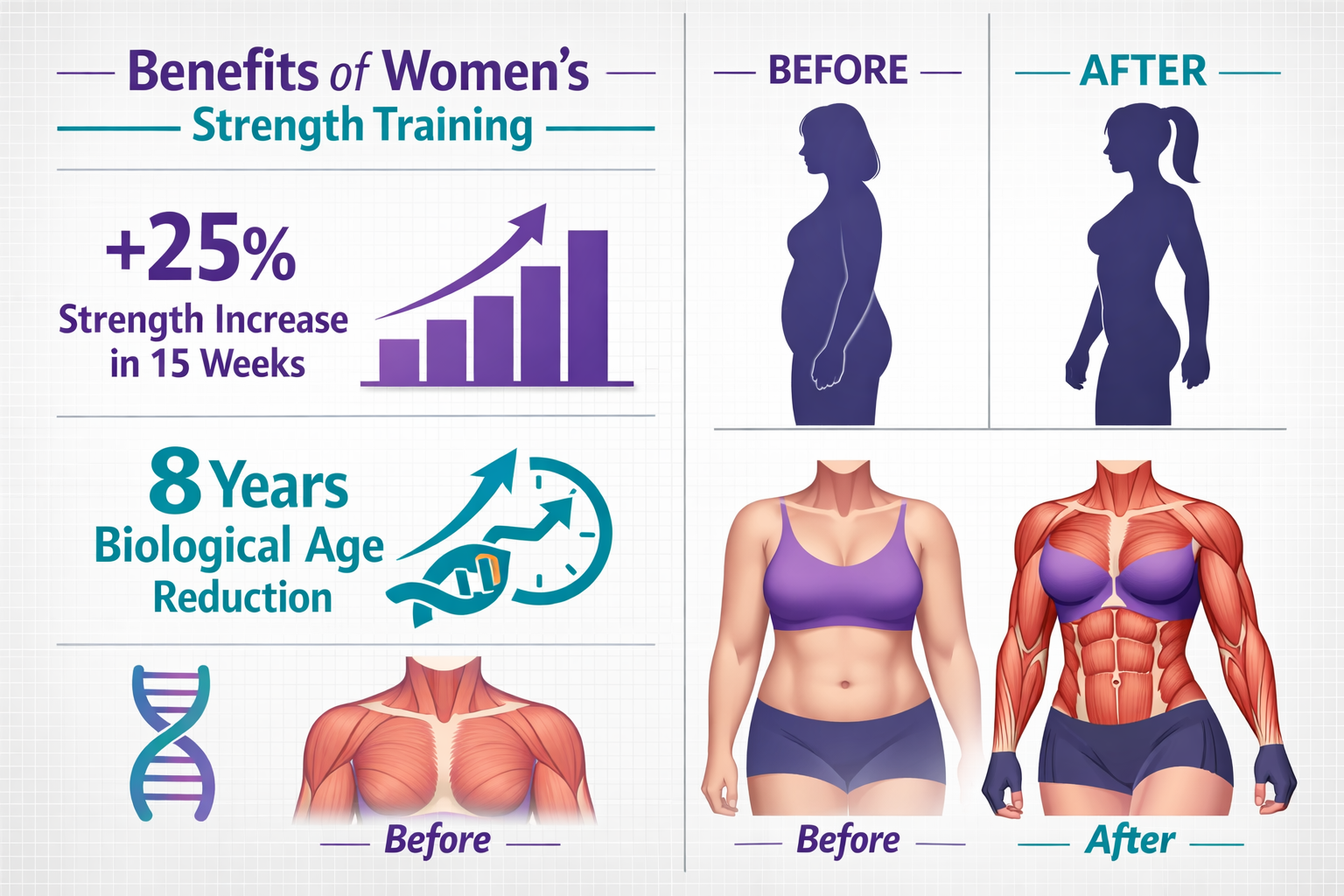
Gone are the days when women were relegated to endless cardio sessions and pink dumbbells. Moreover, modern research reveals that women can build muscle just as effectively as men. In fact, studies show that structured strength training can help women gain approximately 1.45 kg (3.2 lbs) of lean muscle and increase muscular strength by up to 25% within just 15 weeks [2]. Additionally, strength training can reduce biological age by up to 8 years [5].
Key Takeaways
• Women build muscle equivalently to men when following properly structured strength training programs, debunking the myth that women can’t gain significant muscle mass
• Power-focused training trumps volume – moving weights quickly and explosively provides greater health benefits than simply lifting heavy or training for long durations
• Hormonal considerations matter – effective programs account for menstrual cycles, menopause, and postpartum recovery with specialized periodization
• Functional movements create real-world strength – compound exercises that mirror daily activities provide the most practical and sustainable results
• Nutrition integration is essential – successful strength programs combine training with hormone-supportive nutrition strategies rather than generic calorie restriction
The Science Behind Women’s Strength Training Success
Breaking the Muscle-Building Myths
The fitness industry has long perpetuated the myth that women should focus primarily on cardio and light resistance training to avoid “bulking up.” Consequently, this outdated thinking has prevented countless women from experiencing the transformative benefits of serious strength training. Furthermore, recent research from the American College of Sports Medicine confirms that women can build muscle just as effectively as men with consistent, progressive training [2].
What makes women’s strength training unique isn’t the inability to build muscle—it’s the specific adaptations and considerations that optimize results. Additionally, women typically show greater improvements in muscular endurance and respond exceptionally well to higher training frequencies. Meanwhile, data from over 500,000 StrengthLog users reveals that women naturally dedicate more training time to glutes and legs compared to other demographics, suggesting an intuitive understanding of their body’s strengths [2].
The Power vs. Volume Revolution
A groundbreaking 2024 Mayo Clinic Proceedings study discovered something remarkable: women performing resistance training that emphasizes power showed significantly lower all-cause mortality rates, independent of total exercise volume [3]. As a result, how you move weight matters more than how much weight you move or how long you train.
Power training involves moving weights quickly and explosively during the concentric (lifting) phase of exercises. Therefore, this approach offers several advantages for women:
- Enhanced bone density through high-impact loading
- Improved functional capacity for daily activities
- Greater metabolic benefits in shorter training sessions
- Reduced injury risk through improved neuromuscular coordination
Designing Comprehensive Strength Training Programs for Women
Phase-Based Programming Approach
Effective comprehensive strength training for women requires a systematic approach that accounts for hormonal fluctuations, life stages, and individual goals. To achieve this, modern programs emphasize a four-phase system spanning 12 months [1]:
Phase 1: Metabolic Assessment (Weeks 1-4)
- Establish baseline strength and movement patterns
- Focus on form mastery with bodyweight and light resistance
- Assess hormonal markers and energy levels
Phase 2: Hypertrophy Focus (Weeks 5-16)
- Increase training volume with moderate weights
- Target 8-12 repetitions per set
- Emphasize time under tension
Phase 3: Strength Development (Weeks 17-28)
- Progress to heavier loads with lower repetitions (4-6)
- Increase rest periods between sets
- Focus on compound movements
Phase 4: Power Integration (Weeks 29-52)
- Incorporate explosive movements
- Combine strength and speed training
- Maintain progressive overload principles
Essential Exercises for Women’s Strength Programs
Research consistently shows that compound movements provide the greatest return on investment for women’s strength development [2]. Therefore, every comprehensive program should include:
Lower Body Focus
- Squats (all variations) – Front squats, goblet squats, and sumo squats target different muscle groups while building functional strength
- Deadlifts – Conventional, Romanian, and sumo deadlifts develop posterior chain power
- Lunges and split squats – Unilateral movements correct imbalances and improve stability
- Hip thrusts – Specifically target glute development with excellent carryover to athletic performance
Upper Body Development
- Push-ups and bench press – Build chest, shoulder, and tricep strength
- Rows (all variations) – Develop back thickness and improve posture
- Overhead press – Create strong, stable shoulders
- Pull-ups or assisted pull-ups – Target lat development and upper back strength
Hormonal Considerations in Women’s Strength Training
Training Through the Menstrual Cycle
Women’s hormonal fluctuations throughout the menstrual cycle significantly impact training performance and recovery. Consequently, periodized programs that align with these natural rhythms yield superior results [1]:
Follicular Phase (Days 1-14): Higher estrogen levels support muscle building and recovery. Therefore, this is the optimal time for high-intensity training and progressive overload.
Luteal Phase (Days 15-28): Progesterone dominance may reduce performance capacity. However, focusing on technique work, moderate loads, and recovery strategies maintains progress without overstressing the system.
Perimenopause and Menopause Adaptations
As women transition through menopause, hormonal changes require specific training modifications. Moreover, declining estrogen levels impact muscle protein synthesis and bone density. Nevertheless, research shows that women over 50 can still build significant strength and muscle mass with properly designed programs [2].
Key adaptations for this demographic include:
- Increased protein intake (1.6-2.2g per kg bodyweight)
- Longer recovery periods between intense sessions
- Greater emphasis on bone-loading exercises
- Integration of balance and stability work
Nutrition Strategies for Optimal Results
Strength training creates the stimulus for muscle growth, but nutrition provides the building blocks. Furthermore, women’s nutritional needs differ significantly from men’s, particularly regarding hormonal health and bone density [1].
Protein Requirements for Women
Contrary to popular belief, women require substantial protein intake to support muscle development. In fact, research suggests women engaged in regular strength training need 1.6-2.2 grams of protein per kilogram of bodyweight daily [1]. Additionally, distributing protein intake evenly throughout the day (20-40g per meal) optimizes muscle protein synthesis.
Calorie Considerations and Metabolic Health
While calorie deficits are necessary for fat loss, aggressive restriction undermines strength gains and hormonal balance. Instead, a moderate deficit of 300-500 calories supports body recomposition while maintaining training intensity. Moreover, cycling calorie intake (higher on training days, lower on rest days) can optimize both performance and body composition.
Recovery and Long-Term Success
Sleep and Stress Management
Recovery is where strength gains actually occur. Without adequate rest, training becomes counterproductive. Therefore, prioritizing 7-9 hours of quality sleep and implementing stress-reduction techniques proves just as important as the workouts themselves [1].
Tracking Progress Beyond the Scale
Successful strength training programs require multiple metrics for assessment. Rather than focusing solely on bodyweight, track:
- Strength improvements in major lifts
- Body composition changes (DEXA scans or circumference measurements)
- Energy levels and recovery quality
- Functional fitness markers ( stair climbing, carrying capacity)
Getting Started: Your Action Plan
Beginning a comprehensive strength training program doesn’t require perfection—just consistency. To get started, follow this simple progression:
Week 1-2: Learn proper form for squat, deadlift, push-up, and row movements using bodyweight or very light resistance.
Week 3-4: Gradually add weight while maintaining perfect form. Furthermore, aim for 2-3 sets of 8-12 repetitions per exercise.
Week 5+: Implement progressive overload by adding weight, reps, or sets each week. Additionally, train 3-4 times per week with at least one rest day between sessions.
Remember: Every woman’s strength journey is unique. Consequently, what works for one person may need modification for another. Therefore, listen to your body, track your progress, and adjust accordingly. With consistent effort and proper programming, you’ll build the strong, capable body you’ve always wanted.
Ready to transform your fitness? Start with one workout today. Your stronger self is waiting.
You Might Also Enjoy
- Beginner Fitness Roadmap: Your Step-by-Step Plan
- Total Wellness Guide for Women
- Habit Building and Motivation: Staying Consistent
You Might Also Enjoy
You Might Also Enjoy
Frequently Asked Questions
Strength training enhances muscle tone, boosts metabolism, and improves bone density. Additionally, it can elevate mood and increase overall confidence.
Women should aim to strength train at least 2-3 times per week. This frequency allows your muscles to recover while still promoting strength gains and endurance.
Beginners can start with bodyweight exercises like squats, push-ups, and lunges. These foundational movements help build strength and can be modified as you progress.
Not at all! Beginners can achieve significant benefits with lighter weights and high repetitions. The focus should be on form and consistency to build strength gradually.
Strength training releases endorphins, which can boost your mood and reduce stress. It also fosters a sense of accomplishment and empowerment as you see your progress over time.